Journalist Resource
 October 3, 2025
From Soil to City Hall: How El Timpano Reporters Put Oakland’s Lead Problem on the Agenda
Country:


In an age where information is everywhere but often eludes the communities that need it most...

Through investigative reporting, free lead tests and in-person forums, and multilingual community updates via text and social media, El Tímpano brought the voices of immigrant families into the halls of power as part of the StoryReach U.S. Fellowship. Highlights include:
- Reporting that spurred government action: Alameda County’s Joint Powers Authority [JPA] Board discussed the issue publicly and urged Oakland’s mayor to strengthen oversight of lead abatement funds.
- Community-centered outreach adapted to residents’ concerns: Multilingual explainers and hosting events connected affected families with city officials.
- National recognition: The project’s innovative engagement and measurable impact were nationally recognized with the Online Journalism Awards' Knight Award for Public Service.
Oakland, California’s lead problem has long been known by city and Alameda County officials. It is also known that the region’s most vulnerable people are living in the parts of the city that are most likely to contain lead hazards. While local media outlets have covered lead over the last several decades, our team at El Tímpano knew we were best positioned to publish a deeply reported investigation and a series of stories that center the people at the heart of the issue.
We were intentional about laying the groundwork to engage audiences—with the help of the Pulitzer Center StoryReach U.S. Fellowship—so that the stories could have as much impact as possible. What resulted was a yearlong look at how slow action on lead remediation specifically harms the Latino immigrant communities of Oakland.
In 2000, the city and county both joined a lawsuit with eight other California jurisdictions against paint manufacturers who allegedly knowingly continued to sell paint that contained lead, though it was banned in 1978. The lawsuit reached a settlement in 2019, and Oakland and Alameda County jointly received $24 million for lead remediation. After a period of debate, the two governing bodies decided in December 2021 that Oakland should receive $4.8 million immediately, Alameda County would keep $9.6 million, and the remaining $9.6 million would be used to benefit Oakland residents once the officials came to an agreement about how the money should be spent.

As a nonprofit journalism organization, we depend on your support to fund more than 170 reporting projects every year on critical global and local issues. Donate any amount today to become a Pulitzer Center Champion and receive exclusive benefits!
El Tímpano’s investigation wanted to answer two things: What did Oakland do with the $4.8 million it received and has any of that funding supported the people most likely to come into contact with lead? Through records requests and interviews with city and county leaders, my reporting partner, Cassandra Garibay, and I were able to find that Oakland had not spent any of the money it was allocated, and had no plan for how it should be spent. This was the result of years of staff turnover, multiple major crises the city was handling, and distrust between city and county officials.
We paired the investigation with deep investment in community engagement, which will be the main focus of this blog post.
Over nine months, we maintained a civic science partnership to offer free lead tests, held a workshop, went door-knocking in Oakland’s Fruitvale neighborhood, launched an SMS campaign, and hosted a panel discussion with community leaders. Our goal was to inform the community we cover and amplify residents' experiences to decision-makers.


Audience and community engagement
El Tímpano engages with Latino and Mayan immigrant communities. The news outlet reaches communities through SMS—nearly 6,000 people are subscribed to texts that are delivered twice weekly in Spanish and offer “news you can use.” The outlet also works with an outreach team that actively recruits new subscribers and listens to residents' needs. El Tímpano also employs a special projects coordinator, whose full-time mission is to engage and inform community members through alternative approaches like in-person workshops or resource fairs.
Journalists on the El Tímpano team are able to utilize all of these channels for reporting purposes. From the beginning, we knew if we put our heads together we could publish a significant story on how lead was impacting the community we cover. Our intention was to target three main audiences:
- Latino and Mayan immigrant community members who live in the Oakland census areas with the highest risk of lead
- Health care professionals and advocates
- Decision-makers in City Hall and Alameda County
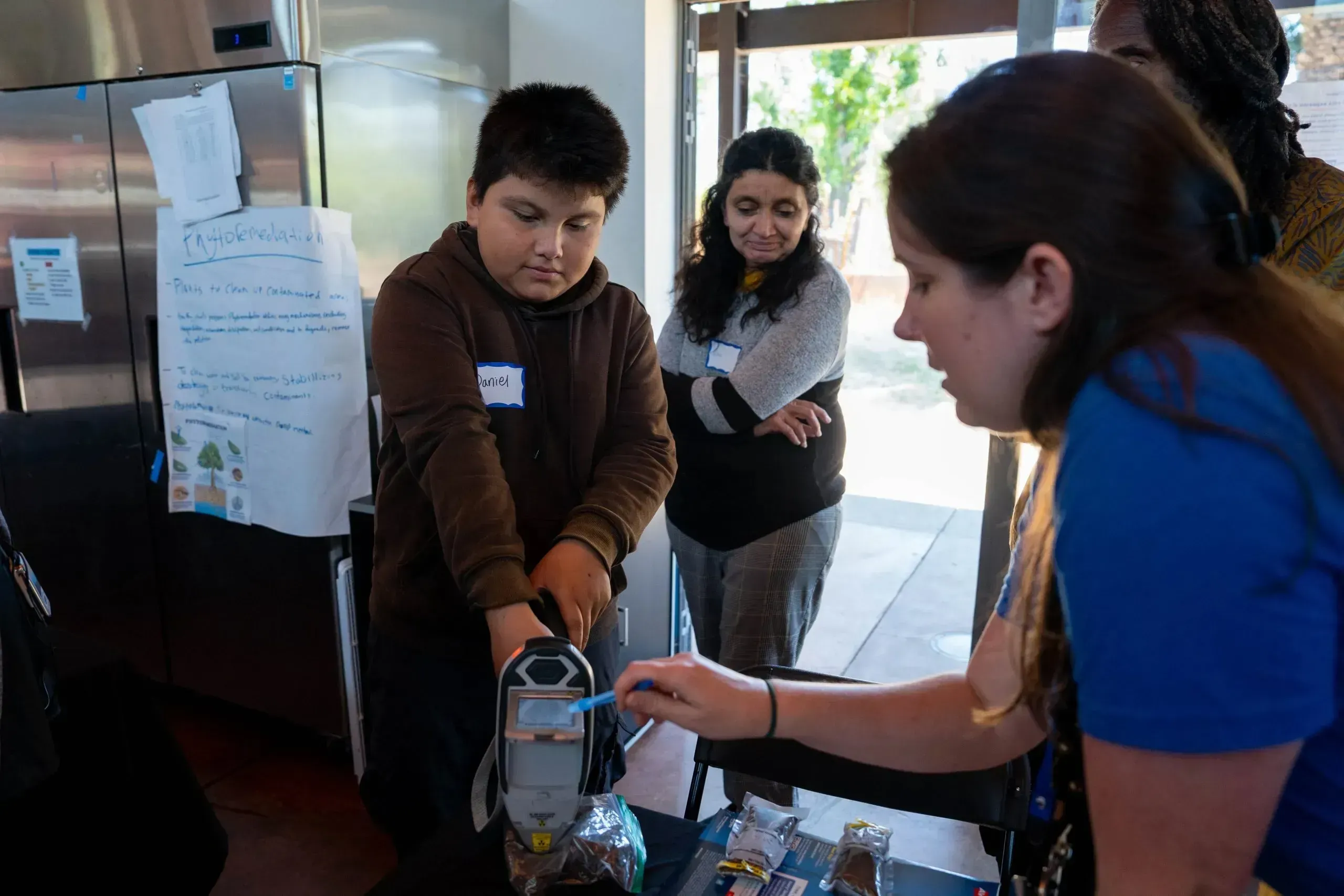
With the help of the StoryReach program and El Tímpano’s special projects coordinator, we organized our first community engagement event to reach the first group, a workshop in July 2024 in Fruitvale, the heart of Oakland’s Latino immigrant community. We invited people to attend via SMS and asked them to bring their own samples of soil from their homes to have it tested for lead.
The workshop was facilitated by the East Bay Academy for Young Scientists [EBAYS], a civic science program at the University of California, Berkeley. We provided live interpretation and child care to encourage attendance.

“There is a payoff when you take time at the beginning of a reporting project to set goals for audience reach…This process strengthens the reporting, builds investment in the story and can help reporters understand an audience’s specific information needs to design guides or explainers.”
We also invited members of La Clinica de la Raza, a community health clinic, to table and offer its services in order to engage with our second target group. Our goals were lofty: Can dozens of people attend? Can we collect hundreds of soil samples and build our own interactive map of lead hotspots?
Ultimately, nine people attended the workshop. All of their soil samples tested for some amount of lead, and we as journalists got our first taste of what it will be like to launch this reporting. We would have to design less demanding ways for our audience to engage on this issue, and we’d have to narrow our goals to make them more realistic and proportionate to the time and resources we had at our disposal.
After the workshop, we decided we wanted to continue to offer free lead testing to our subscribers. We shared a total of eight text messages between July and March 2025 either offering to visit people’s homes to collect a sample or distributing information on how to protect from lead. This was possibly our most effective way of engaging our community.
Our goal was no longer scale, but quality time with the people in our community in order to inform them of the threat of lead in their homes and get to know their level of awareness of the city’s inaction on lead remediation. We wanted to build investment in the story so that people knew their own stake in the issue.
We also tried door-knocking in high-risk areas and tabling at community events and at the public library in Fruitvale. We had some successes and some failures—though with projects like this I don’t believe “failure” is the right word to use, as we were able to use those lessons to iterate in order to meet community members where they are.
To engage with the third group on our list, local decision-makers, we made sure to share our reporting with members of the Oakland City Council and county leaders. We also organized a panel discussion inviting people from the county and city and a consultant who worked with the city in the past to conduct lead research. We all came together in February to discuss solutions.


Iterations/lessons learned
Tabling at the public library is where we learned that our community was scared. This shouldn’t have come as a surprise, but the experience was a check on our own assumptions as reporters. As someone who has covered immigration for years, I knew that fear is commonplace, but I associated that fear with immigration enforcement.
When we first launched this project I thought, "Who would ever turn down a free lead test?" Turns out, a lot of people—especially when cost of living is so high that your options are limited to overcrowded apartments or uninhabitable housing. People feared jeopardizing their standing with their landlords, even if they knew that lead posed a threat to their health.
This was possibly the most eye-opening part of the engagement experience. Reporting partner Cassandra Garibay was able to use this feedback to publish a tenant rights explainer in both English and Spanish to help the people we met better understand what landlords are technically responsible for.

The story’s immediate impact
Around the same time that Garibay and I obtained public records finding that the city had not spent any of the $4.8 million it was allocated, we received a notice that the city had planned to hire a consultant to embark on a yearlong contract to advise on the best way to spend the money equitably. The consultant’s report was expected in summer 2025.
Through our SMS campaign, we met Minerva Flores, who lives with her two adult daughters, son-in-law, and 4-year-old granddaughter in the Bancroft/Havenscourt neighborhood in Oakland. Flores invited us to visit her home and collect a soil sample. During our visit, she shared how she was concerned for her granddaughter, Leyla, and that Leyla’s mother, Yazmin Alvarez, 30, was undergoing dialysis treatment because of kidney failure—a process during which Alvarez learned she had elevated levels of lead in her blood.
Alvarez and Flores welcomed us into their lives. Alvarez was pregnant with Leyla when she found out about her blood lead levels and was concerned that Leyla had been exposed. We met the family when they were in the process of getting Leyla’s blood tested for the first time.
El Tímpano published its first story in October 2024. Immediately other news outlets, journalists, and researchers were quick to amplify the story or reach out with comments.
But the real impact came in November and December, when a group of county officials, known as the Joint Powers Authority Board of Directors, convened and dedicated time during two meetings to discuss our reporting. They ultimately drafted a letter for Oakland city officials, condemning their inaction on lead and urging them to utilize money to start remediating lead at Oakland public schools.
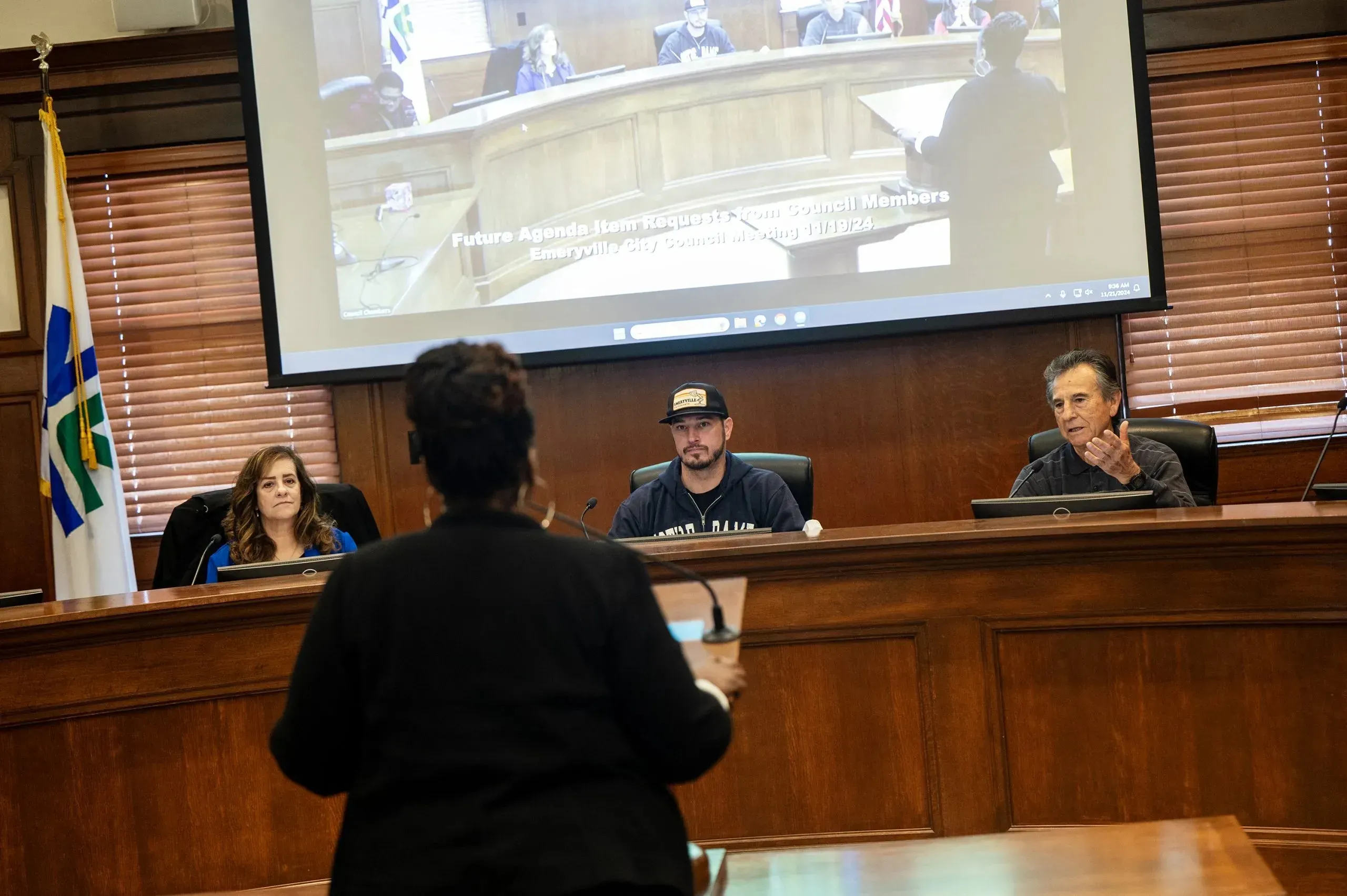
In February of 2025, El Tímpano convened a panel discussion and invited city and county leaders to attend, as well as members of the community. We recorded a message from Flores to play during the event. It was an opportunity to discuss the real challenges ahead for the city. City Administrator LaTonda Simmons, who participated in the panel discussion, commented about how important it was for people in her position to hear directly from members of the community. Even after their story was published, the family continued to stay in touch with El Tímpano and participate in other ventures hosted by the news outlet that were unrelated to the lead project.
“Trust in journalists has deteriorated over the course of many years, but investing in audience engagement early can help re-establish trust that was lost, or build it from scratch if it was never there to begin with.”

Takeaways
El Tímpano is a small news organization, but by playing into our team members’ strengths and because everyone on staff was invested in the project, our series of stories led to real impact. We didn’t set out to solve the problem for the city, but our work spurred conversation and awareness—it was the first step in what will likely be a years-long process of true remediation.
The lessons from the StoryReach Fellowship will inform my journalistic work for years to come. There is a payoff when you take time at the beginning of a reporting project to set goals for audience reach—you identify groups you want to connect with, and establish a strategy for reaching them. This process strengthens the reporting, builds investment in the story, and can help reporters understand an audience’s specific information needs to design guides or explainers.
Trust in journalists has deteriorated over the course of many years, but investing in audience engagement early can help re-establish trust that was lost, or build it from scratch if it was never there to begin with. We found this to be true during the time we spent with Latino and Mayan immigrants for this project.
Tips for reporters
- Partnerships! Think about the newsrooms that are already reaching the audience you want to engage with and establish a collaboration. It also doesn’t always have to be a partner newsroom—in El Tímpano’s case, EBAYS had access to the tech and research we were interested in. The EBAYS team had never participated in a reporting project, but were open to a collaboration. We also reached out to journalist Yvette Cabrera, formerly of the Center for Public Integrity, and she helped to advise us when questions came up.
- Respond to audience needs and be open to iteration. One simple way to do this is to design explainers or guides based on the questions from your audience throughout the reporting process—which means you have to ask people what they need and what questions they still have.
- Don’t assume you know your audience. Journalists often think the general public knows what journalism is, and the average person might also assume they know what journalists do. Let’s do better at informing our sources about our work. When you design in-person events, take time to explain your role as a journalist and the goals of the reporting project. Remind people that their feedback will shape and inform the reporting.
- Get creative about where you reach people. Social media is a great tool, but audience engagement doesn’t end when you post the story on Instagram. Ask yourself: Where do the people I’m trying to reach spend their time virtually and physically? The local swap meet? The active WhatsApp group? How can you get into those spaces and what materials will you need to bring with you?


