

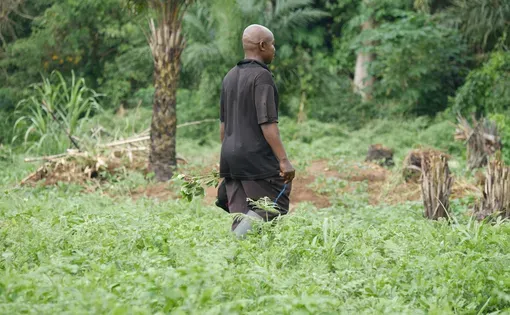
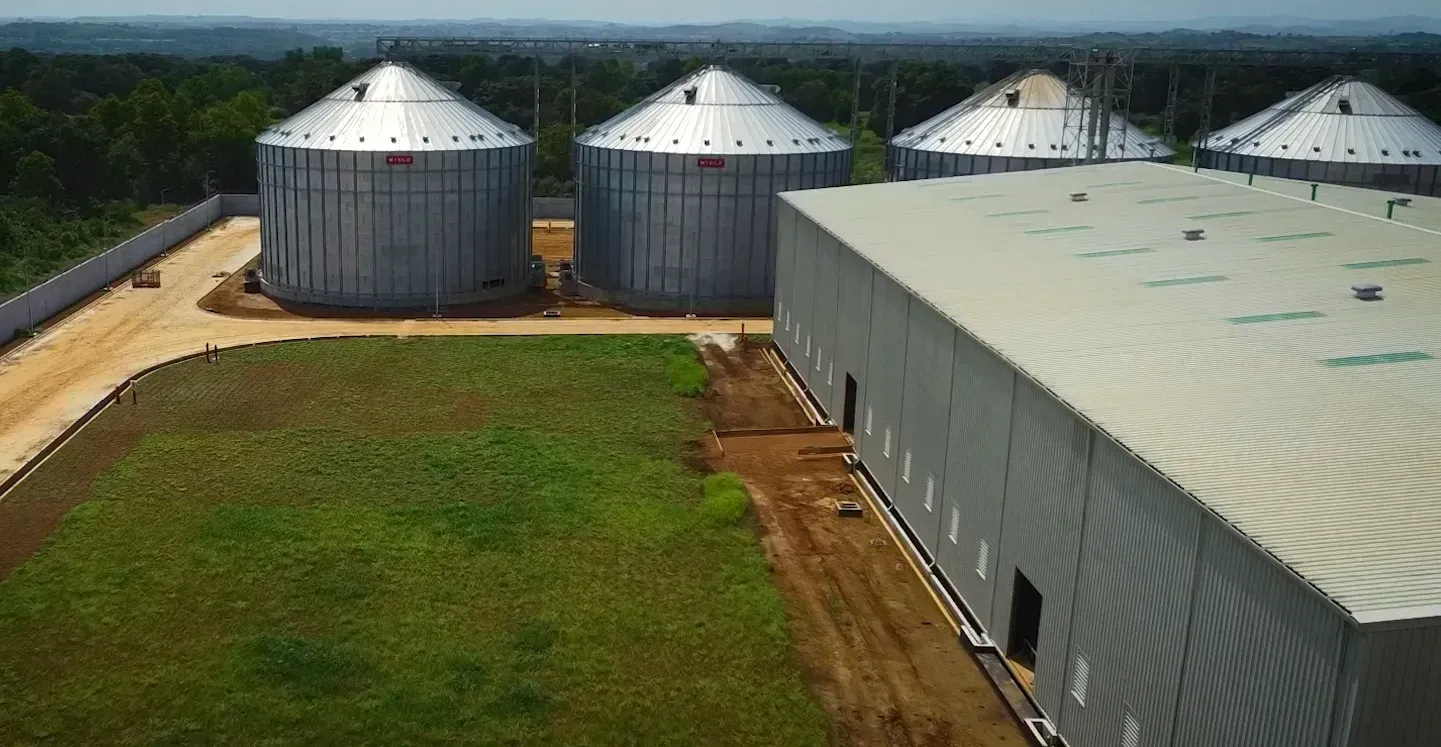
Some fields are abandoned, others have been brought back into production by local families, growing subsistence crops like cassava. We are in Louvakou, Niari department, in the southwestern part of the Republic of Congo. We fly a drone over rain-soaked fields, where until a year ago, one of Eni Congo’s agricultural projects, a subsidiary of the Italian oil company Eni, was located, aiming at producing agri-feedstock for biofuels.
The project was managed by the Luxembourg-based company Agri Resources—which held a concession of 29,000 hectares of land, where it experimented with growing castor oil to supply Eni’s biorefineries in Italy, in Porto Marghera and Gela.
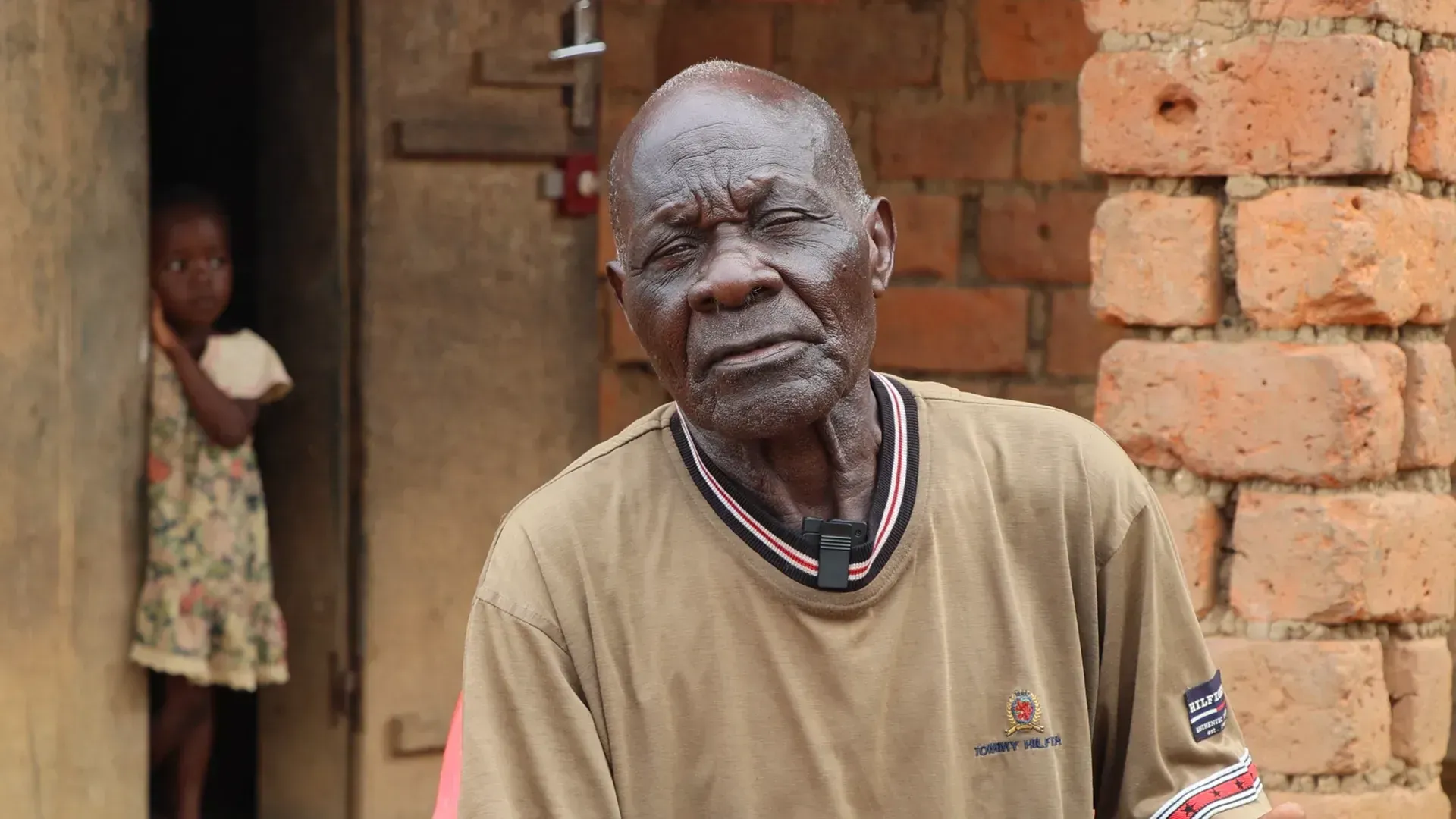
“Agri Resources is not here anymore,” says Joseph Ngoma Koukebene, chief of Kibindouka village, one of the areas affected by the project. Sitting in his courtyard, he peers at us with narrow eyes as he explains that the Louvakou project has ended, apparently due to poor agricultural yields. “We’re feeling quieter now,” says Koukebene.

As a nonprofit journalism organization, we depend on your support to fund more than 170 reporting projects every year on critical global and local issues. Donate any amount today to become a Pulitzer Center Champion and receive exclusive benefits!
Louvakou is one of three sites in the Republic of Congo where Eni began experimenting with castor oil cultivation “on degraded lands” in 2022, to independently produce feedstocks to supply its biofuel plants. The idea of castor oil, a non-food crop that could regenerate degraded lands, stems from the need—driven by EU regulations—to rely on “sustainable” vegetable oils for fuel production. These are vegetable oils that are not meant to cause deforestation nor compete with food production.
But these projects are currently closed, or at a standstill in the experimental phase, while the company has started large-scale production of sunflowers and soybeans in Congo, food crops that could otherwise have an impact on local food security.
Growing biofuels in Africa
Eni produces biofuels primarily using palm oil by-products imported from Malaysia and Indonesia, such as PFAD and POME, often criticised for their potential impact on deforestation and food security, and used cooking oils. Aiming to exponentially increase production, the company has launched projects in Congo and other countries, such as Kenya, the Ivory Coast, and Mozambique.
“To address feedstock availability, we have several ongoing projects called agri-hubs, which are focused on producing vegetable oils grown on degraded lands,” Stefano Ballista, CEO of Enilive, an Eni satellite company, told us during a visit in June to the Porto Marghera biorefinery, just outside Venice.
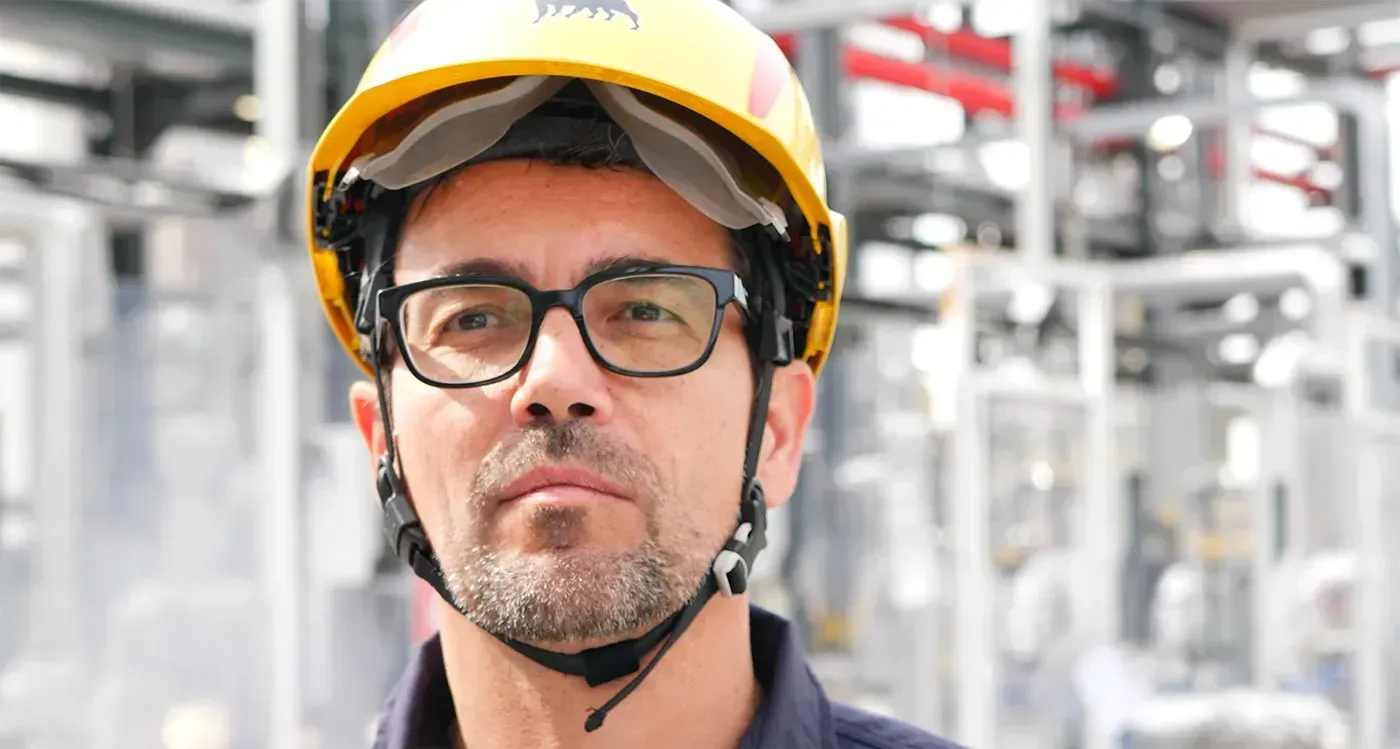
Enilive plans to increase its biorefinery capacity from 1.65 million tons per year to 5 million tons of biofuels and over 2 million tons of sustainable aviation fuels by 2030. According to Ballista, to achieve this goal, the company “intends to produce 700,000 tons of vegetable oils” by 2028.
In Congo, Eni originally planned to produce 20,000 tons of vegetable oils by 2023, using crops such as castor oil, brassica, and safflower, and then reach production of 250,000 tons by 2030. However, things have so far gone differently: the Louvakou pilot project has closed, while two other castor oil production projects, in the departments of Bouenza and Pool, are still in an experimental phase.
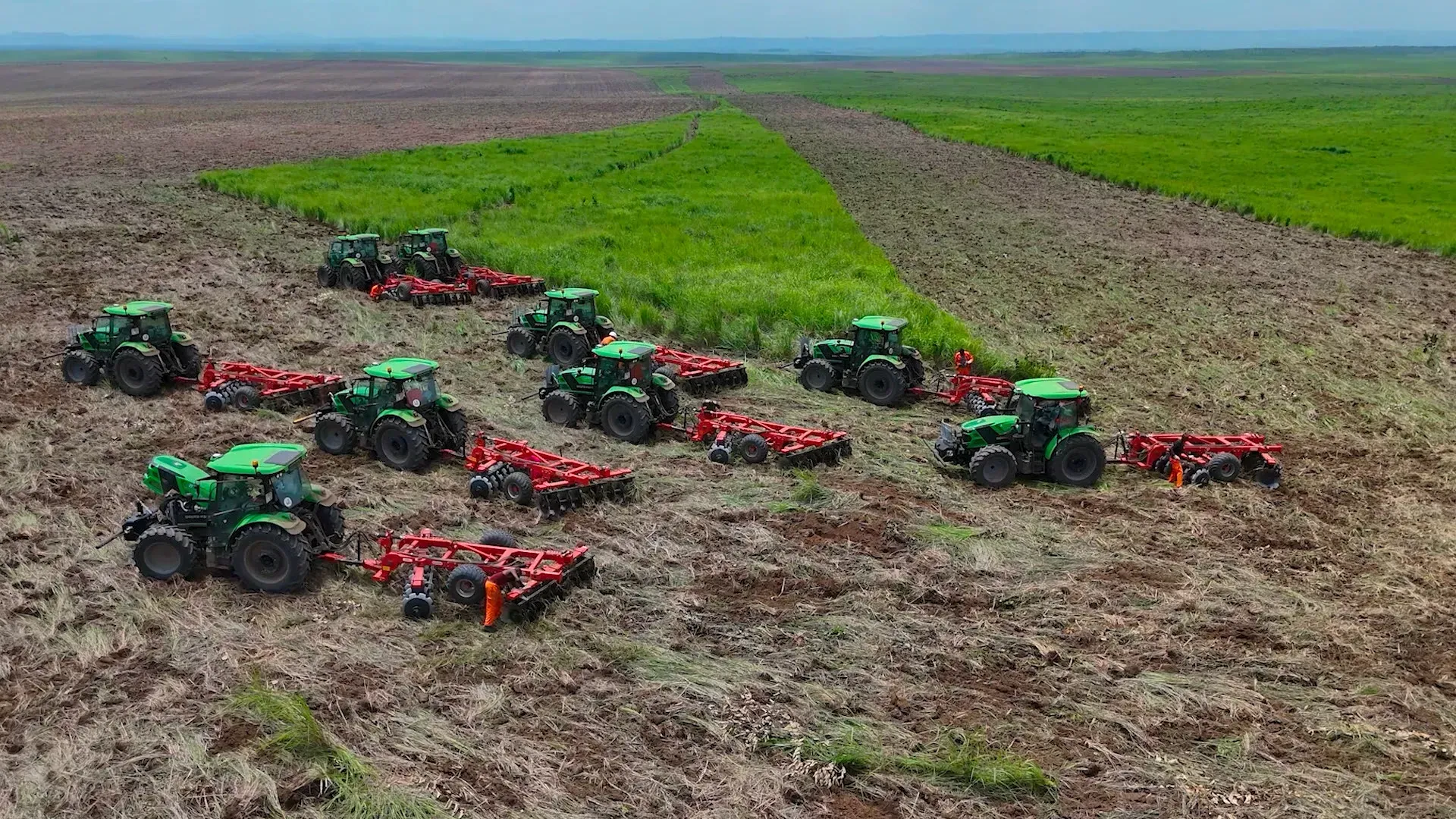
Meanwhile, at the end of May, the company inaugurated an agri-hub in Loudima, in the Bouenza district. According to local press sources, the pressing plant will produce 30,000 tons of vegetable oils for biofuels by 2025, and is fueled by agricultural production of 1.1 million tons of edible crops, such as soybean and sunflower, grown on 15,000 hectares.
Unused lands and food security
“Castor oil production is still ongoing, but it has been scaled back in favour of other crops,” says Chris Nsimba, a farmer from Loudima, who attended the agri-hub’s inauguration.
Eni Congo signed an agreement with the Congolese government in 2021 for “the development of the bio-refined agricultural raw materials sector.” The agreement has a term of 50 years and will cover 150,000 hectares of agricultural land by 2030. The company aims to expand its cultivation in Congo to 40,000 hectares by the end of 2025.
“We have grown sunflowers on land abandoned for decades with very good yields, and the important thing is the oil production in our agri-hub,” says Luigi Ciarrocchi, Director of CCUS, Forestry & Agro-feedstock at Eni. According to Ciarrocchi, the company is still “evaluating” the use of castor oil in Congo.
Bouenza is often referred to as “the breadbasket of Congo” due to its highly fertile soil. However, the Eni executive claims that the Loudima agri-hub exploits land that has become difficult to cultivate because it has been unused for decades, following the end of large-scale public agricultural projects in the 1970s and 1980s, and can therefore be considered “degraded.” The company is working to revitalise the land, providing local farmer organisations with “a range of services,” such as seeds, pesticides, and a fleet of 200 agricultural vehicles, before purchasing the whole crops.
According to the United Nations, in the Republic of Congo, “domestic food production meets only 30 per cent of the country’s needs, forcing heavy reliance on food imports.” Meanwhile, “chronic malnutrition is a pressing concern, particularly among children under the age of five, of whom 19.6 per cent are affected.”
According to Nsimba, Eni is not the only company to have developed large-scale export-oriented agricultural projects in the Bouenza district, bringing “economic development” but little contribution to local food security. According to Ciarrocchi, Eni’s agri-hub relies on unused lands and contributes to local food security by producing “cakes,” by-products of oilseed pressing with a high protein content. they can be used to produce feed for poultry farmers.
The Mattei Plan for biofuels and the European automotive industry
The availability of raw materials is crucial in determining the role of biofuels in the European transport sector’s green transition, which accounts for a quarter of EU emissions. According to Ciarrocchi, Eni’s Agri Feedstock project was born from the challenge of addressing “a limited availability” of sustainable raw materials. At the same time, biofuels could play a strategic role in decarbonising “air transport, shipping, and even heavy road transport,” which he defines as “highly emitting sectors, where it is very difficult to reduce emissions.”
Eni, however, is part of a European alliance of fuel and automobile producers that is lobbying in Brussels to promote the use of biofuels in cars. This lobbying aims to avoid the ban on internal combustion engines, currently scheduled for 2035 in the European Union, arguing that “traditional” cars could become zero-emission if powered by biofuels. Critics, however, argue that failing to ban internal combustion engines could delay the phasing out of fossil fuels in Europe.

The Italian government also supports the use of biofuels in the European automotive sector, and the production of “agri-feedstock” in Africa is one of the main objectives of the Mattei Plan, the development program launched in January 2024 by the Italian government, with an initial allocation of €5.5 billion.
“The Mattei Plan is a vehicle that serves […] the countries of North Africa and all of Africa to develop agricultural production,” said Gilberto Pichetto Fratin, Italy’s Minister of the Environment and Energy Security, speaking at an event supporting biofuels at Eni’s headquarters, “and to benefit—those countries, but also our country and all of continental Europe—from the subsequent production of fuels,” he added.
Eni’s program in Congo is not among the projects funded by the Mattei Plan. In Congo, the Mattei Plan supports another Italian agricultural project, aiming to produce food for the local market, led by the company Bonifiche Ferraresi — with which Eni (a shareholder) signed an agreement in February for the development of biofuel feedstocks. The Mattei Plan also supports Eni’s 80,000-hectare agri-feedstock project in Kenya.
In June, Italian Prime Minister Giorgia Meloni and EU Commission President Ursula von der Leyen met in Rome with the leaders of the African Union, Angola (where Eni’s next agri-feedstock project will launch), Zambia, the Democratic Republic of Congo, and Tanzania, to discuss further developments of the Plan, involving other countries.
“Let’s mobilise together the great potential of African renewable energy and the decarbonization of economic growth,” said von der Leyen. The EU Commission President cited a series of infrastructure projects that will be funded, such as the Lobito Corridor, “a true economic corridor, which allows us to unlock the enormous potential of Angola, the Democratic Republic of Congo, and Zambia,” she said. “That’s why we’re investing in roads, agricultural supply chains, and logistics centres.”
Marien Nzikou-Massala contributed to this report.