Story
 November 5, 2025
Migrants Enriched This Indigenous Village in Panama. What Happens Now That They’re Gone?
Country:


Migrants head south, reversing migration flows.
Key Points
- Migration through Panama's Darién Gap has plummeted by 98% due to immigration crackdowns in Panama and the United States.
- The Indigenous village of Bajo Chiquito, a former way station for migrants, experienced an economic boom from the influx.
- With the sharp decline in migrants, the village's economy has taken a major hit, forcing residents back to traditional occupations.
BAJO CHIQUITO, Panama — No roads lead to this tiny Indigenous community deep in the jungle of the Darién Gap, where a tsunami of U.S.-bound migrants has abruptly slowed to a trickle.
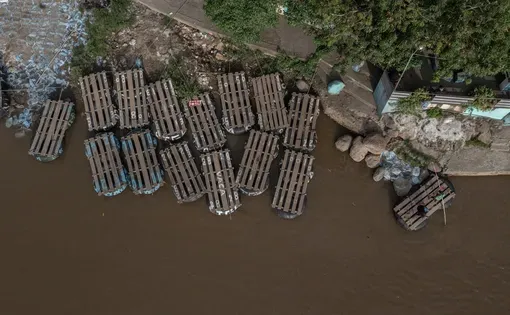
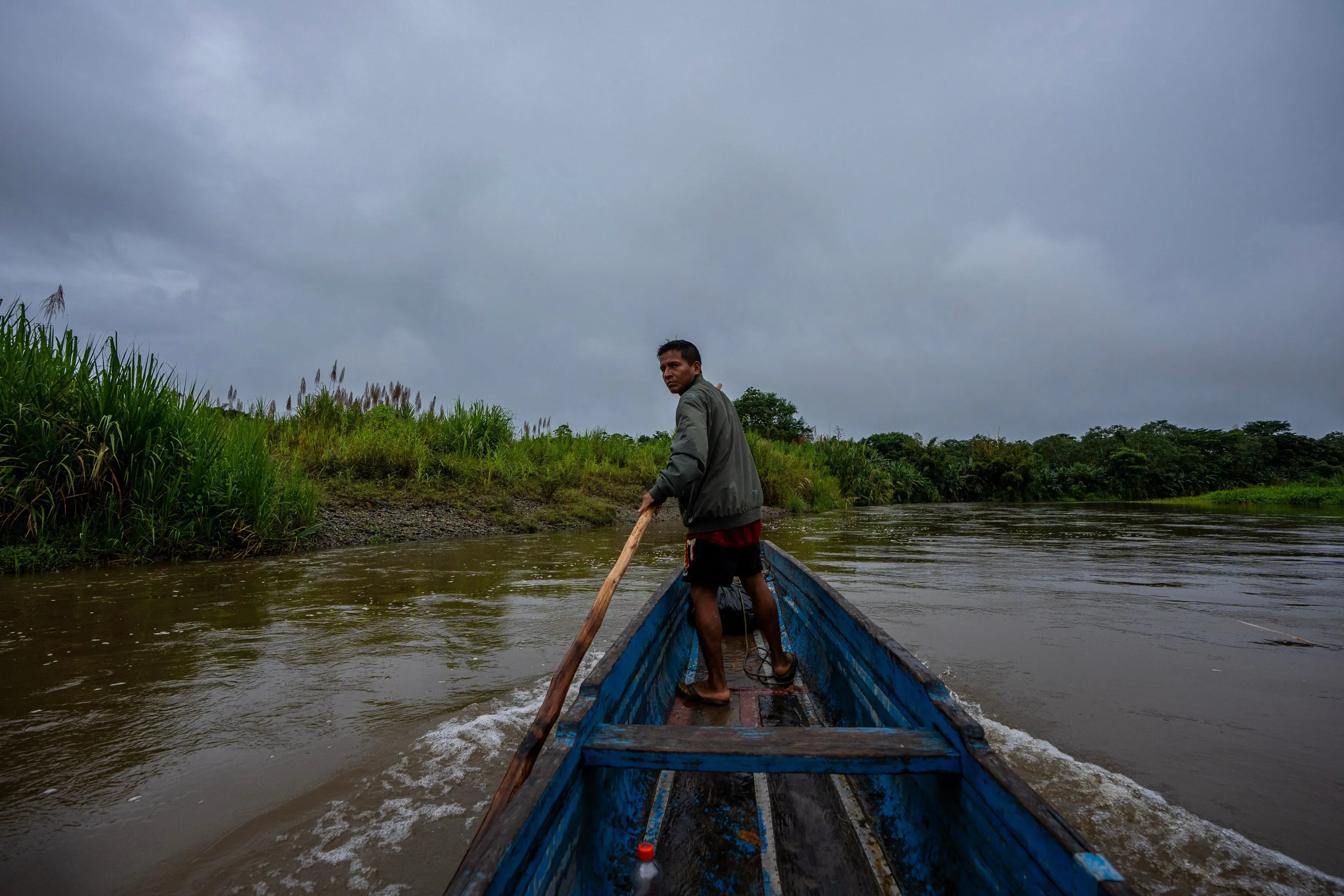
The only way to reach the village is by piragua, a flat-bottomed wooden canoe powered by an outboard motor.
After a three-hour journey up the windy Tuquesa River, 56-year-old piragua driver Omar Cansari finally arrived at the village, shirt drenched from heavy summer rains. Cansari steered his piragua up to the riverbank and docked just below a weather-beaten sign that read, "Bienvenidos, Bajo Chiquito."
Barely anyone was in sight.

As a nonprofit journalism organization, we depend on your support to fund more than 170 reporting projects every year on critical global and local issues. Donate any amount today to become a Pulitzer Center Champion and receive exclusive benefits!
Bajo Chiquito, one of several Indigenous communities along the Tuquesa River, for years has served as a way station for migrants headed to the United States.
It is the first village migrants encounter after trekking through the treacherous Darién Gap, the main gateway for migrants traveling north from Colombia in South America to Panama in Central America.
For years, Cansari, a professional piragua driver, made a living transporting visitors, including journalists, to Bajo Chiquito to see how the community was coping under a crush of migrants who arrived daily by the hundreds, and at times, thousands.
The flood of people overwhelmed Bajo Chiquito, an impoverished community of 382 members of the Indigenous Emberá-Wounaan people. It also provided an economic boon. Bajo Chiquito residents raked in cash selling food, water, clothing and other necessities to migrants passing through. Others grew rich ferrying migrants downriver in piraguas.
But lately, Cansari has been bringing visitors to Bajo Chiquito for another reason: to see how the village is faring ― not with migrants but without them, and their cash.
Photo Gallery: This Town in the Darién Gap Was Once a Haven for Migrants. See What It’s Like Now
A congested, dangerous route north
The Darién Gap, a dense, snake-filled jungle, straddles the border of Colombia and Panama and is considered one of the most remote places on Earth. The Pan-American Highway, stretching from Alaska to the tip of Argentina, ends on one side, then starts up again on the other. The 60-mile section of jungle remains a roadless expanse between South and Central America.
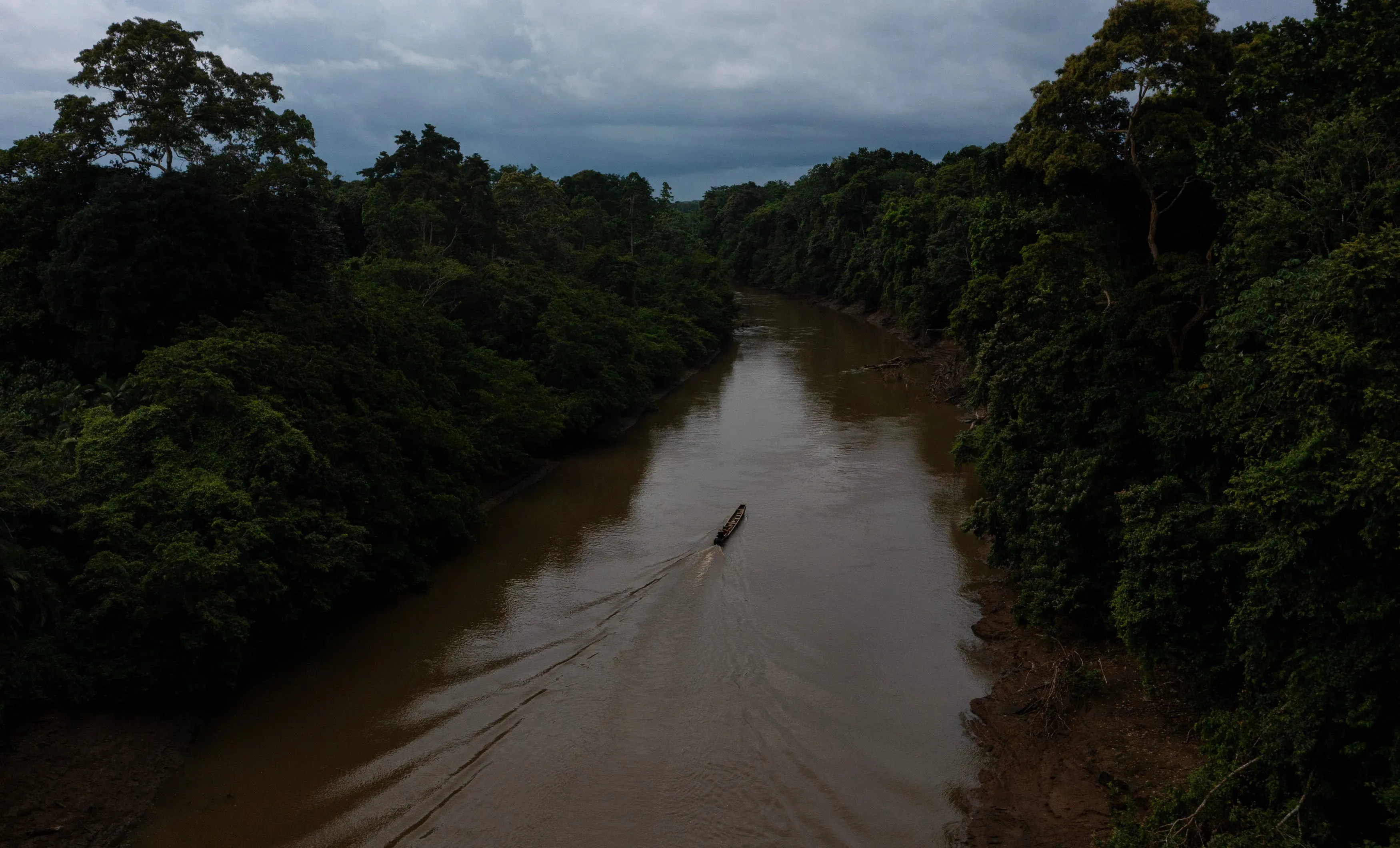
From 2021 through 2024, more than 1.1 million migrants passed through the deadly jungle, many of them traveling as families with young children, and even with babies, according to official data collected by the government of Panama.
The majority of the migrants were from Venezuela, but large numbers of people also came from Ecuador, Haiti, Cuba and other Latin American countries, as well as countries in Asia and Africa, the data shows.
Most were headed for the United States. Along the way, they courted danger, including sexual violence by criminal gangs. Hundreds of migrants died or went missing while trying to cross, according to the United Nations International Organization for Migration's Missing Migrants Project.
The flood of migrants through the Darién Gap was part of an unprecedented surge fueled by multiple factors, including the Biden administration's more welcoming policies toward asylum-seekers arriving at the U.S. southern border and post-pandemic economic and political crisis in several Latin American countries, notably Venezuela, Colombia, Ecuador, Cuba, Nicaragua and Haiti.
But so far in 2025, migration through the Darién Gap has plunged by 98%.
Dual immigration crackdowns in Panama under President José Raúl Mulino and in the United States under President Donald Trump are the reason, according to migration experts.
In Panama, Mulino, the former minister of public security, shut down the border with Colombia after taking office in July 2024, fulfilling a campaign promise, said Caitlyn Yates, a University of British Columbia researcher and expert on migration through the Darién Gap.
Senafront, Panama's border police force, has been arresting and deporting migrants caught passing through the Darién Gap instead of allowing them to pass through, Yates said.
Panama shut down two large reception camps in the villages of Lajas Blancas and San Vicente on the outskirts of the Darién jungle. The closing of the reception centers in March signaled an end to a government policy that helped migrants quickly pass through Panama on buses that picked them up at the reception centers and transported them to the border of Costa Rica, Yates said.
During a visit in August, row after row of cabins at the reception center in Lajas Blancas were empty. Other cabins already had been dismantled.
The former reception center in San Vicente is now used to hold migrants caught passing through the Darién Gap until they can be flown back to South America on deportation flights funded by the United States through a bilateral agreement signed in July 2024, Yates said.
During the visit in August, a guard stood outside the main entrance of the detention center in San Vicente. Nearby was a leftover sign with the same word written in a dozen languages: Welcome.
The numbers of people crossing the Darién Gap actually began to decrease when Mulino came into office, Yates said.
"They completely plummeted, though, in January 2025" when Trump shut down access to asylum at the U.S. southern border and launched a mass deportation campaign that continues to grow.
In the peak month of August 2023, some 82,000 migrants passed through the Darién Gap, according to Panama government data.
In August 2025, there were seven.
The first migrants: 'They had walked such a long way'
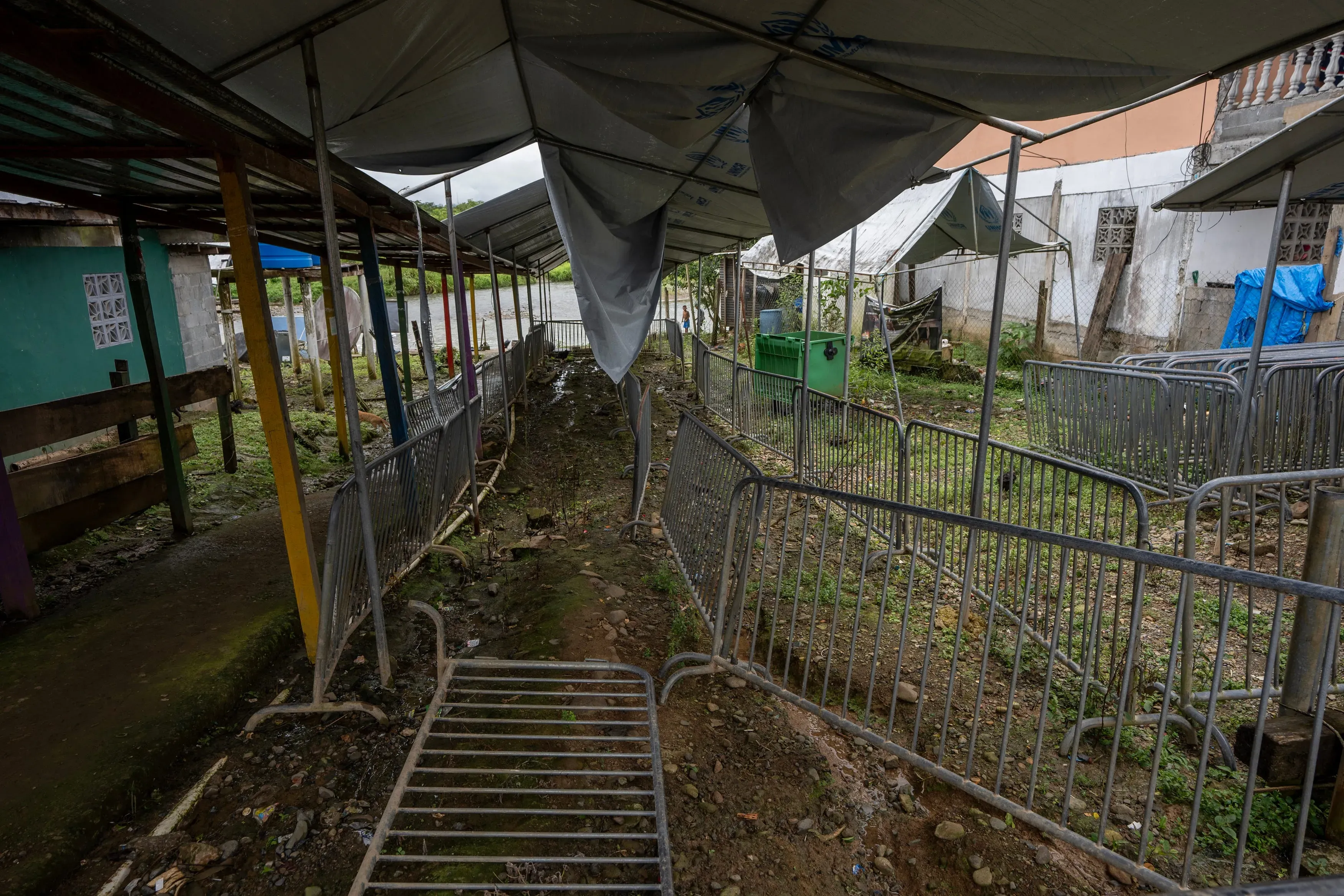
Cansari hiked up a muddy walkway into the heart of Bajo Chiquito. The walkway was lined with metal barriers to funnel lines of migrants to the river. But there were no migrants.
Cansari walked past a wooden post where someone had painted signs with words written in Spanish: Values, Respect, Love.
A year earlier, the village would have been filled with hundreds of migrants setting up camp for the night, searching for a place to charge their phones with generators, trying to find food, bartering for meals.
"It would have been incredibly busy and hectic and loud with children, babies crying," Yates said.
That's not the case anymore.
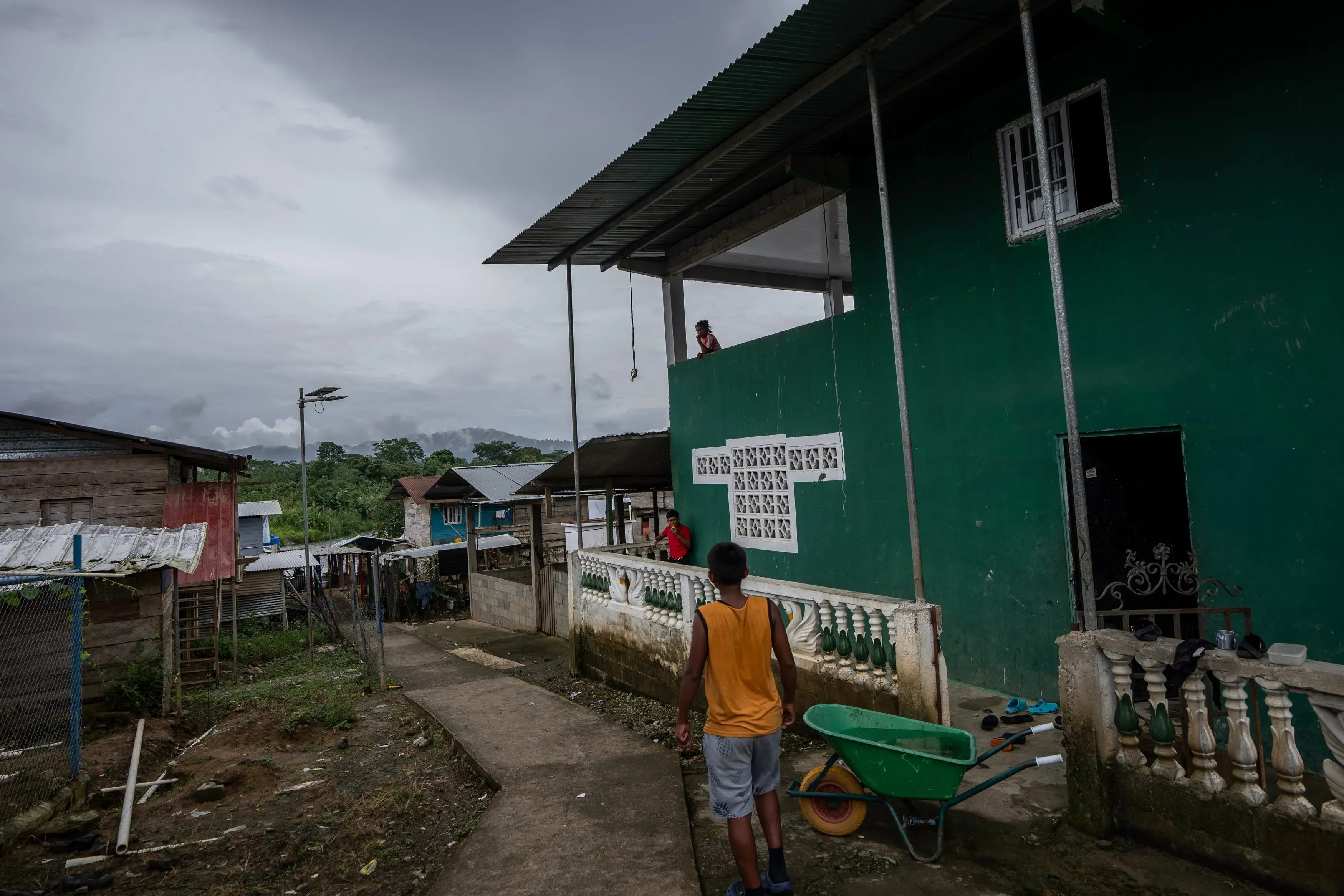
Except for a few children kicking a ball and some chickens pecking the ground, the village seemed almost deserted. The cement slabs where migrants charged phones and ate meals were empty. So were the makeshift rooms and bathrooms where migrants slept and showered.
A woman with long black hair that fell below her waist in a ponytail walked out of one of the cement block houses. She wore a maroon turtleneck over a paruma, the traditional patterned skirts worn by the Emberá-Wounaan who live in villages along the rivers of the Darién Gap.
She introduced herself as Esmeralda Dumasá, the 52-year-old leader of Bajo Chiquito.
She took a seat under a tent with the letters "UNHCR" printed in blue ink on the white canvas. The tent was a remnant of the structures erected by the United Nations High Command for Refugees to provide shade for migrants, Dumasá said.
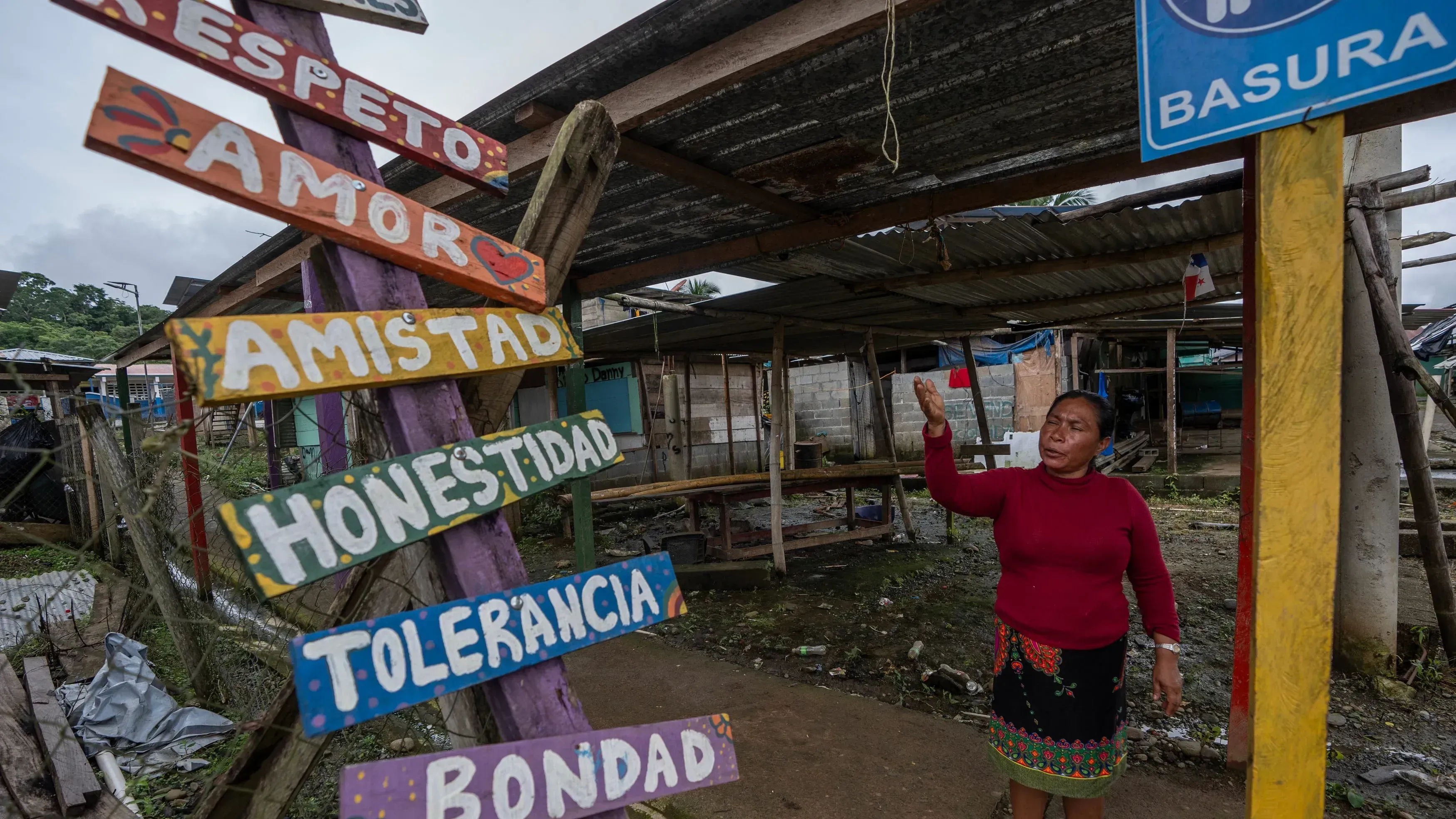
The village benefited from other improvements, Dumasá said. She pointed at the solar-powered lighting, washing facilities and a Wi-Fi network installed by nonprofit groups that aid migrants.
The first large group of migrants arrived in Bajo Chiquito in 2014, Dumasá said. They were families from Nigeria. They arrived exhausted and hungry, with blistered feet.
The community didn't know what to do. Leaders told the migrants they couldn't stay, there was no place for them to wash or go to the bathroom, Dumasá said.
"Some of the mothers began to cry," she recalled.
Women from the village, who were down washing clothes in the river, heard the cries and rallied the community to help, Dumasá said.
"We had to show them consideration; they had walked such a long way," Dumasá said.
Packed with visitors, flush with cash
In 2019 and 2020, the number of migrants arriving in Bajo Chiquito began to explode, Dumasá said. By 2023 and 2024, as many as 200 and 300 migrants were arriving each day. On any given day, 2,000 to 3,000 migrants packed the village, she said. Most stayed a day or two before moving on, Dumasá said.
Migrants flooded into the other Emberá-Wounaan villages along the river, she said. Locals converted their homes into makeshift restaurants and stores, selling everything from food to clothing, Dumasá said. Others rebuilt their homes.
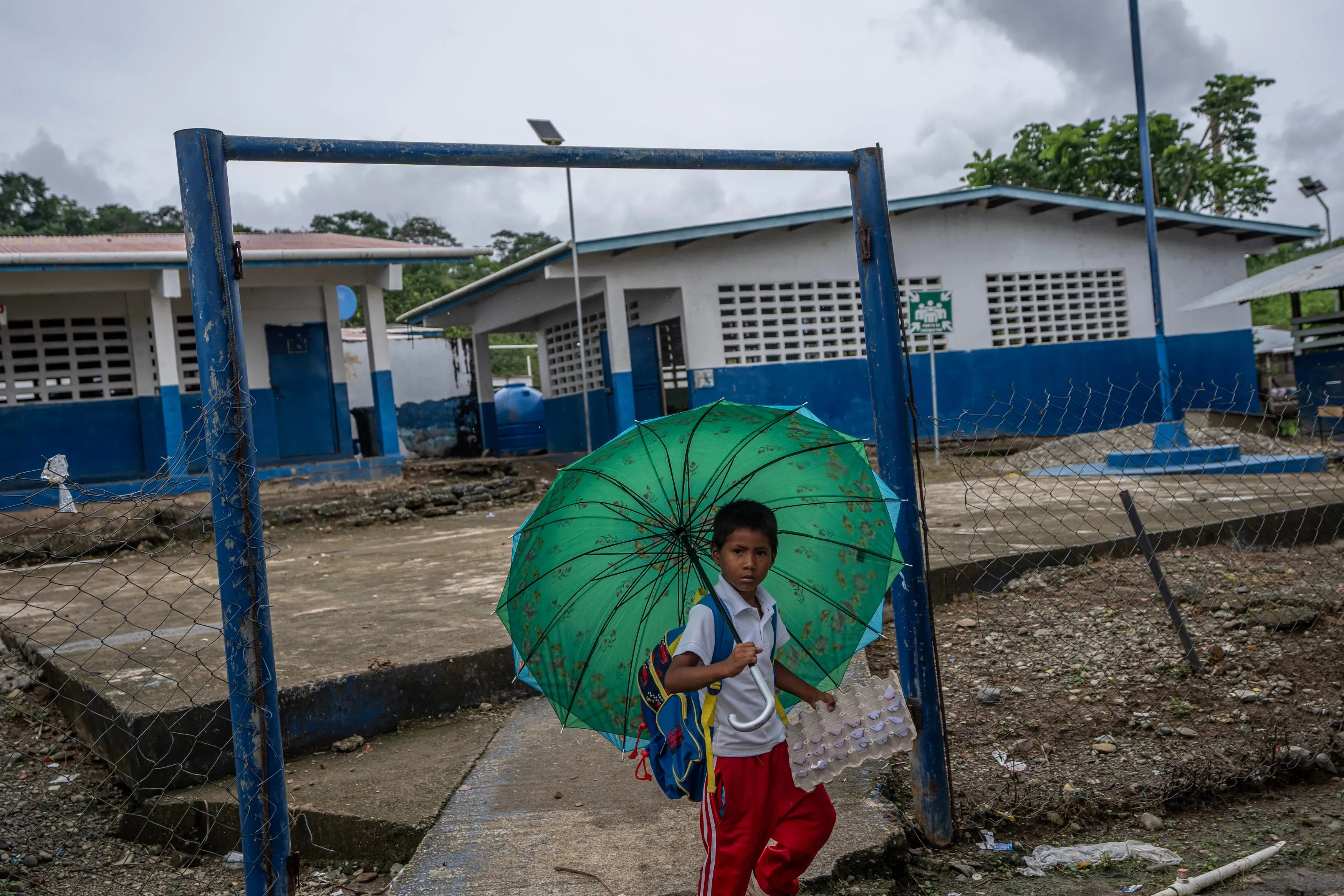
With the infusion of cash, the village rehabbed some of the school's classrooms and bought new chairs for the students. They bought lights for the health clinic and installed solar panels. The church also got a makeover, she said.
Many residents abandoned the banana fields, the village's main source of income, to ferry migrants downriver. They charged migrants $20 to $25 apiece. With 15 migrants packed into a piragua, they raked in $300 to $375 per trip.
Some residents rebuilt wood homes with cement blocks. Every dwelling in the village now has solar panels, she said.
Others used the money made from migrants to buy cars. Some put children through college, Dumasá said. Some blew the cash on alcohol and partying, she said.
"The impact on the economy here in Bajo Chiquito was huge," Dumasá said.
The village profited from migrants passing through, but the assistance was not about making money, Dumasá said.
"For us, this was a humanitarian action," Dumasá said. "The Emberá know what it means to be a human being, to share with people who are not part of your family."
Still, migrants influenced the Indigenous community in ways Dumasá found worrisome. She paused to point out a girl wearing a short dress instead of a traditional paruma skirt and some boys in NBA jerseys.
"It's quite worrying for our young people who wanted to adapt to the changes brought about by migrants, getting tattoos, wearing boots, speaking more Spanish," instead of the Emberá language, Dumasá said as reggaeton music, popular with migrants, blared from a speaker nearby. Reggaeton is one of the most popular genres in the world, a cross between reggae and hip-hop and Afro Caribbean sounds.
The village returns to its roots
The village is much quieter now since the migrants have left, Dumasá said.
But Bajo Chiquito's economy has taken a big hit.
"The stores no longer carry the same number of items they used to," Dumasá said. "And people don't go out for weeks to buy merchandise like they used to."
"Economically, people are returning to what they always did: growing and selling bananas," Dumasá said.
Almancio Chango Rosales had turned the front room of his house into a little convenience store and sold chicken, rice and canned food to migrants. The extra cash helped support his family.
"Business was super," Chango Rosales said. "Busy. Really busy."
He said he competed with many other residents who opened stands to sell food and supplies to migrants.
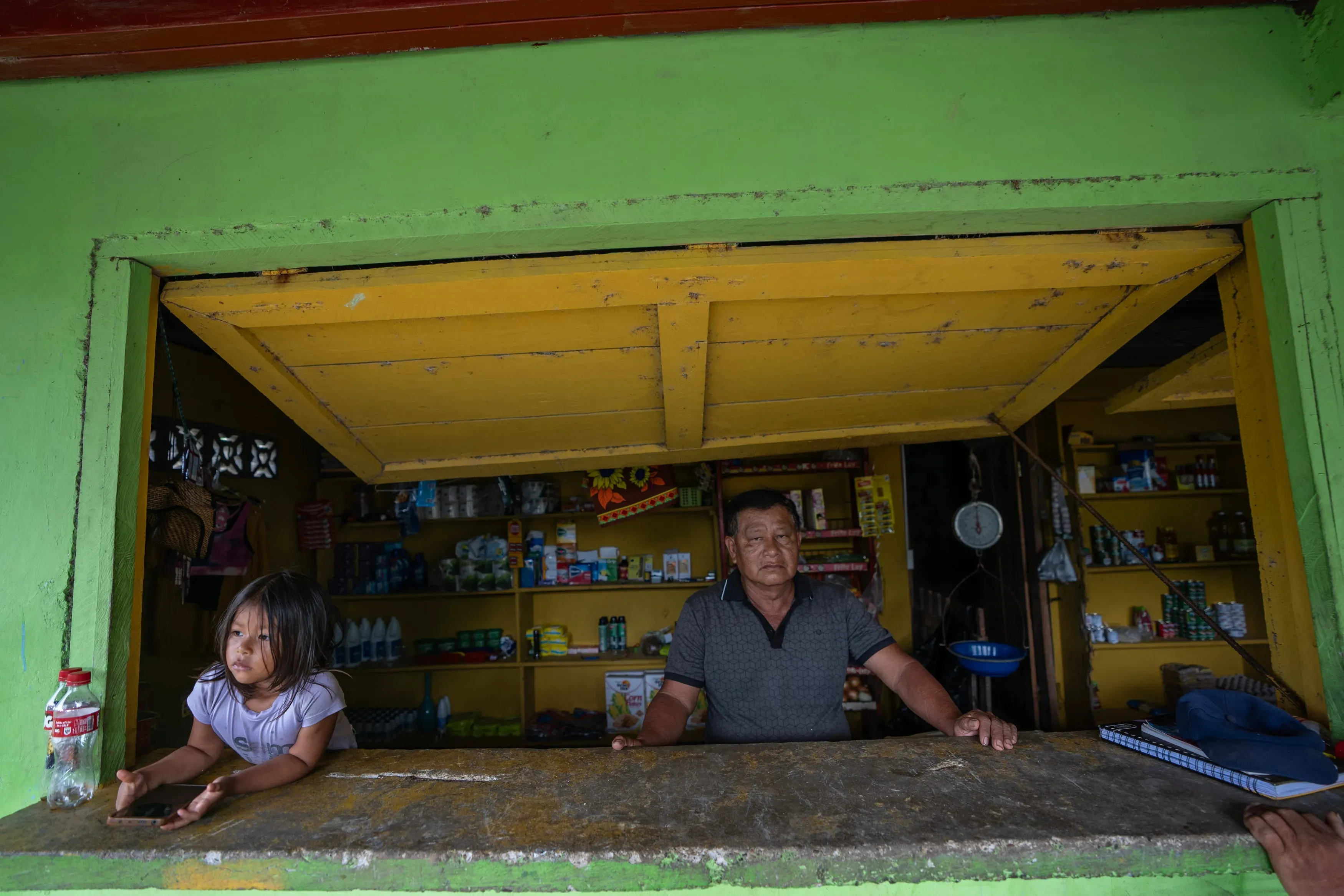
Now the migrants are gone. These days, only kids stop by after school to buy sodas and snacks, Chango Rosales, 65, said, standing in the window of the store, Kiosco Chami.
Without the income from migrants at his store, Chango Rosales said, he's gone back to his first occupation: growing corn, yucca and bananas on his farm.
"It's what we've always done," Chango Rosales said.