Story
 November 26, 2025
West Virginia Has Worst US Health-Based Drinking Water Violation Rate, and Crisis Is Likely Worse
Country:

In West Virginia, water is a devastating stumbling block.
The saying holds that mountaineers are always free.
But the West Virginians who come to Betty Stepp don’t feel free to trust their own water.
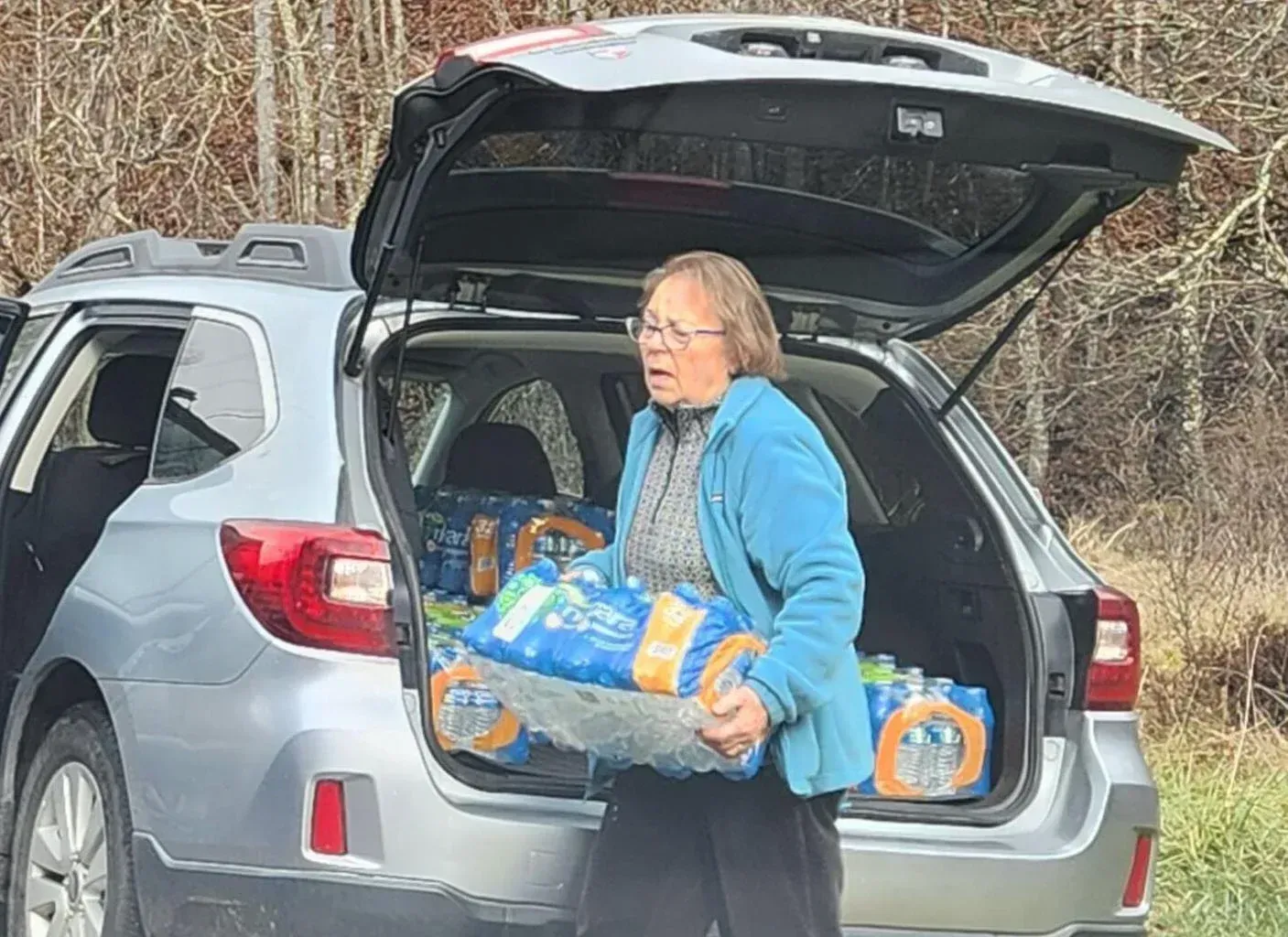
Stepp, 76, knows this because they rely on bottled water donated by local churches and distributed from Boyd’s Chapel United Methodist Church in her McDowell County community of Anawalt, powered by volunteering from her and other women in their 70s.

As a nonprofit journalism organization, we depend on your support to fund more than 170 reporting projects every year on critical global and local issues. Donate any amount today to become a Pulitzer Center Champion and receive exclusive benefits!
Their bottled water distribution gatherings, usually twice a month, operate on 50 cases a month and draw from donations from Trinity United Methodist Church and Bland Street United Methodist Church in Bluefield. They’re critical events for McDowell County residents living in some of the nation’s poorest communities who spend extra money and time taking their laundry across mountainous terrain to keep their clothes from getting discolored.
But Stepp’s husband, Jerry Stepp, 75, laments that she and the roughly half-dozen volunteers that power the volunteer effort have struggled to get younger residents on board to help. Betty Stepp is recovering from a sprained ankle while another volunteer waits on a knee replacement.
“They're not young women who can get out here and lift a case of 40 bottles of water at one time,” Jerry Stepp said. “They have to break them down to where they can handle them. So that's additional work.”
Jerry Stepp has his hands full with his own water work as president of the McDowell County Public Service District board. He has served on the board since 1998, helping lead the organization created eight years earlier to provide sanitary water services to all unincorporated communities within the county, whose percentage of people in poverty in 2023 — 36.2% — was the state’s highest and more than triple the national rate.
The McDowell County Public Service District has had no funding for what Jerry Stepp estimated would be a $7 million expense to cover just the first phase of an upgrade for Anawalt that would include a new water tank and benefit at least 200 to 250 people.
“The biggest problem here in Anawalt is the material that was used when the water was put in,” he said. “It's old, old pipe. It's not of good quality. For health reasons, you're probably better off not to drink the water. That’s all I’m going to say.”
Residents of McDowell County and neighboring Wyoming County report foul-smelling, discolored water that often stains their clothes, sinks, toilets and tubs red or orange, with concerns driving some locals to turn to roadside springs that may offer better water aesthetics but are bacteriologically compromised. The water quality concerns span all area water sources, from rusting, unregulated private wells to tap water supplied by outdated infrastructure for those who don’t frequent roadside springs.
“We need these pipes replaced as soon as possible,” Jerry Stepp said.
W.Va.'s poor drinking water violation rates
In 2024, West Virginia had the nation’s highest percentage of public water systems with health-based Safe Drinking Water Act violations — 29.2%, according to a Gazette-Mail analysis of U.S. Environmental Protection Agency data.
West Virginia’s percentage of public water systems with any kind of violations has climbed sharply from 32.1% in 2015 to 79.1% in 2024.
West Virginia had the nation’s sixth-highest percentage of public water systems with acute health-based violations in 2024 — 2.1% (18 systems total) — over seven times more than the percentages in neighboring Maryland and Ohio and more than double that of fellow neighbor Kentucky.
Health-based violations represent the exceedance of maximum contaminant or residual disinfectant levels. Acute health-based violations represent significant short-term health risks that can cause immediate illness.
West Virginia’s 2024 percentage of public water systems identified as “priority systems” — systems on an EPA enforcement priority list due to having unresolved serious, multiple or continuing violations — was 50.7%, a nearly tenfold percentage-point rise from its 2015 total of 5.3%.
West Virginia’s percentage was more than 13 times the national percentage of 3.8%.
Just 11.6% of West Virginia public water systems were returned to compliance in 2024, less than half the U.S. total of 26.4%.
Than Hitt, senior scientist for the West Virginia Rivers Coalition, a water conservation and restoration advocacy nonprofit, observed that bacterial contamination is the primary cause of municipal drinking water violations in the state due to broken septic systems and poor waste management.
“This is not a new problem,” Hitt said, “but rather it stems from a legacy of underinvestment in water infrastructure.”
Hitt noted that local jurisdictions often lack the capacity to apply for funding through the West Virginia Water Development Authority, a state revenue bond bank that provides financing for building water and wastewater facilities to local governments, or other sources.
Meanwhile, water utilities keep providing whatever supply they’ve got.
“[Y]ou can't just shut it down,” said Leigh-Ann Krometis, an associate professor and public health researcher at Virginia Tech who has studied central Appalachian water access and quality extensively. “[I]f a water utility is cited as having persistent problems, there’s not a lot we can do about it other than provide technical assistance.
The West Virginia Department of Health said in an emailed response provided by Department of Environmental Protection Chief Communications Officer Terry Fletcher that the DOH attributes the state’s comparatively high violation rate to “increased oversight at the state and federal level along with small and disadvantaged public water systems that lack financial resources, have aging or failing infrastructure, lack of system maintenance and overall lack of technical, managerial, and financial capacity.”
The DOH said it lacks water quality data that support a decline in water quality across the state over recent years, despite the EPA data suggesting just that.
EPA Media and Public Affairs Specialist Kelly Offner deferred comment on West Virginia’s public water system violation rates to the DOH.
Betty Stepp says local water quality has gotten worse in private wells in addition to public systems in recent years, something she attributes to mountaintop removal coal mining and gas well drilling.
“Their water is, really, lord knows what‘s in it,” Jerry Stepp said of discolored water in nearby wells. ”It’s due to the mining and it’s due to the gas wells. When they go down into the earth and frack all of these gas wells, they distribute everything into your water systems.”
The Rev. Caitlin Ware, codirector of From Below: Rising Together for Coalfield Justice, a coalfield social justice initiative of the West Virginia Faith Collective that has advocated for greater water infrastructure investment in southern West Virginia, noted that floods damage water lines and can contaminate them.
That’s a problem, Ware noted, in communities like those throughout the southern coalfields that already didn't have the money to fix lines. Many of those communities lie vulnerable in flood-prone topographies, dotting the state’s narrow valleys and steep slopes.
West Virginia residents who live in some of the nation’s poorest counties who are responsible for their connections between their home and main water lines can ill afford upgrades for their own aging pipes, Ware noted.
Residents frequently oppose rate increases that water utilities need for infrastructure upgrades for the same reason.
The upshot is that affordable water is clean out of reach.
“[T]hey simply can't afford to pay high rates for black tap water they can't use,” Ware said.
Area water testing results have shown levels of iron, manganese and aluminum well above reporting limits.
The EPA has assigned iron, manganese and aluminum secondary maximum contaminant levels — guidelines to help public water systems manage drinking water for aesthetic considerations, like taste, color and odor.
But although contaminants aren’t thought to pose a human health risk at the secondary maximum contaminant level, according to the EPA, their presence throughout southern West Virginia and other Mountain State communities makes for water that Krometis wouldn’t call potable.
“No one would drink that,” Krometis said.
Limited data on private wells relied on by thousands in W.Va.
West Virginia’s drinking water quality problem likely is worse than its public system figures show because they don’t account for the quality of private wells and roadside springs that thousands of West Virginians rely on for their water.
A 2023 DEP report to then-Gov. Jim Justice estimated that roughly 250,000 West Virginians are served by well, spring or cistern water.
Hitt noted that prior surveys in the Eastern Panhandle of West Virginia have detected high PFAS concentrations in groundwater and that private wells are common in the growing region, where he indicated greater study could help show whether regional groundwater contamination also impacts private well water.
Hitt also observed a dearth of surveys to evaluate groundwater quality or private wells in central West Virginia.
The DOH said it has “very limited” data on PFAS concentrations in groundwater sources. The DOH and DEP lack regulatory authority over private wells, although the latter may investigate and act if there is evidence that a private well may be affected by a site or activity regulated under a DEP permit.
There is no statute requiring the DEP or DOH to conduct routine monitoring or data collection at private wells, Fletcher noted.
“We've only recently begun to test for PFAS in municipal systems,” Hitt said, “and so there is clearly more work to do here, especially for private wells.”
Spring water likely harmful, but 'at least it's not black'
Krometis’ work has relied on roadside spring sampling. She says samples throughout southern West Virginia, Kentucky, Maryland, Tennessee and Virginia commonly show E. coli, a contaminant, like many coliform bacteria, that comes from human and animal fecal waste and is used to indicate whether other potentially harmful bacteria could be present.
Multiyear monitoring of roadside springs throughout Pennsylvania published this year by Penn State Extension, a government-funded, science-based education service, found that roadside springs are a popular source of drinking water used regularly by more than 10% of Pennsylvania’s population — and that nearly all roadside springs fail health-based drinking water standards during each monitoring period.
Many contain E. coli bacteria, with some containing pathogenic parasites and other contaminants that pose human health risks, the study found.
A 2020 study by Virginia Tech researchers found 82.6% of survey participants in McDowell County, Martin County, Kentucky and Craig and Floyd counties in Virginia didn’t trust their home tap water due to aesthetic issues.
A 2019 study by Krometis and other Virginia Tech researchers monitored water quality at 21 central Appalachian springs. Over 80% of spring samples were positive for E. coli, indicating possible risk of exposure to waterborne pathogens.
The DOH doesn’t regulate roadside springs or have any water quality data on such springs.
“For some residents, these springs are a lifeline when little cash flows into their public systems or their pockets,” Ware said, observing that residents pull up to fill jugs throughout the day at a spring off U.S. 119 near the border of Logan and Mingo counties and another off U.S. 52 near the tiny McDowell County community of Maybeury.
Diannia Vider of Indian Grave Branch Road in McDowell County told the Gazette-Mail last year that water quality has been getting worse in her area as rust accumulates, reporting going to a spout near Maybeury some 10 miles away and filling water jugs three or four times a year.
“[R]esidents trust them more knowing it’s at least not black,” Ware said of roadside springs and the water they provide, adding that some residents even fill and deliver to older ones who can't make the trips.
Water systems decline after coal busts
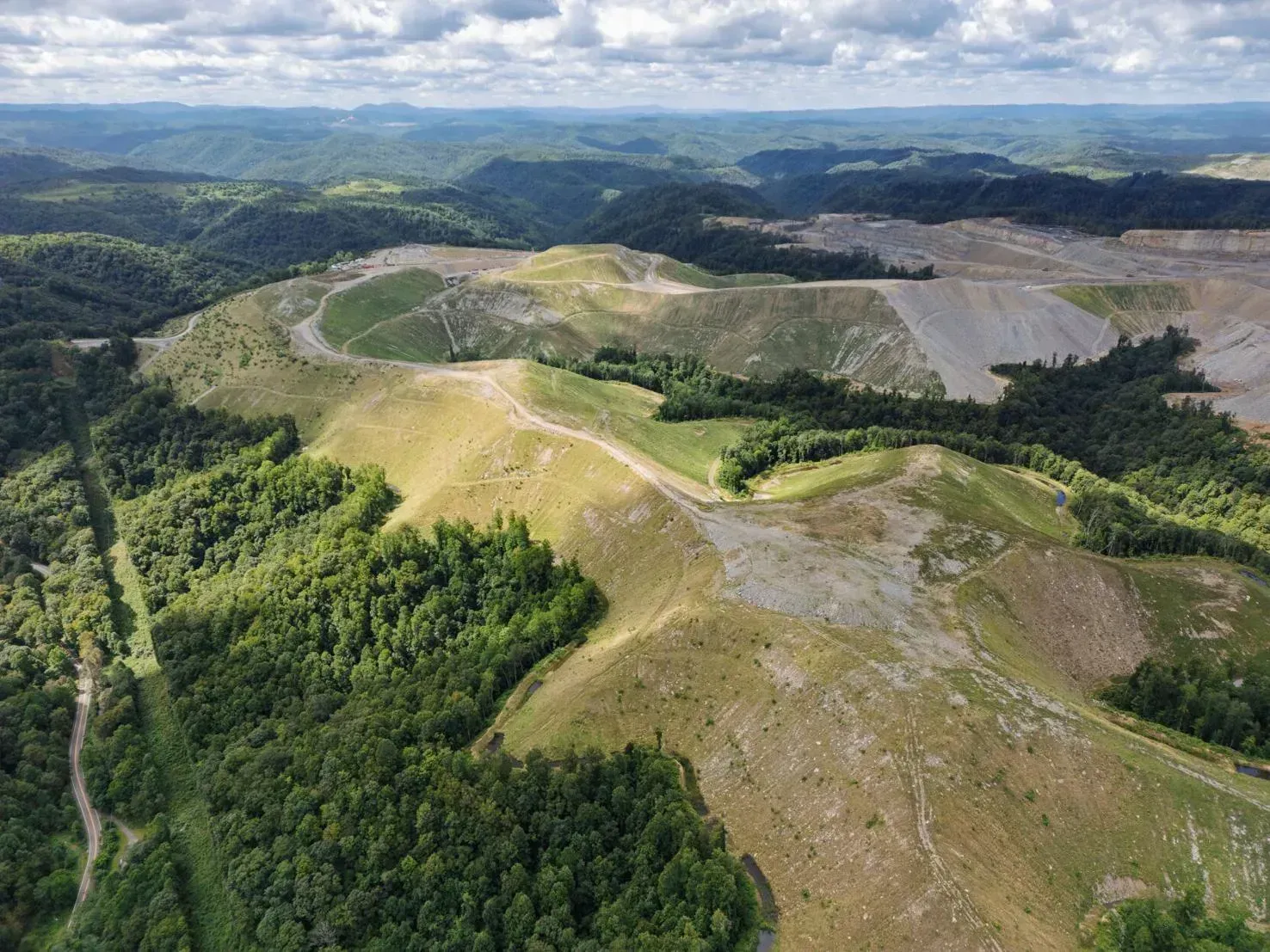
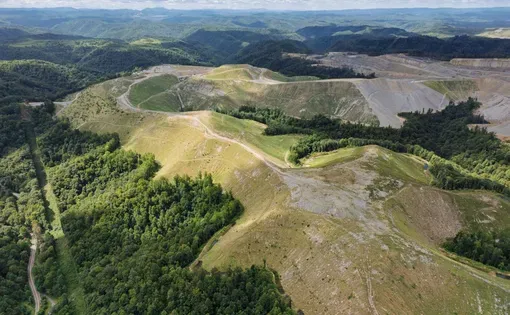
Krometis acknowledged that “totally denud[ing]” a mountain, as has happened with mountaintop removal mining in West Virginia’s southern coalfields, results in “more sediment, more minerals and stuff in your water.”
But Krometis referenced a peer-reviewed 2022 study she coauthored that found that increases in surface mining land use and high-density development decreased water quality monitoring and reporting violations, which the authors said could reflect economic development effects.
Krometis alluded to coal companies having set up their own water systems before they failed.
“Then when the coal was gone and the company was gone, so was all the funding for that water and wastewater system, and they were just left to fail,” Krometis said. “[T]hat boom-bust economy cycle is not helpful for long-term infrastructure integrity.”
Ware pointed to the City of Gary in McDowell County, whose municipal water system into which the West Virginia Public Service Commission opened an investigation in August after its staff reported the city was dealing with contaminated water that was discolored, had greasy film and ruined clothes, with high levels of iron, manganese, alkaline metals and other contamination sources.
U.S. Steel was Gary’s main employer for most of the 20th century until it wound down operations in the 1980s after having installed public infrastructure for the city, including construction of its 400-customer sewer system 60 years ago, according to the PSC.
“Many of these coal communities were burdened with outdated systems they simply don't have the income to operate and maintain,” Ware said, “which in turn causes more people to leave.”
Waiting to be able to trust
Another corrosive effect of that vicious cycle is a dearth of trust among those who stay — not only in their water but in government forces unable to provide water they can count on.
In their 2022 book “The Profits of Distrust: Citizen-Consumers, Drinking Water, and the Crisis of Confidence in American Government,” public policy researchers Manuel Teodoro, Samantha Zuhlke and David Switzer focus on that vicious cycle.
Tap water failure, the researchers noted, can reduce trust in utilities and government, increasing commercial water consumption and reducing citizen political participation. Incentives and resources for water utility performance are thus also reduced, increasing the risk for more tap water failure.
“Perceptions of tap water quality, therefore, are a function of people’s trust in government,” the authors wrote. “To trust tap water is to trust the government.”
DOH records list 3,766 boil water notices issued statewide from Nov. 26, 2024, through Tuesday — an average of 10.3 per day.
Using water, Krometis said, is “an act of faith in government.”
“It's just very challenging once people lose trust in their water,” Krometis said.
That challenge looms large for the Stepps, where one spouse serves water to the public through bottles and the other through their utility system.
Betty Stepp said their home has been under a boil-water advisory so often that she doesn’t trust their tap water.
At 76, she admits she’s running out of time for the McDowell Public Service District to secure the funding and install the infrastructure that could rebuild that trust.
“How long do you wait?” she said, lingering on the question. “How long do you wait?”







