Story
 December 9, 2024
‘Teka Teka’ Podcast: What AI Means for Filipino BPO Workers
Country:


Project
The Philippines and the AI Boom
How AI intersects with the systems of disadvantage and discrimination in the Philippines.
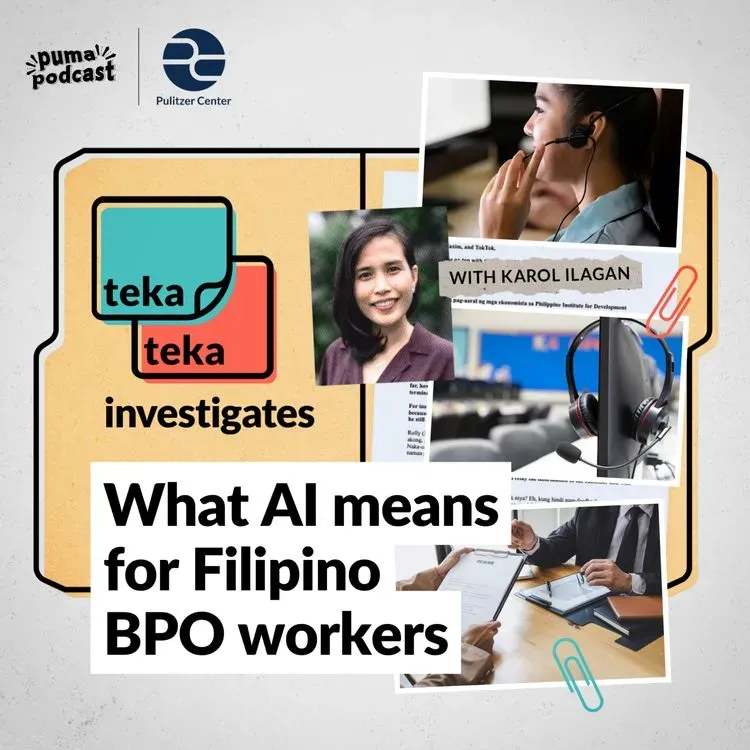
The Philippines, a leading global destination for business process outsourcing (BPO), generates around $30 billion annually from the industry. Despite challenges like expensive and slow internet, factors like high English proficiency, cheap labor costs, and government tax incentives help maintain its competitiveness worldwide. However, the rise of artificial intelligence or AI is projected to reduce agent labor costs globally, posing challenges to the workforce.
This development highlights the need for BPO workers to upskill and for call centers to offer more complex services. While AI is seen to displace some jobs, could it also present opportunities for job creation and worker advancement?
To explore these dynamics and their impact on Filipino BPO workers, we spoke with Renso Bajala of the BPO Industry Employment Network (BIEN) to learn what it’s really like at the workplace. We learn that all these predictions are so much more complicated than they seem. BPO workers experience the impact of AI systems from recruitment to assessing their job performance. Bajala also talks about how the so-called “upskilling” or “re-skilling” plans must start beyond the BPO sector.