Story
 April 11, 2026
‘I’m Blistering’: Water Struggles Intensify for West Virginians As Takeovers Loom
Country:


In West Virginia, water is a devastating stumbling block.
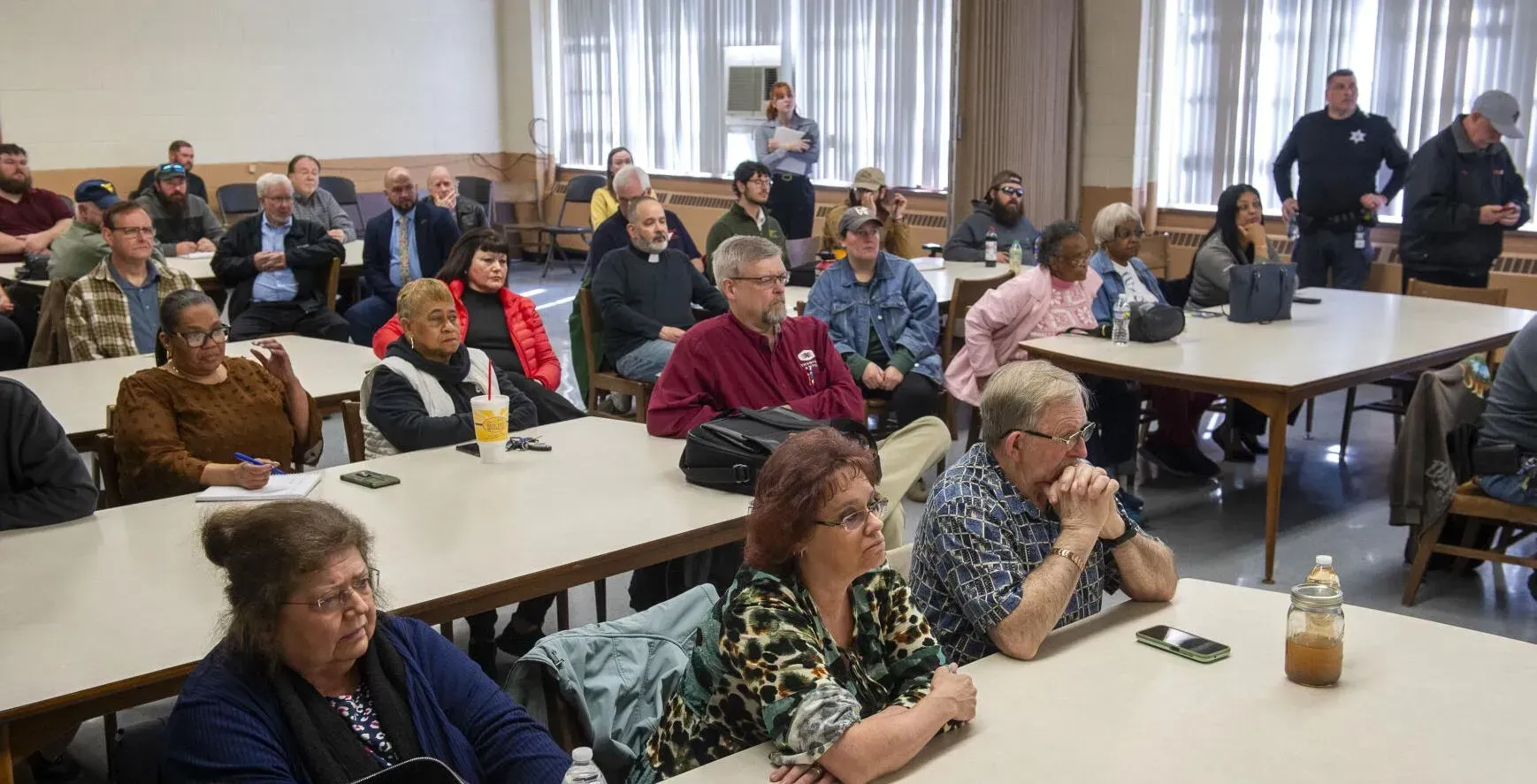
"Well, I would like to have decent water."
So opened the first comment at a West Virginia Public Service Commission hearing at the McDowell Armory in the McDowell County seat of Welch last month to get public input on the status of the nearby city of Gary’s troubled water system.
The March 19 hearing came eight months after the PSC opened an investigation into Gary’s system, prompted by longstanding water quality concerns and high levels of water loss that have left city customers on the hook to pay for water too discolored and odorous for them to consider consuming — if it makes it to their taps at all.

As a nonprofit journalism organization, we depend on your support to fund more than 170 reporting projects every year on critical global and local issues. Donate any amount today to become a Pulitzer Center Champion and receive exclusive benefits!
The opening comment came from Rhonda Finley of Gary, who lamented paying for water not sufficient for cooking or bathing but dark and dangerous enough to leave her without any white laundry.
With a blistered body to hide inside tarnished clothes.
“It's not sanitary for nothing,” Finley said. “I bathe, I'm blistering from head to toe.”
April Muncy, once of Gary, said her mother still living in the town of fewer than 850 people has to buy water for brushing her teeth and for her dog’s drinking water.
“She had a dog that died from the water. And this here is a picture of what her water looked like,” Muncy said, showing what she described as water supply that “looks like coal dirt, like coffee.”
Muncy said she brings her mother water in jugs from Anawalt, a McDowell County community more than 10 miles away that has been struggling separately to secure funding for what’s been estimated to be a $7 million first phase of an upgrade to its own outdated infrastructure that would include a new tank.
“I also take her white clothes home and wash them,” Muncy said.
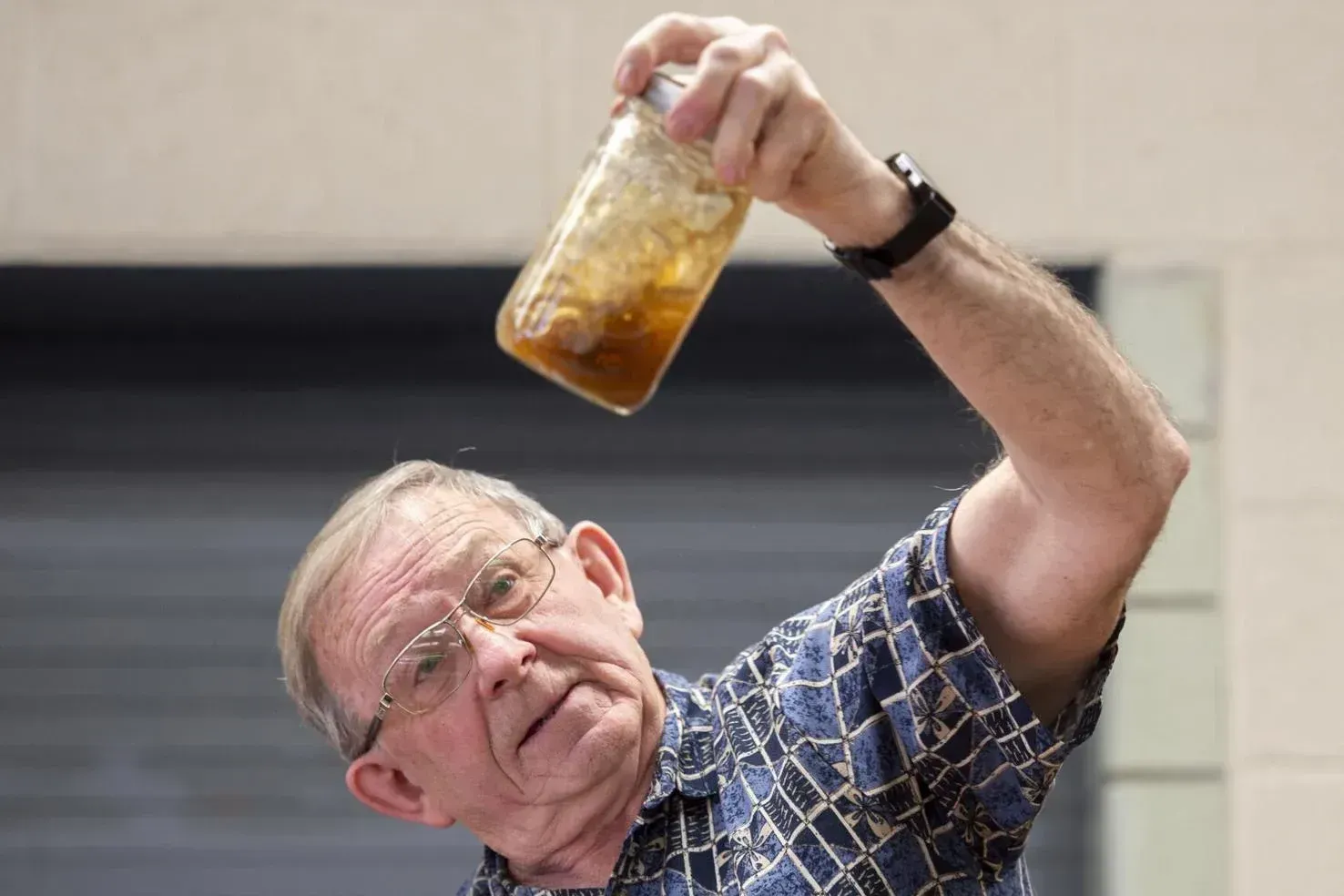
So did Steve Brock, who brought water from home he called “murky, muddy” and reported having to buy new, $150-$175 filters every four months because they get so clogged up from fine particles that water won’t drain through.
“We need help from the federal government and the state,” Brock said. “And it should have been done yesterday, not today. And we've been here just four years, and I haven't seen any change.”
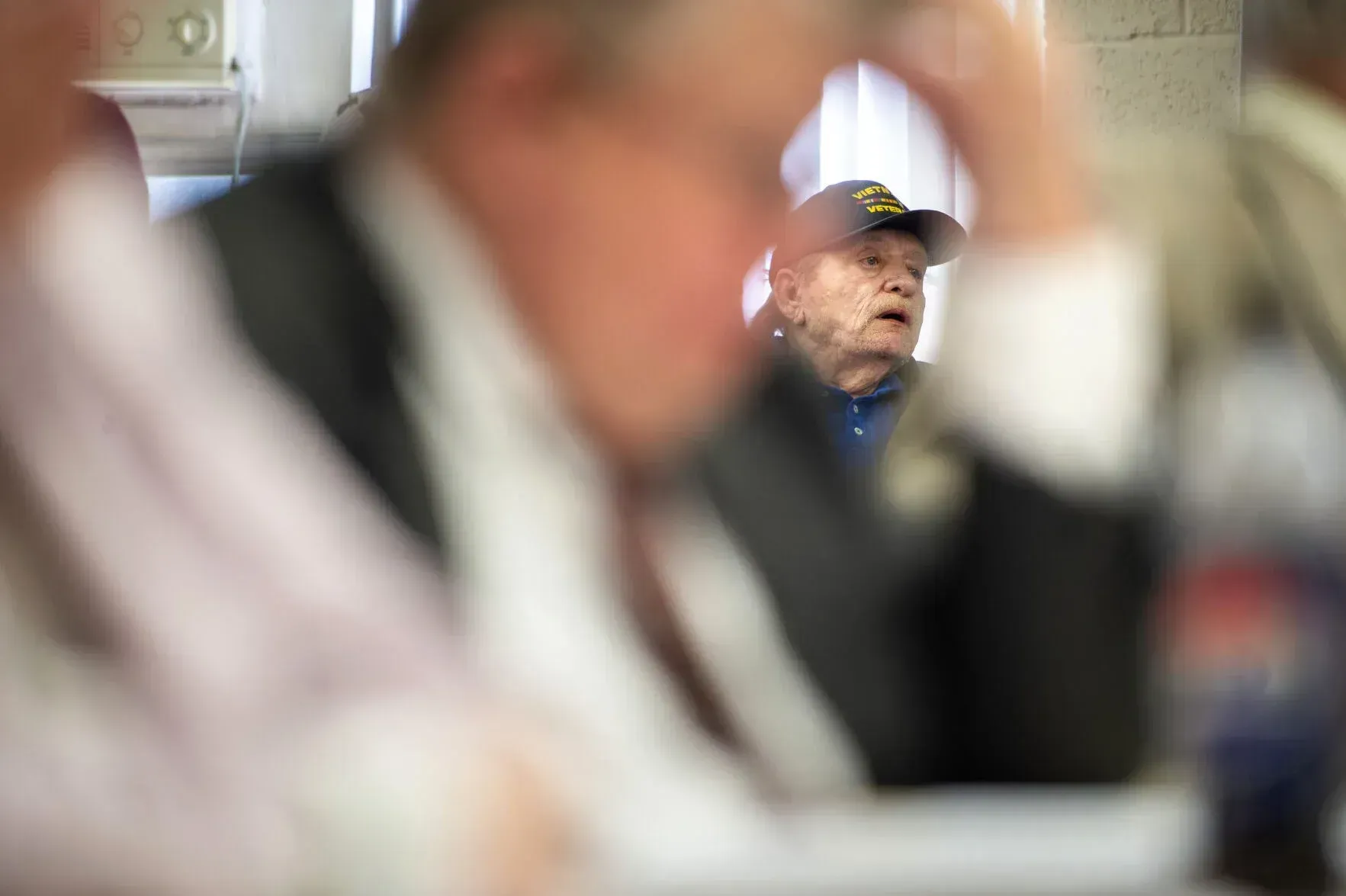
Lifelong Gary resident Jeffrey Walker, 74, said the community’s water didn’t get this bad until four or five years ago when a Chinese company started using area water for mining.
“I haven't had [any] — knock on wood — cancer or anything from drinking the water years ago, but now you can't even bathe in it,” Walker said.
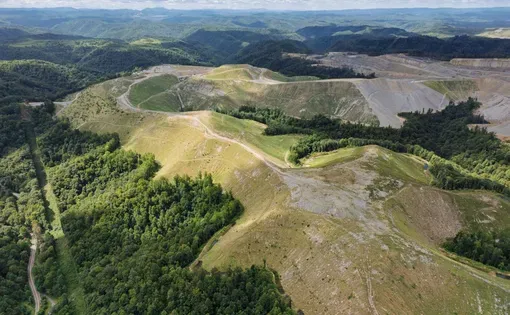
Area residents and advocates have identified the company as metallurgical coal provider Taishan Resources LLC of nearby Wilcoe, which a West Virginia Department of Environmental Protection spokesperson indicated to the Gazette-Mail has a well sourced from the same abandoned Gary No. 10 Mine as Gary’s city well. The close proximity has fueled concerns of mining-impacted water supply — especially after a PSC staff witness testified at the agency’s March 19 stop in Welch that coal refuse has permeated the city’s well house building situated on area covered by an active DEP surface mining permit.
McDowell County Commissioner Cecil Patterson, listed by Taishan Resources on its website as the company’s vice president of safety and mining operations, did not respond to requests for comment. Taishan Resources lists its parent company as China-based Shandong Weijiao Group International Trade Co., Ltd.
What followed Walker’s words to the PSC was an evidentiary hearing on Gary’s water plight that highlights common threads behind West Virginia in 2024 having the highest percentage of public water systems with health-based federal Safe Drinking Water Act violations — 29.2% — according to a Gazette-Mail analysis of U.S. Environmental Protection Agency data.
Gary’s case underscores the PSC’s and some local leaders’ push for greater coordination between and consolidation of water service providers struggling with aging infrastructure and dwindling customer bases in vulnerable places like McDowell County, whose percentage of people in poverty in 2023, 36.2%, was the state’s highest and more than triple the national rate.
The case also underscores the Legislature’s failure in its latest annual regular legislative session that ended last month to controversially empower the PSC to force mergers between public service districts.
“Water's always been bad in Gary,” Muncy said, “but it's worse now than it's ever been.”
'They need help'
PSC staff witness Brandon Crace, a technical analyst associate with the PSC Engineering Division, noted the staff’s August 2025 finding that Gary’s water system meets the classification of a distressed utility under state law and recommendation that the McDowell County Public Service District should be declared as “the capable, proximate utility” to acquire, operate and maintain the Gary water system.
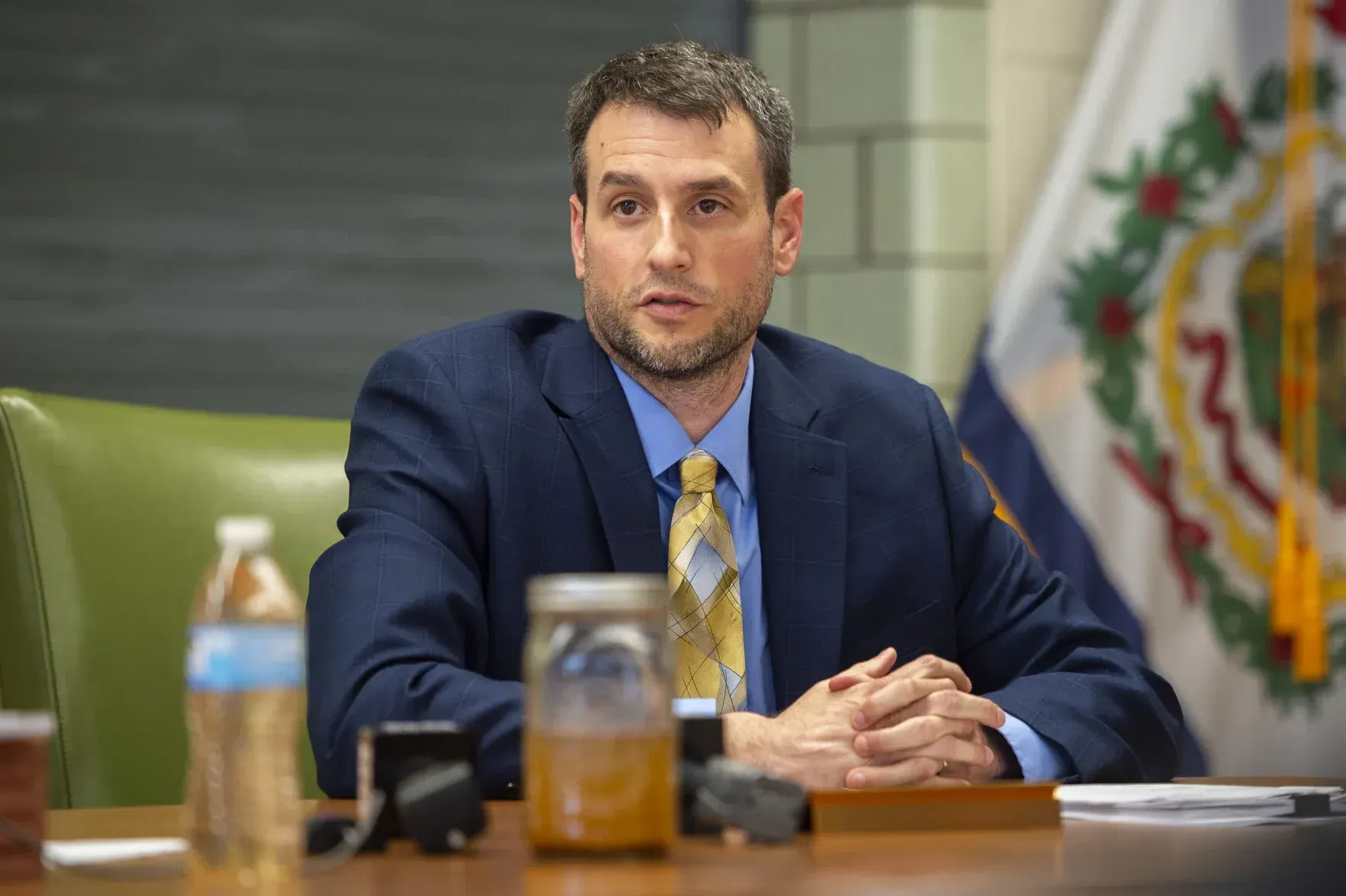
PSC staff also had recommended Gary evaluate and potentially construct a new water source with better water quality than the well it has been using, complete a water loss study and evaluate available backup equipment, including pumps, meters and piping.
Crace cited water samples collected and violations issued by other agencies.
West Virginia Department of Health records show 54 drinking water violations determined for the City of Gary since February for a 2023-25 reporting period, nearly all of them for unresolved failures to monitor a wide range of analytes — including human carcinogens like benzene and vinyl chloride.
Crace alluded at the Welch hearing to a PSC staff finding that Gary has lost between 91% and 94% of its water pumped each year from 2021 through 2024 — amounting to an estimated loss of approximately 720 million gallons of water.
PSC staff in a February 2026 filing noted an absence of operational and calibrated flow monitoring equipment resulting in “questionable recordings and measurements.”
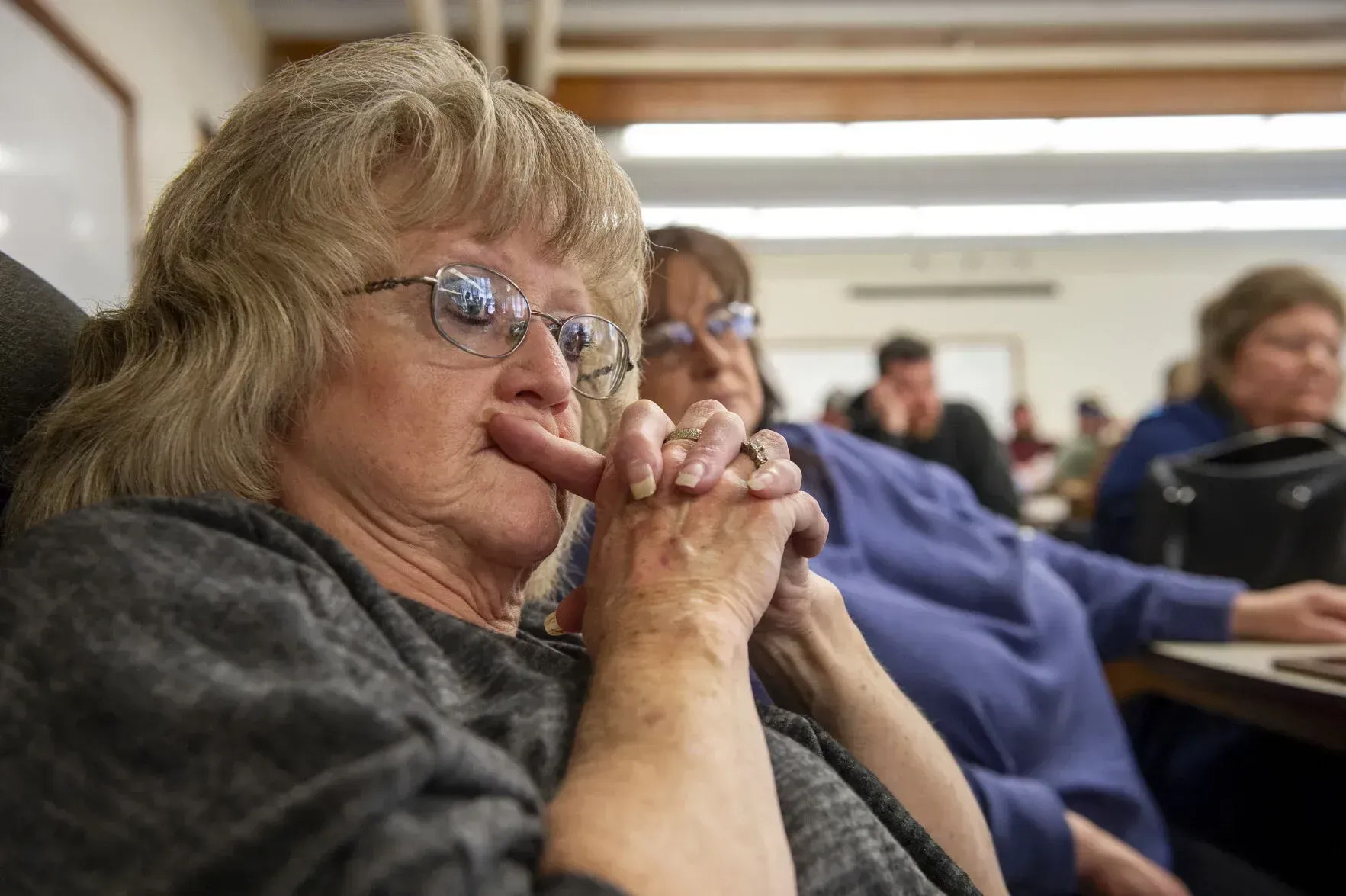
Echoing the public comments of Gary residents and water quality advocates that preceded his testimony decrying sediment in the water supply, Crace observed that there had been 2 to 4 inches of coal refuse on the floor of the well house and a similar black sediment mixed in with water on the floor of the water treatment plant, near raw water lines.
“So somehow a similar type of material is getting to the water plant,” Crace said.
Crace called an operations and maintenance agreement proposed jointly by the City of Gary and McDowell County Public Service District on March 13 — not yet approved by the PSC — “a good step forward.”
The city has consented in the agreement to transfer ownership of the city water system to the district contingent upon the agreement’s approval.
The parties ask in their proposal for the PSC to dismiss the case for investigating whether the city is a distressed utility under state law, saying dismissal would “remove a cloud over public financing of the anticipated Project.”
But Gary Mayor Robert Little told the Gazette-Mail Wednesday that he wasn’t satisfied with the proposed agreement, disagreeing with Crace’s conclusion in Welch last month that the McDowell County Public Service District was better equipped to take over Gary’s water system due to its experience adjusting to operate other troubled water systems.
“They’ve got no more experience than we’ve got,” Little said in a phone interview.
Little previously told the Gazette-Mail he feared the city giving up its water operations would help lead it to losing its municipal charter.
Gary had objected to the case prior to last month’s agreement proposal, moving to dismiss the case outright in December, citing a “technically feasible, funding imminent, project to completely overhaul and replace its water system” in a Dec. 1 filing.
Little said Wednesday city engineering contractors had identified three new supply sources that could be pursued under grant support the city has been pursuing for but has been held up by the PSC’s investigation.
But PSC staff found that although Gary requested a design loan, no supporting information had been filed with the West Virginia Infrastructure & Jobs Development Council in advance of what would be the first phase of a roughly $7.9 million project to construct access for a new raw water source at an area mine, consider an alternative for another new raw water source at another area mine, and enter into an agreement for an emergency interconnection with the McDowell County Public Service District.
The Infrastructure & Jobs Development Council was enacted in 1994 to be the state’s funding clearinghouse for water and wastewater infrastructure projects.
But PSC staff found no evidence of funding commitments available through the council website for the first phase and that the proposed infrastructure upgrades don’t address the water system's source of supply, aged water storage tanks and booster stations, or inadequacies within the water treatment plant.
Gary’s request to the council for a $20,000 preapplication funding assistance grant to prepare a preliminary application was filed in September 2020, according to PSC staff — underlining how long projects can take from conception just to secured funding, let alone construction or completion.
“They need help from the federal government,” Brock said of Gary city officials. “There's not enough money in McDowell County to get this done.”
'[T]he situation now has become dire'
Like the city of Gary, the Kanawha Falls Public Service District adamantly has opposed PSC momentum toward having it consolidated with another entity.
In November 2025, West Virginia American Water and the Fayette County Commission jointly sought PSC approval for the investor-owned company to acquire for $13 million the wastewater utility assets of Armstrong Public Service District, the water and wastewater assets of Kanawha Falls Public Service District and the wastewater assets of Page-Kincaid Public Service District after their respective dissolutions by the county commission. The moves would cover over 3,500 customers.
The two applicants cited “considerable cost and expense to continue operating … and to make the upgrades and replacements necessary to provide reliable service” in their filing, as well as a 2023 determination that the Kanawha Falls PSD was a distressed utility.
In February, the PSC approved an emergency request from West Virginia American Water to approve an interim emergency operations and maintenance agreement between the company and Page-Kincaid PSD after reporting the PSD’s “situation has now become dire.”
West Virginia American Water said Page-Kincaid no longer could make its insurance payments amid “struggles to continue providing adequate and reliable service to its customers,” and that it could not wait until the closing of a transaction pending approval by which the former already was slated to take ownership and control of the latter’s system.
But the Kanawha Falls PSD has objected in the unresolved case to the proposal. In a February filing, the PSD called West Virginia American Water “a habitual base-rate-case filer” that, based on its schedule of seeking a base rate hike every three years, “seems unable (or unwilling) to live within the additional revenue the Commission has consistently granted.”
West Virginia American Water in November estimated average monthly bill increases of 50% and 43% for Kanawha Falls PSD water and wastewater customers 36 months after closing based on use of 2,500 gallons per month and a 5/8-inch meter.
And the PSD contended the company and the county commission lack the legal authority to force a merger.
The Republican-supermajority West Virginia Senate in a unanimous February vote passed legislation in Senate Bill 625 that would have allowed county commissions, with PSC approval, to order the dissolution and sale or merger of a water or sewer public service district system to any other public service district, municipality or privately owned public utility system.
Defended by PSC Chairman Charlotte Lane in state legislative committee meetings, the legislation drew opposition for not requiring that the PSD system eyed for dissolution be declared a distressed or failing utility under state law in Senate Bill 739 of 2020 allowing the PSC to order the acquisition of a utility meeting that definition by what the agency deems the most capable utility.
The PSC has overseen 25 distressed or failing water or wastewater utility cases under SB 739 since 2020, an average of five per year.
West Virginia American Water has loomed large in state utility consolidations.
Roughly $30 million West Virginia American Water’s forecasted $301 million of investment planned through February 2027 is considered new investment for acquisitions, Christina Chard, senior director of rates and regulatory support at American Water Works Service Company, testified in West Virginia American Water’s revenue hike case.
The PSC had determined 30 water and wastewater utilities to be potentially unstable as of Oct. 24, according to a “watch list” of such utilities it prepared as required by state law.
The PSC on Friday scheduled evidentiary and public comment hearings for April 21 on the question of West Virginia American Water acquiring the troubled Lincoln County Public Service District following the parties’ joint request in July for approval of the former to acquire the latter for $12.9 million.
'What this means for the children of West Virginia'
Meanwhile, Gary waits for cleaner water in a purgatory of sediment-laden, clothes-staining water that is nevertheless deemed safe by state authorities.
A DEP spokesperson said Thursday the agency inspected the City of Gary well house in January and again in March and observed no mining-related impacts during either inspection. The spokesperson said in an email there is “not a direct hydrologic connection between surface runoff and the public drinking water supply” sourced from the No. 10 Mine void.
The city meets all required drinking water standards under legally enforceable federal primary standards and treatment techniques that apply to public water systems, a Department of Health spokesperson said Thursday.
Dr. Kate Waldeck of Cabell County, a pediatric critical care doctor, struck a different tone at last month’s Welch hearing, saying that what testing samples showed to be a “high amount of sediment” could dehydrate a baby if mixed with formula.
Waldeck warned there could be adverse side effects from what were found to be high chlorine levels in the water, including skin and gastrointestinal irritation. Waldeck fears that the chlorine is being used to combat high bacteria load.
“I drove a few hours to do it, to ask not just everyone in this room who I think probably understands and is here for good reason,” Waldeck said, “but the larger area of the state to consider what this means for the children of West Virginia.”
“I just think something needs to be done,” Muncy said.
Mike Tony covers energy and the environment. He can be reached at [email protected] or 304-348-1236. Follow @Mike__Tony on X.