Story
 October 30, 2025
Brazilian Lithium Became ‘Carbon Neutral’ With Carbon Credit Project Investigated for Deforestation
Country:


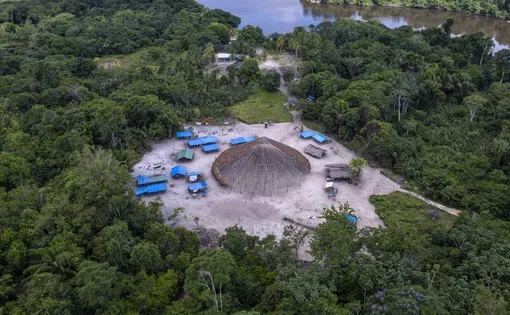
The socio-environmental impacts of the extraction of critical minerals in the Amazon

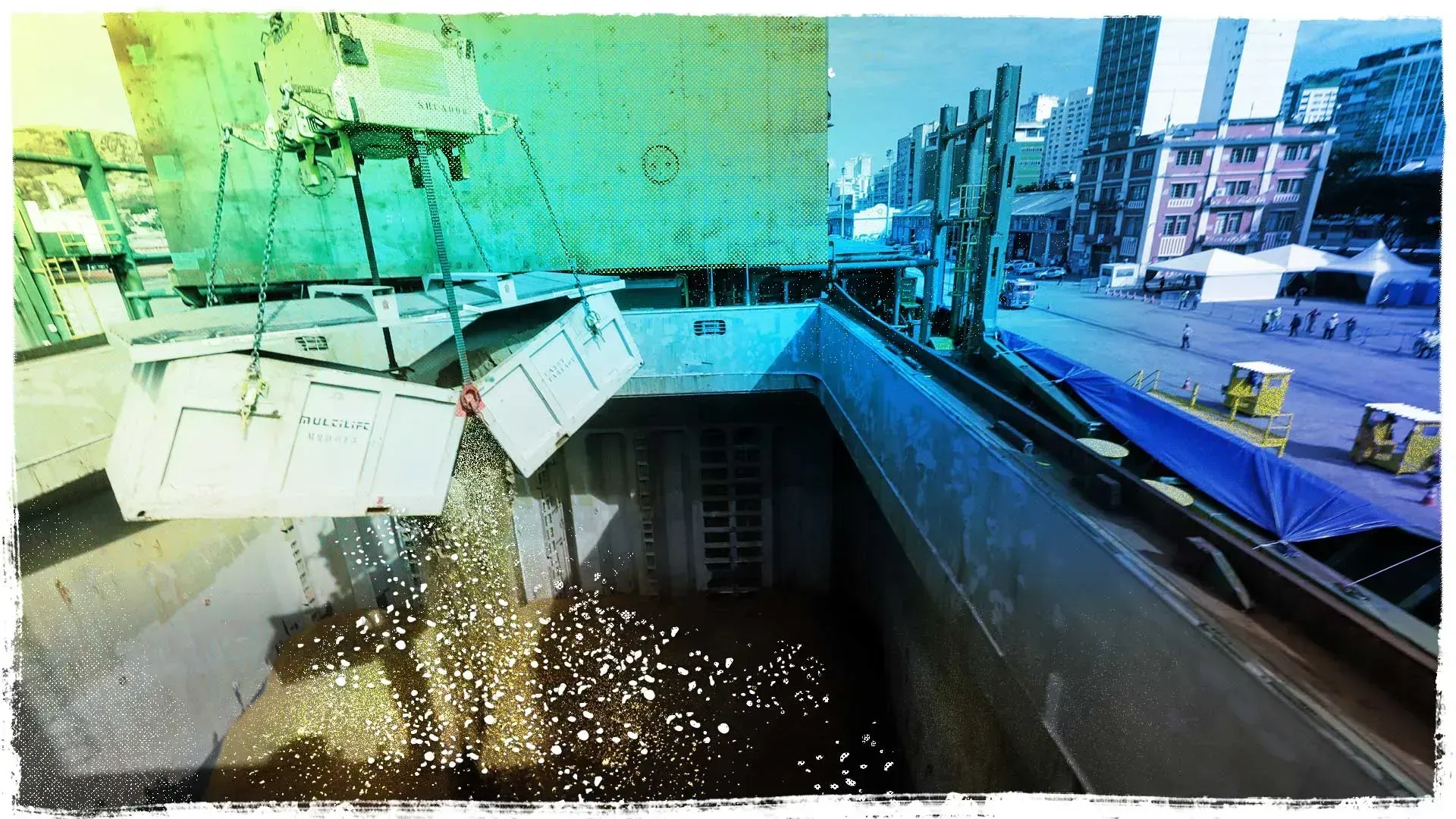
A Canadian mining company promoted green and “quintuple zero” lithium extracted in the Brazilian state of Minas Gerais, but its polluting greenhouse gas emissions were offset with carbon credits from a project suspected of deforestation, misappropriation of public lands, corruption, and other potential crimes in the Brazilian Amazon.
Sigma Lithium often says that its mining model in Brazil is raising the standards of the global lithium business.
The Canadian mining company “is at the forefront of environmental and social sustainability in the electric vehicle battery materials supply chain,” it repeatedly states in its press releases. Sigma named its flagship product, extracted in northern Minas Gerais, first as “Triple Zero Green Lithium” and later as “Quintuple Zero Green Lithium.”
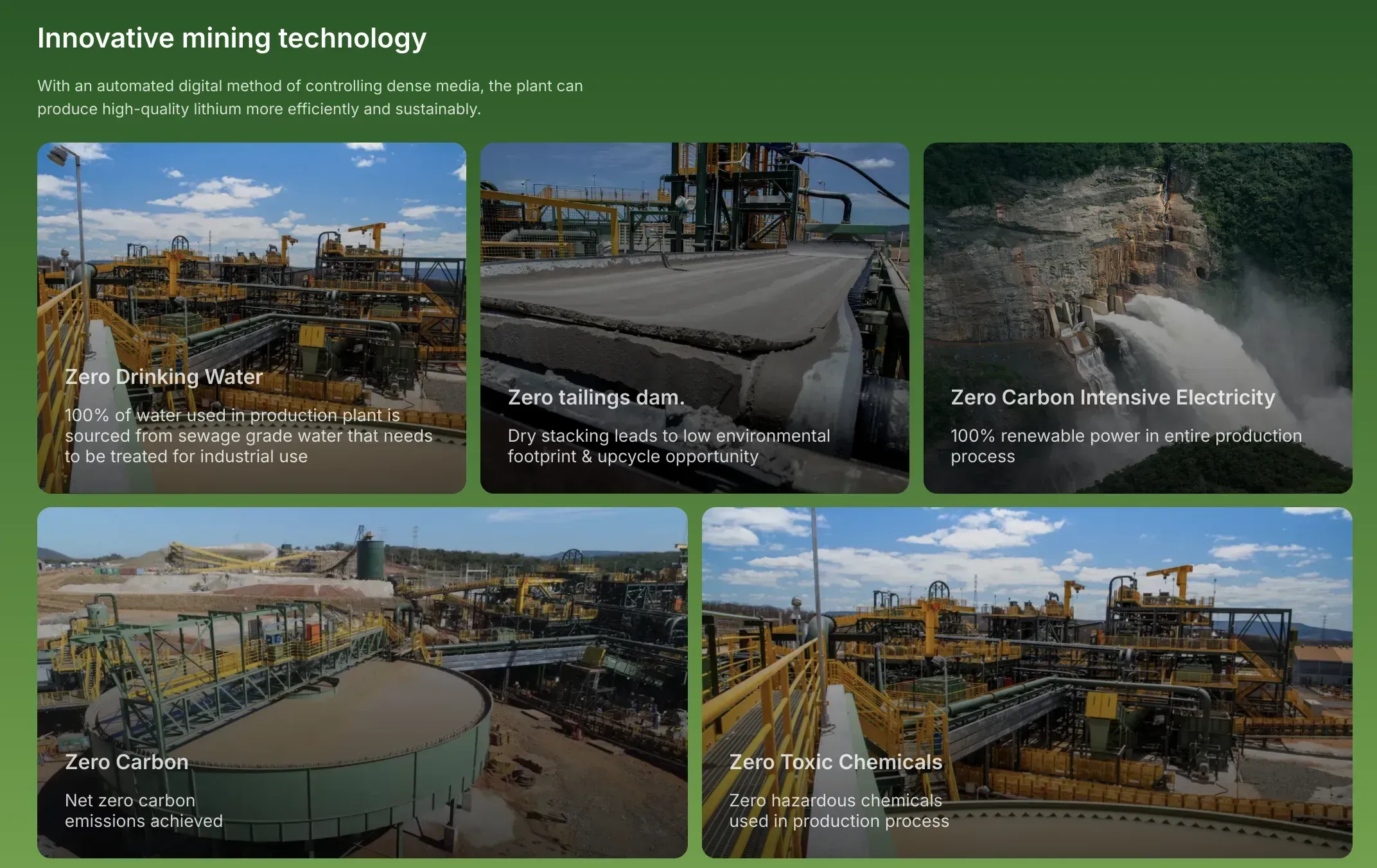
Those multiple “zeros” refer to the technologies that Sigma claims “set a new standard for environmentally sustainable mining” and “paving the way forward for the battery materials sector.” The company says it uses “zero drinking water” (since all its water is treated and recycled wastewater), has “zero tailings dams” (because it eliminates waste by selling or recycling it for road paving), uses “zero carbon-intensive electricity” (as all its power comes from renewable sources), and produces “zero toxic chemicals” (thanks to a process called “dense media separation”). This narrative is central not only to its marketing strategy but also to its business model, which has allowed it to command higher prices in the market.
A fifth “zero” is fundamental to Sigma’s story: the company says its mining operation is “zero carbon” or “net zero emissions.” This means that the amount of greenhouse gases—such as CO2—emitted into the atmosphere equals the amount it has removed. The company claims to have “effectively lowered its carbon footprint with a series of pioneering initiatives,” including carbon offsets.

As a nonprofit journalism organization, we depend on your support to fund more than 170 reporting projects every year on critical global and local issues. Donate any amount today to become a Pulitzer Center Champion and receive exclusive benefits!
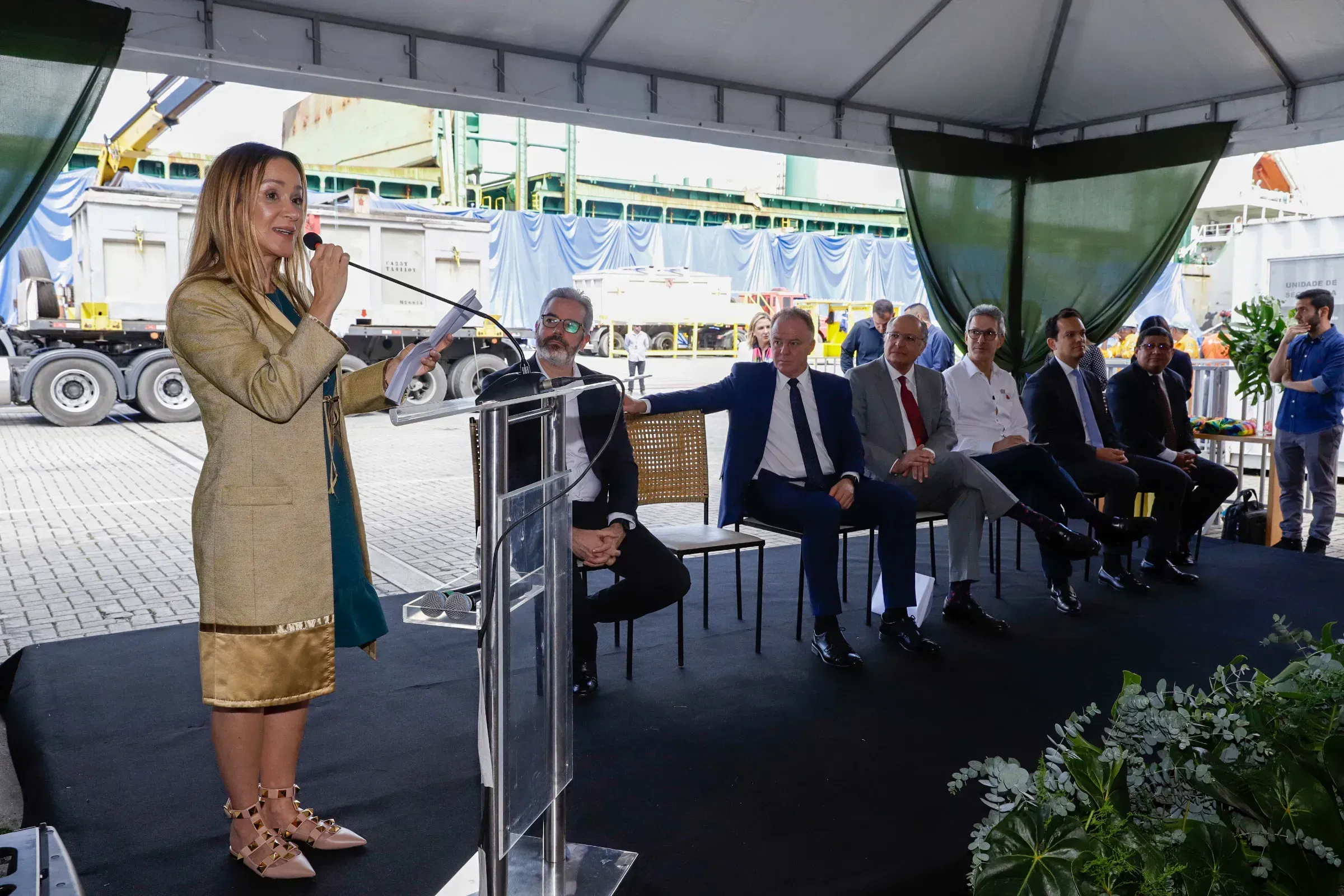
When Sigma Lithium announced its first shipment of 30,000 tons of lithium and by-products to China on July 23, 2023, in the presence of Brazilian Vice President Geraldo Alckmin and Minas Gerais Governor Romeu Zema, it explained that it had reached carbon neutrality for that shipment “offsetting the remaining ‘hard to abate’ carbon emitted during its production process,” both at the mine and the processing plant. It did so by purchasing 59,000 carbon credits from a voluntary carbon market project in the Brazilian Amazon.
However, that same project—which was used to zero out the company’s carbon footprint in its first year of production—has been under scrutiny by Brazilian authorities for more than a year over suspicions of illegal deforestation, misappropriation of public lands, corruption, and other possible crimes, as shown by a journalistic investigation and the June 2024 Federal Police’s “Operation Greenwashing.” Following these revelations, the international certification body that had endorsed the project suspended it. The project remains on hold.
This means that the carbon credits Sigma Lithium used that year may have been of low environmental integrity. As a result, the company’s claim that its first lithium shipment was “net zero” could be in question. Although it used those credits ten months before the allegations linking the project to possible environmental crimes became public, the mining company has not made any public statement in the year since news broke of the criminal investigation, nor has it explained what due diligence it performed before purchasing the credits to ensure their quality. It has also not disclosed whether it replaced those problematic carbon credits with others.
Contacted by this journalistic alliance, Sigma Lithium said it has not used carbon credits since 2024, when it shifted its strategy from purchasing external offsets to reducing emissions from its own operations. “The company reaffirms its commitment to low-impact mining based on technological innovation, health, safety, and socio-environmental responsibility, in line with global decarbonization goals,” it stated, without explaining what prompted the change. Sigma did not respond to questions sent later about what due diligence process it used to assess carbon credit projects, what actions it took after learning of issues with project Unitor, or whether it informed its buyers and shareholders that the “net zero” status of its lithium might have been compromised.
These findings come from a joint investigation by Repórter Brasil and the Centro Latinoamericano de Investigación Periodística (CLIP), as part of the Lithium in Conflict project, which brought together ten media outlets from across the region to explore some of the disputes surrounding the lithium industry in Latin America. The investigation was also supported by the Pulitzer Center’s Rainforest Investigations Network.
Green Lithium in Brazil
Most attention in the lithium market tends to focus on Argentina, Bolivia, and Chile—the so-called “ABC Triangle,” home to the world’s largest reserves.
Brazil—which holds an estimated 1.3 million tons of lithium resources, according to the U.S. Geological Survey’s annual mineral commodities report published in March 2025—is also seeking a foothold in that market. It ranks tenth globally in economically or technically feasible lithium deposits. Unlike its western neighbors, whose lithium lies in brine pools high in the Andes, Brazil’s is found in volcanic rocks known as pegmatites and the prospection boom has even reached the Amazon, as revealed by another Repórter Brasil investigation within this project. (Read the story ‘The ‘Lithium Fever’ spreading toward the Brazilian Amazon is threatening 21 protected areas’.)
One such company is Sigma Lithium Corporation, a Canadian mining firm listed on the Toronto and Nasdaq stock exchanges, which has been operating for a decade in the Jequitinhonha Valley in northeastern Minas Gerais. There, in the municipalities of Itinga and Araçuaí—about 600 kilometers north of Belo Horizonte—Sigma holds its main assets: the Grota do Cirilo mine and the Greentech processing plant.

Since April 2023, Sigma has been extracting and processing lithium there—lithium that is later used to manufacture the batteries powering electric vehicles, a key technology in the global effort to move away from fossil fuels, which still drive much of the world’s transport sector. This same lithium is increasingly being used in batteries that enable large-scale storage of energy generated from renewable sources such as solar and wind power, ensuring that electricity remains available even when the sun isn’t shining or the wind isn’t blowing. Transportation and electricity generation are the two sectors responsible for the highest greenhouse gas emissions on the planet.
In October 2024, the state-run National Bank for Economic and Social Development (BNDES) approved financing worth 486.8 million reais (about USD 89.37 million) for the construction of a new processing unit that Sigma calls its “Second Greentech Carbon Neutral Plant.” The funds come from the New Climate Fund, a financial instrument linked to Brazil’s Ministry of the Environment aimed at mitigating climate change.
Given the central role of its flagship product in the energy transition—and the geopolitical disputes that have led to lithium being designated a “critical mineral”— combined with the growing number of social and environmental conflicts surrounding lithium projects worldwide, it’s perhaps not surprising that Sigma’s public narrative revolves around the technological achievements that allow it to market its lithium as “green” and “quintuple zero.” The company has showcased this narrative at several United Nations climate summits, including Glasgow in 2021, Sharm el-Sheikh in 2022, and Dubai in 2023. It has also been highlighted by Brazilian civil society organizations such as the Arapyaú and Itaúsa institutes, which featured Sigma’s emission-reduction and mining-impact mitigation initiatives in their recent report on private-sector solutions for nature- and climate-based challenges.
“Premium Product with Premium Pricing”
On July 26, 2023, Sigma Lithium proudly announced its inaugural shipment of 15,000 tons of “environmentally sustainable and carbon neutral battery-grade lithium” and another 15,000 tons of by-products from the port of Vitória.
“We were founded with the mission to produce environmentally sustainable lithium with the lowest possible greenhouse gas emissions,” said Sigma’s CEO, Ana Cabral. “With the successful execution of our first shipment, we celebrate the accomplishment of our mission: we were able to reach our net zero target well in advance of our estimated timeframe, and ahead of the overall metals and mining sector.”
That environmentally sustainable and carbon-neutral profile allowed Sigma to sell its lithium at a higher market price—USD 3,500 per ton of lithium and USD 350 per ton of by-products. In the company’s own words, it was a “premium product with premium pricing.”
Its customer was Yahua International Investment and Development Co. Ltd., a Hong Kong–based company that is part of China’s Yahua Group. The group supplies lithium hydroxide to electric vehicle manufacturers such as Tesla—owned by billionaire Elon Musk—and China’s BYD, as well as Contemporary Amperex Technology Co. Limited (CATL), the world’s largest battery producer.
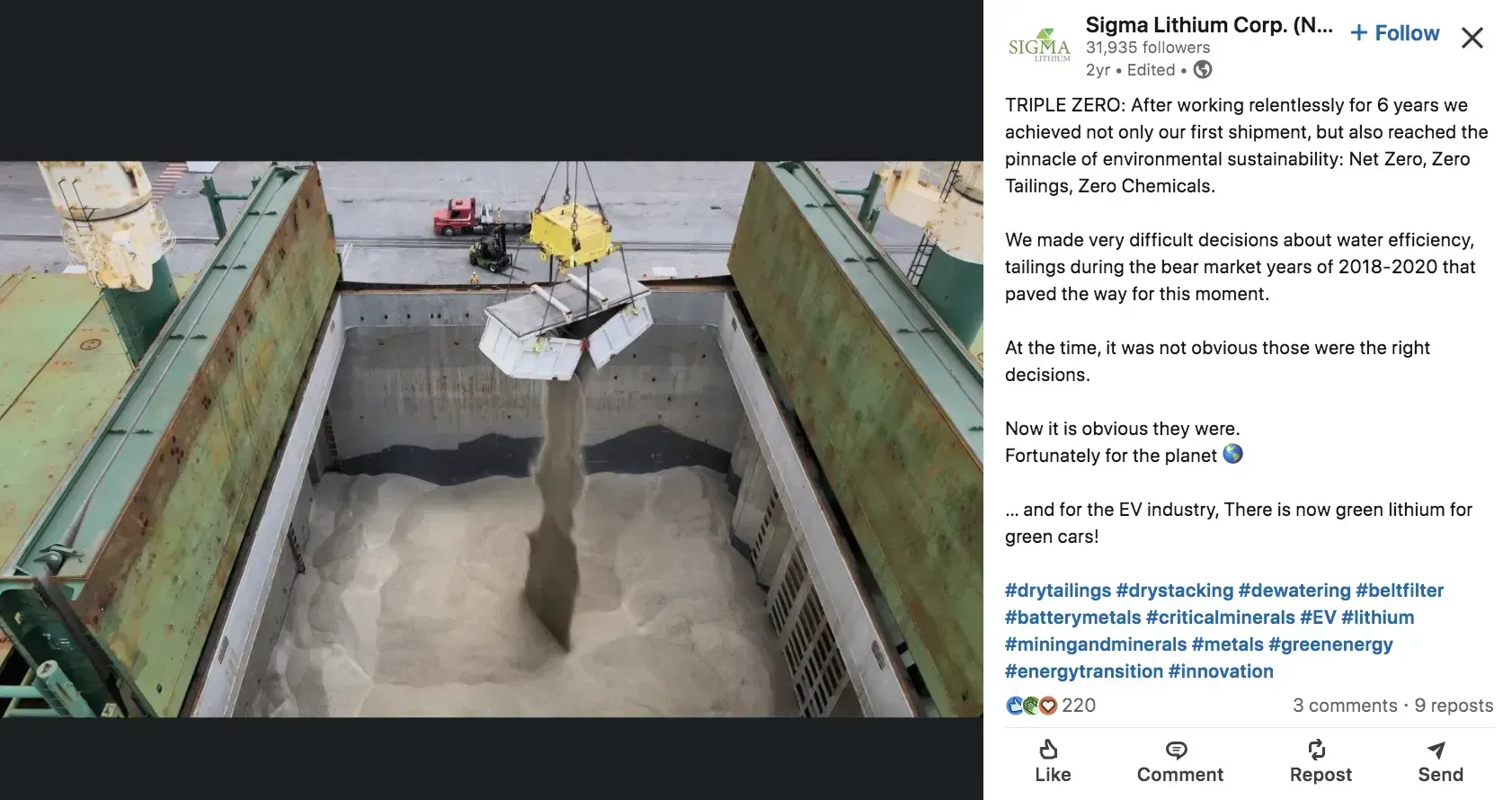
To fulfill its promise of achieving carbon neutrality throughout its lithium production chain, Sigma turned to the voluntary carbon market. It purchased 59,000 carbon credits to offset the same number of tons of CO2 emitted.
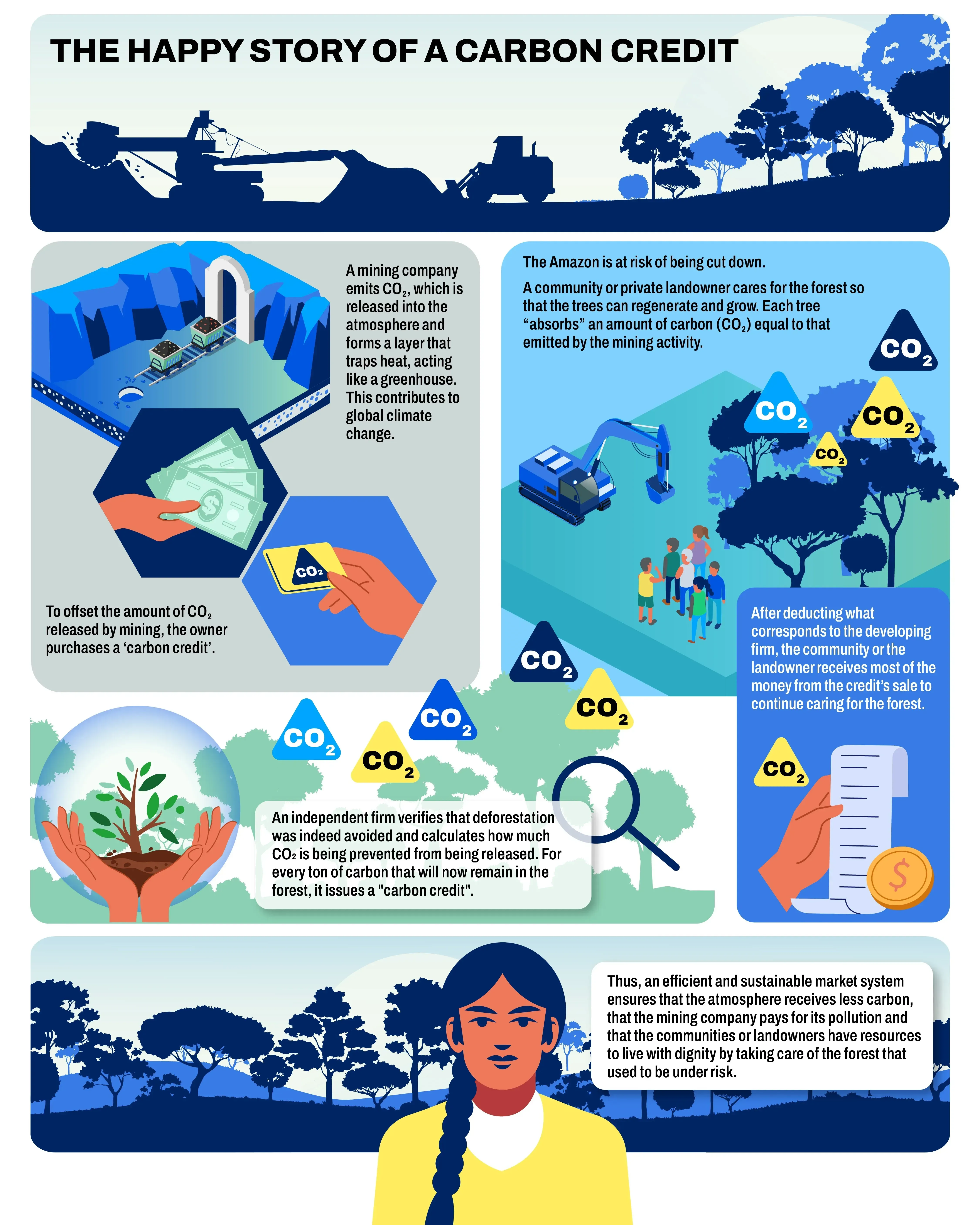
On paper, the deal was a win-win. REDD+ projects—the type of carbon market initiative the company chose—typically connect local communities or private landowners who prevent deforestation in critical ecosystems with companies like Sigma that seek to offset their carbon footprint by paying those communities for the environmental results achieved. It is a climate finance mechanism designed to channel private-sector funds to those on the front lines of conservation.
To this end, Sigma signed an agreement with Carbonext, one of the largest players in Brazil’s carbon market. Both companies publicly celebrated the partnership. The mining firm stressed that “the carbon credits generated by Carbonext and its partners are of high quality and integrity.” Janaína Dallan, Carbonext’s president, emphasized that “projects like the ones Sigma is supporting protect more than two million hectares in the Amazon biome with support for constant local and satellite monitoring to ensure high integrity and quality of forest preservation projects.”
As Sigma announced, thanks to that arrangement, it “has successfully achieved net zero carbon emissions” in its inaugural shipment—something the company claimed occurred “26 years ahead of the United Nations’ 2050 targets.”
Sigma is not the only mining company publicly emphasizing its environmental performance.
“Today it is becoming economically beneficial to engage in a sustainability discourse. Many companies are doing it not only to reassure civil society or regulators, but also because a sort of secondary market has emerged for ‘green lithium,’ ‘green cobalt,’ or ‘green nickel,’ where these minerals can fetch slightly higher prices because someone down the supply chain—whether a battery or EV manufacturer, or the end customer—cares about their environmental footprint,” said Thea Riofrancos, a U.S. researcher and professor at Providence College, in an interview with this journalistic alliance. Riofrancos, author of the recently published book Extraction: The Frontiers of Green Capitalism, about the global lithium boom, added: “In the end, it’s also about projecting a brand image to buyers.”

A carbon project that hid deforestation
The carbon project that Sigma Lithium ultimately chose in mid-2023 to offset its emissions—called the Unitor REDD+ Project—carried a serious problem that would come to light almost a year later.
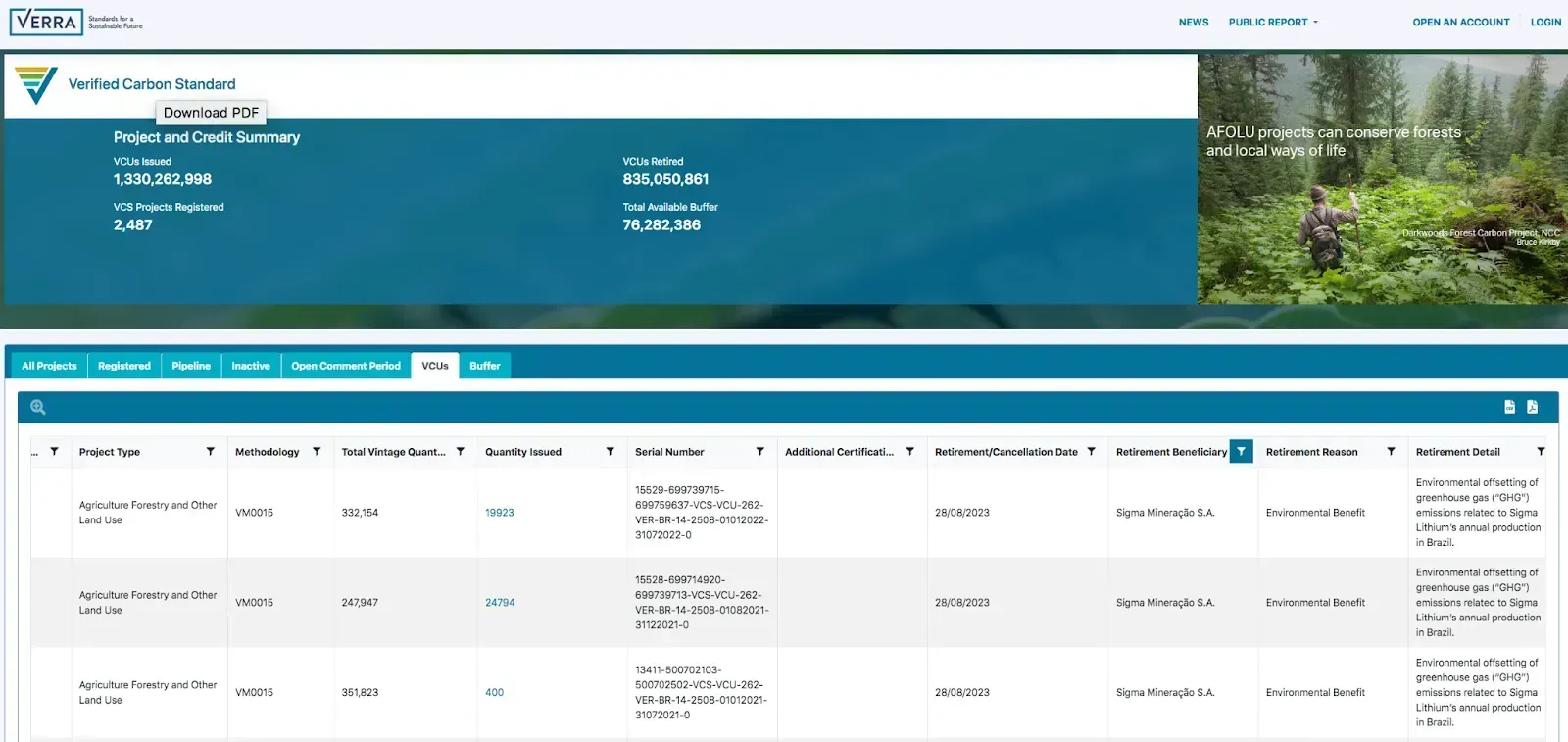
On August 28, 2023, Sigma Mineração S.A.—one of Sigma’s two Brazilian subsidiaries—retired 59,000 credits, according to the transaction registry of the U.S.-based certification standard Verra, which had approved the initiative. As that registry shows it did so over six transactions with the purpose of “environmental offsetting of greenhouse gas (“GHG”) emissions related to Sigma Lithium’s annual production in Brazil.”
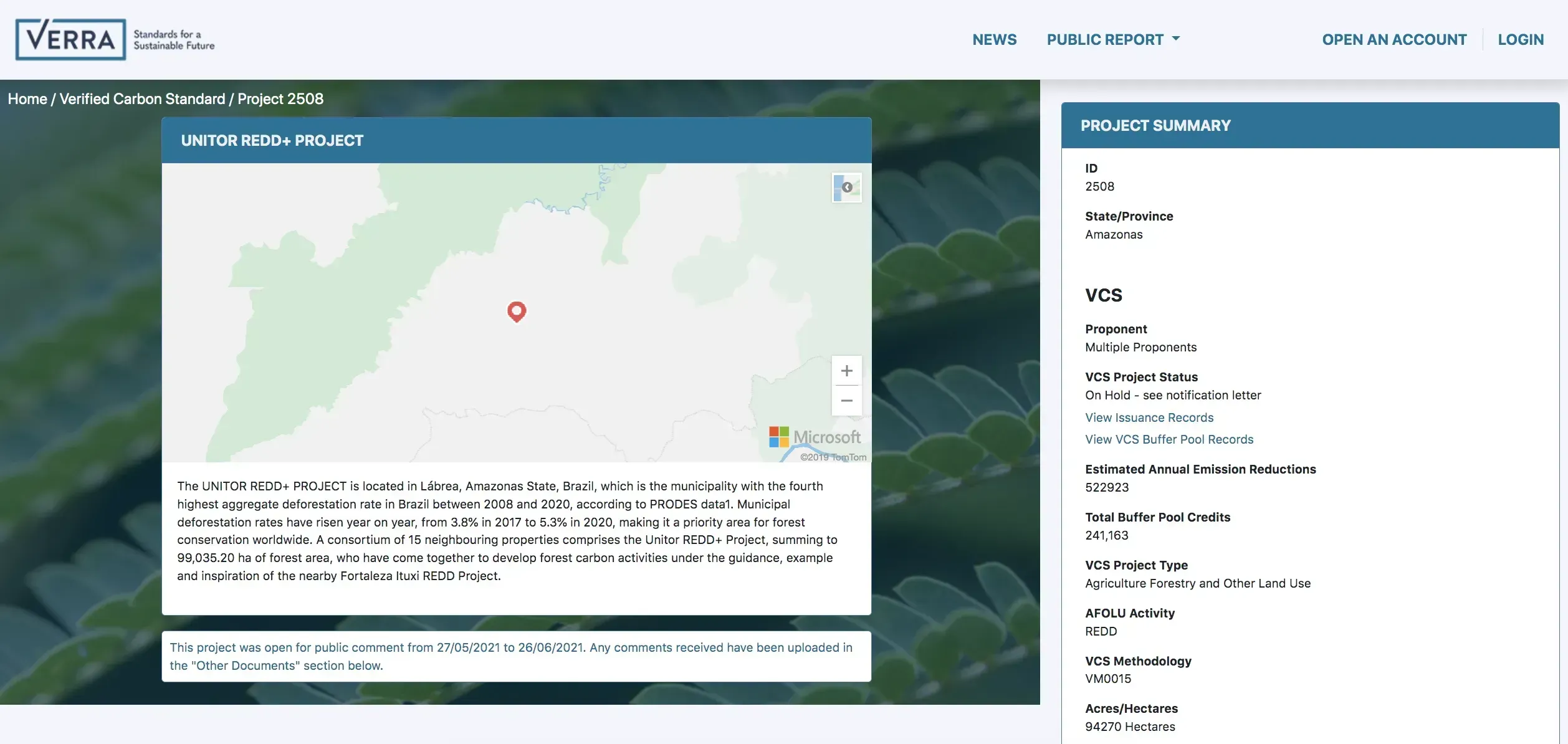
The chosen project, Unitor, revolves around 15 adjoining ranches in Lábrea, in the southwest of Amazonas state, near the border with Bolivia. According to the project design document (PDD, in industry jargon), this is an area that had the fourth-highest deforestation rate in Brazil between 2008 and 2020. By joining the project, these private properties—totaling 99,035 hectares—sought to avoid the region’s most common scenario near Acre and Rondônia: “intense deforestation historically, mainly due to the expansion of agriculture and cattle ranching.”
The project listed two proponents: Carbonext Consultoria Ltda., a carbon-market project developer, and Ituxi Administração e Participação Ltda., an agribusiness company that owns one of the properties included in the environmental scheme. Several other owners also appear in the project documents, including three companies and five individuals, as does the consultancy Avix Engenharia e Estudos Técnicos. The public face of the entire environmental initiative was businessman Ricardo Stoppe Junior, a São Paulo physician described by a business news outlet as Brazil’s largest individual seller of carbon credits and “one of the best examples of how to make money without cutting down forests.” According to CLIP’s Anatomy of the Carbon Market, Stoppe has been linked to at least five REDD+ projects: three are on hold, one was rejected by Verra, and one is in formulation. The latter two have not reached the market.
Validated by the Spanish auditor Aenor and certified by Verra in May 2022, the Unitor project sold its first credits that same year.
However, not everything was as it seemed. In May 2024, Unitor and another project called Fortaleza Ituxi (both linked to Ricardo Stoppe Jr.) were found to have inconsistencies between the volume of timber declared to authorities and the amount actually felled, according to satellite images. The images were analyzed by the Center for Climate Crime Analysis (CCCA) for a journalistic investigation by Mongabay, as part of the collaborative project Opaque Carbon led by CLIP.
The discrepancy found in the images suggested irregularities in timber management. Grupo Ituxi, the company responsible for both projects, denied to Mongabay any connection to the suspicions and stated that all its initiatives are audited and certified.
Two weeks after the investigation was published, the Federal Police launched Operation Greenwashing against those responsible for the carbon projects, investigating possible links to land grabbing and illegal deforestation. This year, the Federal Police ended their investigation and formally concluded that Stoppe Junior and 30 other individuals misappropriated public lands for the generation of carbon credits, among other crimes, as revealed by Folha de Sao Paulo newspaper in October. The Federal Police believe that a criminal organization was behind the scheme.
Stoppe was arrested in June 2024 but is currently on provisional release under electronic surveillance. The final report of the Federal Police investigation is being analyzed by the Federal Public Prosecutor’s Office (MPF), which will decide whether to bring the case to court.
On June 13, 2024—a week after Operação Greenwashing—Verra, which had originally approved the projects, suspended them “until all findings are satisfactorily closed.” Carbonext told this reporting alliance that on June 8 it wrote to Verra informing it of the police operation and of its decision to “suspend any sale, transfer, generation, and issuance of credits from said projects until further notice from the authorities.” As of October 2025, Unitor appeared on Verra’s platform as “on hold.”
Sigma Lithium told this reporting alliance by email that it “has not used carbon credits since 2024, when it decided to stop using external environmental offset certificates.” That decision, it explained, “reflects the evolution of the company’s ESG [environmental, social and governance] strategy, which began prioritizing the effective reduction of emissions in its operations, replacing offset mechanisms with concrete actions for decarbonization and environmental efficiency.”
In its October 16 email, the mining company also said it is focused on its “Quintuple Zero” strategy, which it described as a “pioneering model in the sustainable mining sector.” Among its five pillars, it cited one that does not appear in the strategy’s description on its website or in its communications: zero workplace accidents in the last two years and zero fatalities in 12 years, since the company’s founding. Zero emissions fell outside that quintet. Asked whether it had modified the formula for its “quintuple zero” lithium, the company had not responded at the time of publication.
Besides Sigma, companies that purchased Unitor credits include PwC International, Colombian state oil company Ecopetrol, Austrian state oil company OMV, Belgian chocolatier Guylian, and the Belo Horizonte airport concessionaire.
A Potential Environmental Integrity Problem for Sigma
Although Sigma Lithium is not responsible for the actions of the Unitor project’s promoters—and, as far as this journalistic alliance has been able to verify, is not under investigation by police—its name and status as a buyer of credits from the project did appear in at least one document from Brazilian authorities.
The Federal Public Ministry (MPF) in Amazonas recommended the suspension of all carbon credit projects in that state and highlighted the controversies caused in this market. “There is information about major companies and global brands using these irregular credits to appear sustainable to their consumer audiences,” it wrote in August 2024. The recommendation, however, was not implemented.
By mid-2024, it must have been clear to Sigma that the Unitor credits it used to offset its emissions—and to declare its operations carbon-neutral the previous year—were problematic. In carbon market jargon, they may have been of low environmental integrity.
This was an issue because Sigma’s carbon-neutrality goal is closely tied to offsets. As the company explains in a report to its shareholders, its “ambitious net-zero targets” are “measured as emissions minus carbon credits.”
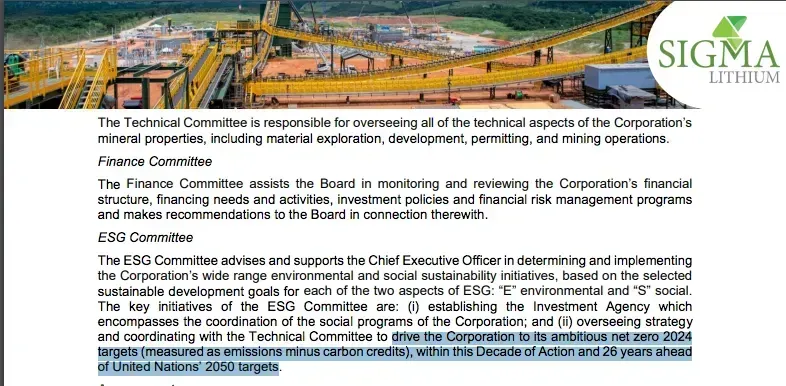
Another report from 2023 outlines its “net zero” strategy in more detail: the company would assume responsibility for all its scope 1 (direct emissions), scope 2 (energy consumption), and scope 3 (value-chain) emissions. For the latter, it proposed achieving neutrality in two phases: a first phase in 2023, covering emissions from the 700-kilometer transport route between Minas Gerais and the port of Vitória, and a second phase beginning in 2024, including maritime transport to the port of delivery. For transportation, the company planned to use biofuels, while for residual emissions—or those it could not reduce by other means—it would turn to carbon credits. One year later, another report reaffirmed those commitments but postponed the scope 3 target by a year.
Sigma had likely assumed it was buying high-quality carbon credits, not ones that would end up at the center of a criminal investigation. Several Brazilian companies that used credits from projects linked to Stoppe found themselves in a similar situation after Operação Greenwashing. Some have publicly discussed the corrective measures they took: Itaú Bank and Localiza, a car rental company, told InfoAmazonia that they had purchased new credits to replace those they had used from the Fortaleza Ituxi project.
This journalistic alliance asked Sigma what due diligence procedure it uses to assess the quality of environmental projects it invests in, which other projects it has purchased from, and what actions it took after learning of Unitor’s legal troubles—including whether it bought new credits to replace them. We also asked whether it informed its buyers and shareholders that the “zero emissions” of its quintuple zero formula might have been compromised by the Federal Police’s Operação Greenwashing. We found no mention of the Unitor project or Greenwashing operation in any documents on Sigma’s website, nor any other carbon-credit transactions under Sigma’s name in Verra’s public registry. (You can see the questions submitted to Sigma here.)
Because the carbon market is relatively new, there is no clear or standardized protocol for how companies should proceed when they discover that the credits they purchased and used may have serious environmental or social flaws. However, three experts consulted by Repórter Brasil and CLIP agree that companies have a duty of transparency toward their clients, investors, and the public.
“If it’s a serious company, once it becomes aware of the case, it should inform investors and clients, disclose that it will discard the 59,000 credits because it cannot vouch for their integrity, and purchase new ones to ensure carbon-neutral production—this time paying closer attention to quality. Depending on the investigation’s outcome, if the credits are later deemed valid, they could be reinstated. The first thing to do when an operation like this becomes public is to withdraw the credits from the market and buy new ones,” argues Shigueo Watanabe Jr., a researcher at environmental organization Climainfo, with over two decades of experience in carbon credits. He is also a member of the technical committee of the Gold Standard Foundation, the world’s second-largest carbon-credit certifier.
Another researcher interviewed by this journalistic alliance, who spoke anonymously because she works in the sector, agrees that companies should act publicly and transparently. “A company that is an interested party in a project involved in a scandal over possible environmental crimes should make some kind of public announcement, in addition to stating its position and what it is doing to remedy the situation. It’s a matter of reputation,” she said.
Carbonext told this reporting alliance that as soon as it learned of the investigations, it legally terminated its service contracts for developing the three carbon projects and notified Verra. “An operation has been launched by the Federal Police of Brazil with the aim of investigating alleged illegalities involving certain carbon projects due to alleged false documentation in the origin of land titles, by the owners,” Carbonext wrote to Verra on June 8, 2024, in an email shared with CLIP.
Because “such credits might be affected as to their ownership and legality,” the carbon-project developer said it “suspended any sales, transfer, generation and issuance of credits from such projects until further notice from the authorities.” Projects linked to Stoppe, once listed on its website, no longer appear there.
Carbonext did not respond when asked whether it notified the companies that used Unitor credits of the suspension or whether it recommends any procedures for replacing them. In its view, “there has been no issue of environmental integrity,” since “the activities proposed by the project have been implemented, audited, and their results verified,” and “the credits generated remain valid for the proven conservation of forests on the properties, even though the land title certificates issued by the competent agencies are under investigation for suspected corruption.” The company also argued that “in no sector of the economy does a private company have the authority to investigate fraud in public institutions; only the authorities can do that.” (You can read Carbonext’s full answers here.)
Verra told this journalistic alliance that it does not notify credit users when a project is suspended because it “does not engage in market transactions, meaning we don’t have a direct relationship with the ‘end user’ you speak of.” Its process, the organization explained, consists of publishing a notification letter in the project’s registry “so stakeholders are aware of its status,” followed by “a quality control review” that may lead to further actions—one that, in the case of Unitor, is still pending. Verra did not say what procedures it recommends end users follow when a project is suspended due to environmental integrity concerns.
At least one of Sigma’s main shareholders has a stated interest in ensuring its investments have increasingly low greenhouse gas emissions. Norges Bank Investment Management, which manages the Norwegian Government Pension Fund and, through it, the world’s largest sovereign wealth fund, seeks to ensure that all companies in its portfolio “align their activities with global net zero emissions in line with the Paris Agreement” as well as “science-based short-term, medium-term and 2050 net zero targets.” Among the fund’s environmental investment criteria—which, as of March 2025, held 2.2% of Sigma’s shares and was its fourth-largest individual shareholder—is that “companies disclose high-quality, relevant climate information.”
Asked whether it was aware of potential environmental integrity problems in the carbon credits Sigma used to certify its 2023 carbon neutrality, Norges Bank Investment Management told this alliance that it “has no comment.”
Among Sigma’s roughly one hundred shareholders are mostly global asset managers and banks. The largest investor, holding 43% of the shares, is the Brazilian firm A10 Investimentos Ltda., an investment manager legally represented by Sigma’s CEO Ana Cabral and controlled—according to the mining company’s most recent annual financial report—by Marcelo Freire da Paiva, who co-chairs Sigma’s board of directors with Cabral. As of March 2025, other major shareholders included asset managers Fitpart Fund Administration Services Ltd (7.4%), Appian Way Asset Management LP (4.42%), Swiss bank Julius Baer (2%), financial services firm Citadel Group (2%), global asset management giant BlackRock Inc. (1.5%, down from nearly 5%), and Brazil’s Nucleo Capital Ltda. (1.3%). These firms invest in publicly traded companies like Sigma to include them in investment funds they manage, which in turn deliver returns to thousands of private or institutional investors. The identities of those end investors are not public.
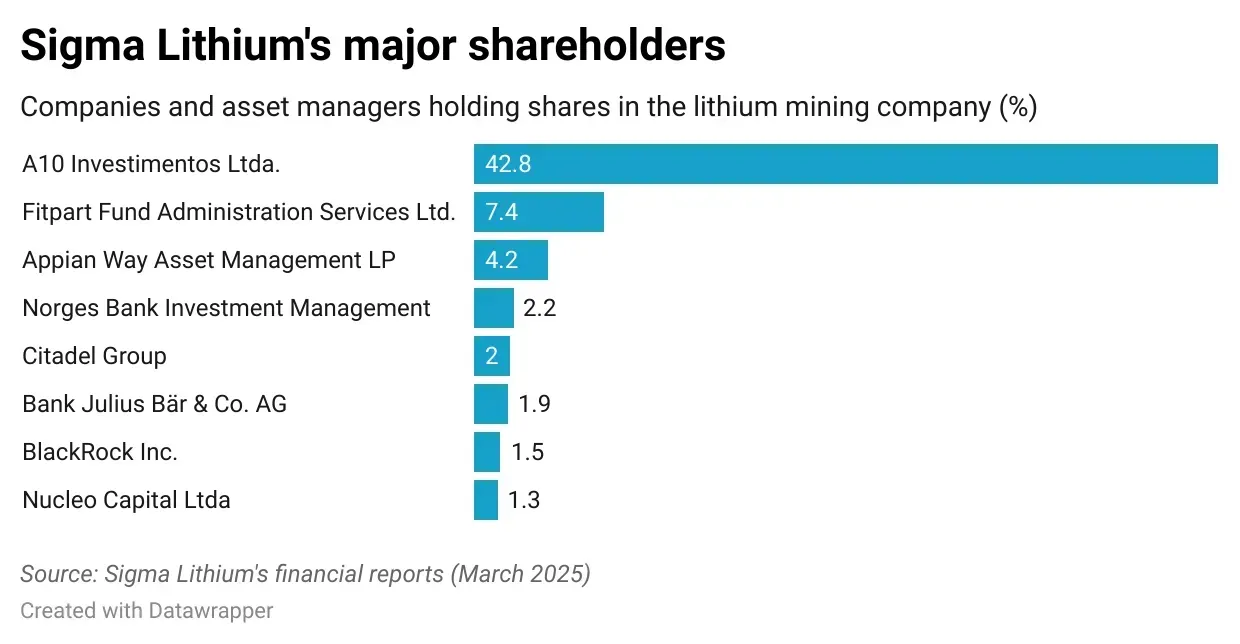
Fitpart told this reporting alliance that it is no longer a Sigma shareholder, that it has reported this to the U.S. Securities and Exchange Commission (SEC)—though it still appears in Sigma’s financial statements as of June 2025—and that “the team responsible for this investment no longer works with us.” Citadel Group and Julius Baer replied by email that they would not comment on the problems surrounding the carbon credit project used by Sigma. Appian Way, BlackRock, and Nucleo Capital did not respond to emails.
The destination of quintuple zero lithium
The buyer of Sigma’s first shipment of lithium—which the company declared carbon neutral after purchasing credits from the Unitor project—was Hong Kong–based Ya Hua International Investment and Development Co. Limited, a subsidiary of China’s Sichuan Yahua Industrial Group Co., better known as Yahua Group.
Founded in 1952, the group is one of China’s oldest chemical-sector companies. Its business today is divided between civil explosives and the lithium production chain, including mining, processing, and sales. The company says it plays “a vital role in the global clean energy value chain” and has an important client portfolio. Among its direct suppliers are electric vehicle and battery manufacturers such as Tesla, BYD, and CATL. Yahua also highlights that its products reach other major companies in the sector, including BMW and Volkswagen.
Yahua Group has supplied lithium to Tesla for at least six years. In 2020, it signed an agreement to deliver between 63,000 and 88,000 tons of lithium through 2025, valued at between 630 and 880 million USD, according to Reuters. In 2023, the agreement was renewed through 2030, increasing the volume to between 207,000 and 301,000 tons. In June 2024, a new contract extended the partnership until 2027, with an option to renew through the following year. The amount and value of the lithium carbonate in that deal have not yet been disclosed.
Like its supplier Sigma, Yahua places strong emphasis on reducing emissions and has “completed several key verifications, including product carbon footprint assessments,” which it describes in its latest sustainability report as “green and low-carbon.” Last year, the group published guidelines to reduce its carbon footprint and celebrated its certification under the Responsible Minerals Assurance Process, a seal of the Responsible Minerals Initiative based on OECD due diligence guidelines for responsible mineral supply chains.
One of Yahua Group’s priorities, according to its most recent sustainability report, is to “prioritize procurement of green materials with recyclability, low-pollution, and low-emissions.”
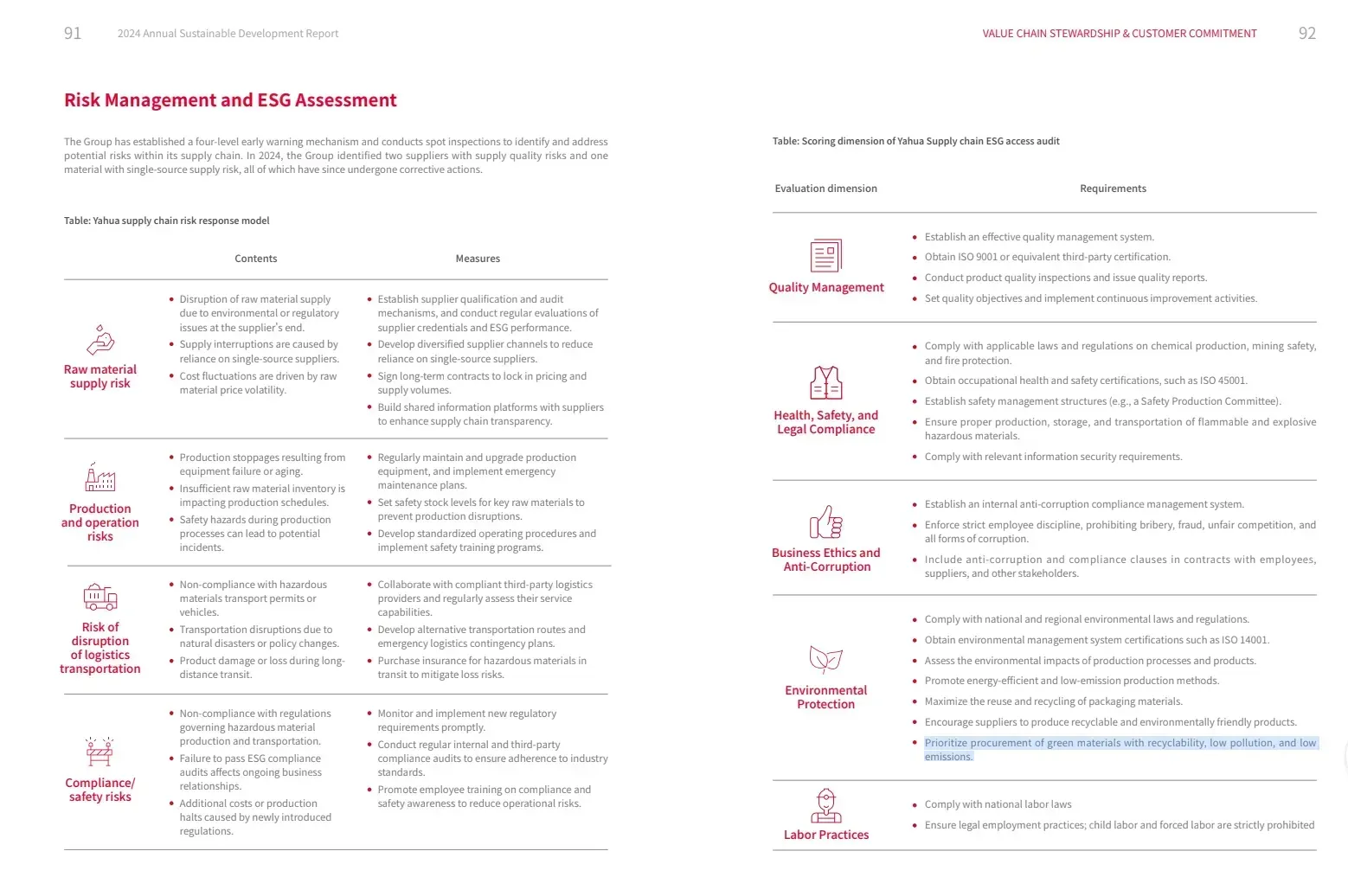
This journalistic alliance asked Yahua whether Sigma Lithium had informed it that the 2023 shipment it purchased was offset with carbon credits from a project under investigation by the Federal Police and subsequently suspended. As of the publication date, Yahua had not responded.
Battery manufacturer CATL confirmed that Yahua Group is part of its supply chain but said that “according to our traceability system and supply chain mapping, we can verify that the materials supplied to CATL by Yahua do not originate from Sigma Lithium.” The company added that it conducts “rigorous due diligence protocols” for its suppliers, including third-party audits, on-site inspections, and continuous monitoring of environmental and social impacts. “So far, no public health or environmental risks have been detected in these entities, including Yahua Group,” the company said.
BYD did not respond to an e-mail asking what measures it has taken to verify the origin of the lithium purchased from Yahua Group and ensure it presents no social or environmental irregularities. Tesla was also contacted, but did not reply.
Warnings about possible territorial impacts
The controversy over “carbon-neutral lithium” is not the only issue surrounding the company. Associations of traditional peoples, civil society organizations, and public agencies have denounced the potential negative impacts of the lithium industry in the region.
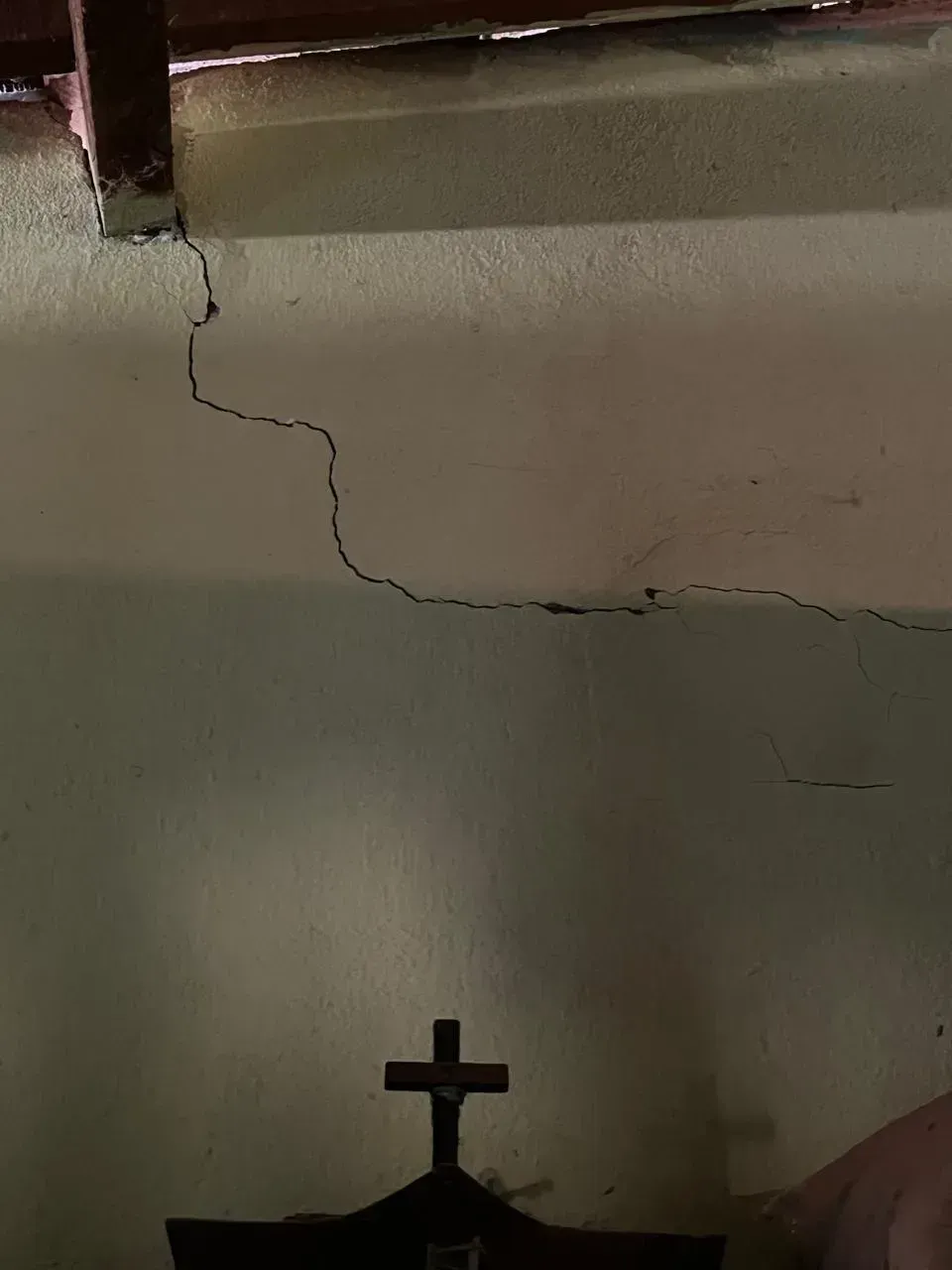
“More than 100 families living around the project suffer daily from negative impacts and collective and individual harm, such as high noise levels, dust, cracks in their houses, health problems, and losses in food production,” states a letter signed on August 21, 2025, by 68 organizations, including quilombola (Afro-descendent) and Indigenous groups, labor unions, and local politicians. A month later, the consumer advocacy organization Idec published a study echoing some of those concerns and questioning the appropriateness of the financing granted by the state development bank BNDES under its Responsible Banks Guide program. Among other points, Idec noted a “possible contradiction between Sigma’s sustainability narrative and its actual practices.”
The letter from the 68 organizations was a response to a tribute paid by the Minas Gerais state legislature to Sigma Lithium’s CEO and co-founder, Ana Cabral. Two days later, she was granted honorary citizenship of the state for her “outstanding services to Minas Gerais.” In her acceptance speech, she remarked that “foreigners can’t pronounce ‘Jequitinhonha’; it has become Lithium Valley,” referring to the “Vale do Lítio” initiative launched by the state government in 2023 to promote lithium mining in the region.
In a report published in December 2024, the Federal Public Prosecutor’s Office (MPF) warned that lithium extraction is a high-impact activity “with the potential to worsen the vulnerability of traditional communities.” The document identified 258 traditional communities affected by various companies. “The central issue is the denial and invisibility of traditional communities and interference in their way of life without prior consultation,” said prosecutor Helder Magno da Silva, who requested the report.
In Sigma’s case, the document points to a “clear deficiency” in the environmental licensing process regarding hydrological analysis and notes failures in environmental impact studies—factors that, according to the MPF, “increase the vulnerability and exposure of traditional populations to mining-related impacts on the fundamental right to water access.”
In early September, the MPF sent a recommendation to the National Mining Agency requesting the suspension and review of lithium exploration and extraction permits in Araçuaí, where Sigma operates. The document stresses the need for free, prior, and informed consultation with affected communities that were not properly heard before project approvals.
Beyond access to water, another issue cited by the MPF is the emission of dust and the presence of toxic residues “linked to respiratory problems and skin diseases among nearby populations.” One such community is Piauí Poço Dantas, a village of small-scale farmers located near the Grota do Cirilo mining complex. “We breathe dust 24 hours a day,” said one resident, who spoke on condition of anonymity for fear of reprisals, describing one of the occasions in which dust engulfed the community.
Residents of Piauí Poço Dantas also reported increased noise levels and cracks in their houses caused by vibrations from blasting. These accounts appear in a technical report by the Minas Gerais State Prosecutor’s Office (MPMG), which interviewed four communities near the project.
This reporting alliance asked Sigma about the Idec report questioning the BNDES financing, the MPF documents, and the letter signed by 68 organizations. The company did not respond, but in other media it has denied any irregularities in prior consultations, relationships with neighboring communities, or its environmental record.
Meanwhile, Sigma has continued selling its “quintuple zero lithium”—that is, net zero lithium—to other global companies. In September 2024, the mining company reported shipping 22,000 tons to Japanese automotive giant Mitsubishi. Between that month and April 2025, it said it had made four additional shipments totaling 76,000 tons to IRH Global Trading Ltd, a metals and critical minerals trading company based in the United Arab Emirates and owned by Abu Dhabi’s Royal Group.
In all these transactions, the company emphasized “carbon neutral,” though it did not publicly disclose whether it used carbon credits or which projects were involved. Verra’s public transaction registry lists no further operations naming Sigma as a beneficiary, though the voluntary carbon market allows users to choose not to make their names public. When asked, Sigma said it has not used carbon credits since 2024 but did not specify what decarbonization and environmental efficiency measures it has incorporated into its operations.
Ultimately, Sigma overhauled its environmental offset strategy after the credits it used to reduce emissions in its first year of production came from a project now under Federal Police investigation for possible environmental crimes. Despite this, the company has yet to address the issue publicly.