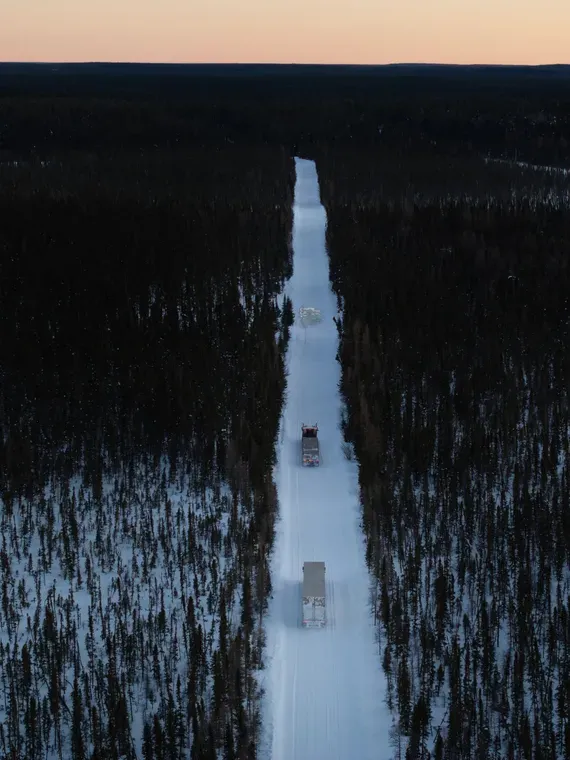

More than 50 Indigenous communities in Canada—with a total population of 56,000 people—depend on about 6,000 kilometers (3,700 miles) of winter roads.
They have no all-season roads connecting them to the nearest cities. Most of the year, small planes are their only lifeline. But in winter, the lakes and rivers around them freeze, allowing workers to build a vast network of ice roads.
Indigenous communities rely on such routes to truck in supplies like lumber for housing, fuel, bulk food, and bottled water, which are too expensive to fly in by plane.
The climate crisis is pushing temperatures higher each year, bringing deadly wildfires, heatwaves, floods, and rising sea levels. In Canada’s north, rising temperatures are threatening a way of life, as the winter road season grows shorter every year. Chiefs are declaring emergencies as the roads fail to freeze on time.
All-season roads could cost billions of dollars. But it’s unclear who will foot the bill.


