The Italian government is engaged in a discussion with the EU on the topic of biofuels. The thesis is that they could be a solution to make car transport in Europe zero-impact.
Are biofuels an effective solution to reach the “zero-emission” target for car transport in Europe? The Italian government is playing a tug-of-war with Brussels on this thesis, with the aim of changing by the end of the year the actual EU legislation, prescribing the farewell to internal combustion engine vehicles by 2035.
“The ban on internal combustion engines from 2035 has been, and is proving day by day more and more to be, a choice that has no logic, an idiocy,” said Gilberto Pichetto Fratin, Minister for the Environment and Energy Security of the Italian government, speaking in June in an event in support of biofuels at the Eni headquarters in Rome. “The battle for biofuels, which is a national interest, is instead a battle that can provide an important response,” said the minister, adding that “the Italian government intends to move forward on this.”
The event was part of the Tour d’Europe, a traveling initiative promoted by companies from the fuel and automotive industries, to support the idea that biofuels can be a “zero-emission” technology, as well as electric vehicles. The tour will end on June 24 in Brussels, with the aim of pushing the European Commission to review the regulation by the end of the year.

As a nonprofit journalism organization, we depend on your support to fund more than 170 reporting projects every year on critical global and local issues. Donate any amount today to become a Pulitzer Center Champion and receive exclusive benefits!
“We have two large manufacturing industries, vehicles and fuel producers, that have come together,” Emanuela Sardellitti, Advocacy strategy senior executive of the trade association FuelsEurope, told us on the sidelines of the event. The aim is to support the principle of “technological neutrality”: “Even an internal combustion vehicle, which is banned by the ‘CO2 auto’ legislation, therefore by a European regulation, starting from 2035, is actually a vehicle that can be qualified as a zero-emission vehicle, through the use of renewable fuels,” Sardellitti said.
A matter of policies
To combat global warming, Europe has committed to reducing 90% of greenhouse gas emissions from its transport sector by 2050. Transport represents a quarter of EU emissions, in particular road (71%), air (14.4%) and maritime transport (13.5%). The EU strategy foresees that by 2035 all new cars must be “zero-emission”, while 70% of the fuels used in aircraft must be “Sustainable Aviation Fuels”. This requirement actually translates into a farewell to endothermic or “internal combustion” engines, including diesel, gas, methane or LPG, in favour mainly of electric engines. Other sources such as hydrogen and biofuels could be used for air transport, maritime transport or heavy transport, which are more difficult to electrify.
The FuelsEurope coalition and Italy are trying to include biofuel-powered vehicles in the “zero emissions” category, promoting the idea that the carbon released into the atmosphere from exhaust pipes is the same carbon captured “at the source”, during the cultivation of raw materials on agricultural land (the so-called carbon farming).
“Until 3 years ago, when the current [Italian] Prime Minister [Giorgia Meloni] went to Europe to talk about ‘technological neutrality’ she was portrayed as a polluter, as a conservative who wanted to destroy the environment,” said Salvatore Deidda, a member of parliament for the right party Fratelli d’Italia and chairman of the Italian Parliament’s Transport Committee, during the event at the Eni’s headquarters. “Luckily now there is more awareness,” he said.
In the last decade, Europe has been a global leader in the development of biofuels, which in 2022 accounted for 7.2% of EU diesel production and 4.7% of gas demand (with bioethanol – source: IEA). In the same year, the sector suffered a sharp slowdown due to the effects of the revision of the Renewable Energy Directive (RED II), which put a brake on “first generation” biofuels, based on the use of vegetable oils, in particular palm oil, one of the main crops responsible for tropical deforestation – a major driver of global warming.
“At the global level, we are still going to experience a steady growth in production and consumption of biofuels worldwide, but those are mainly driven by middle income countries,” Edith Laget, an agricultural policy analyst for the OECD, told Corriere. According to Laget, “in the developed world, such as Canada, the US, and the EU, the growth will continue to decrease” in particular due to regulations that discourage the use of vegetable oils from dedicated crops, in favor of “advanced biofuels,” which instead use waste raw materials or do not produce land consumption and food insecurity.
“Developed countries are mindful of that, and are updating their policies in this direction,” Laget said, “and are updating their policies in this direction. For the middle income countries, such as India, Brazil, Indonesia, there’s a lot of consideration of being self-sufficient in terms of energy,” continuing to use crops such as sugar cane or palm oil.
Italy is currently the only European country that is part of the Global Biofuels Alliance, an initiative launched by India in 2023 during the G20 presidency. The Italian government has also placed the biofuels issue at the center of the G7 Energy held in 2024 in Turin.
Converted refineries
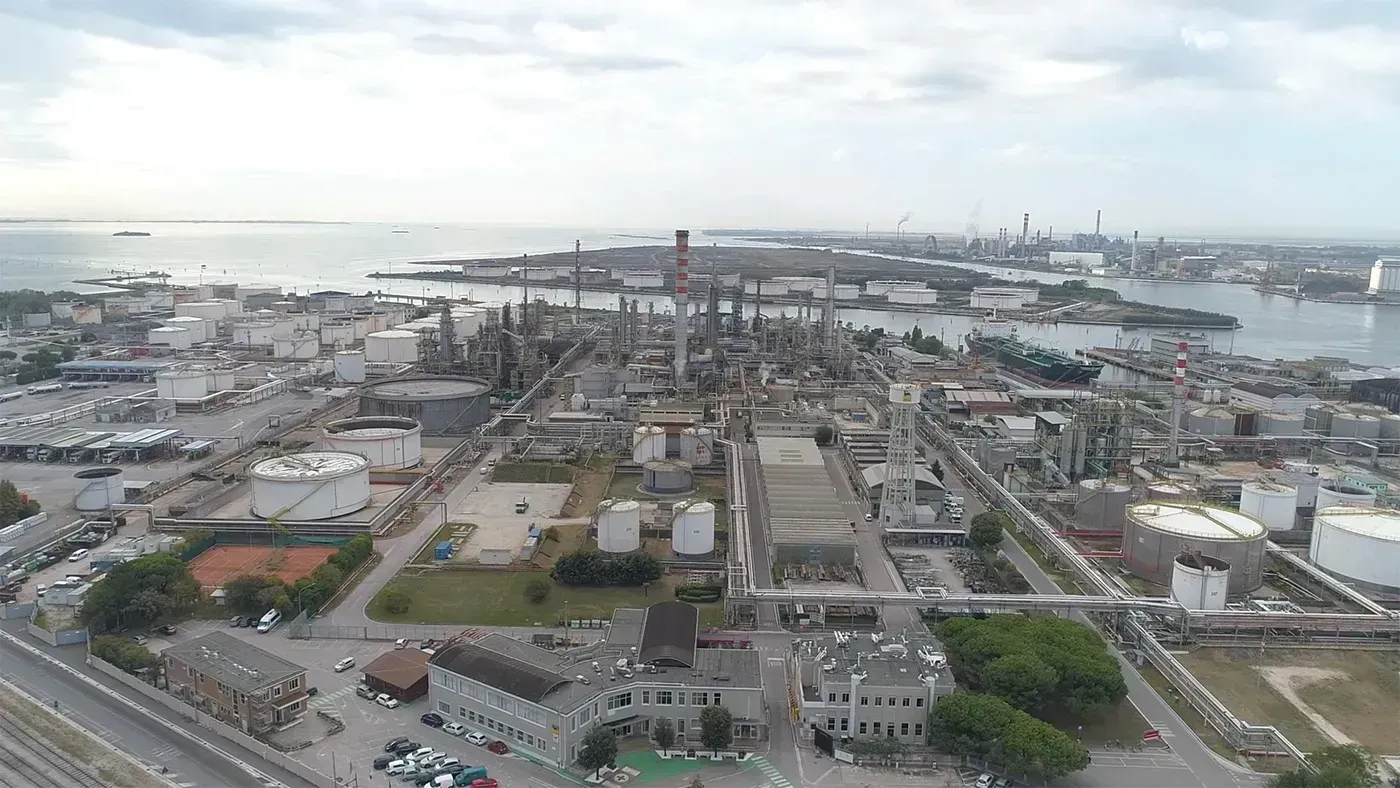
The first biorefinery in Italy was founded in 2014 in Porto Marghera and is managed by Enilive, a satellite company of Eni, the Italian main oil & energy company.
“Today we are able to transform waste and residues, such as animal fats, used cooking oil or residues from the agro-industrial industry, into energy for mobility,” Stefano Ballista, CEO of Enilive, told us as we visited the plant. “The process is based on a proprietary technology that has generated the conversion of the first traditional refinery into a biorefinery in the world, here in Venice,” Ballista said.
The plant mainly produces “hydrogenated” biodiesel (HVO). “Our HVO diesel can be used in a blend, with fossil diesel, but also used completely pure,” Raffaella Lucarno, biorefining manager for Enilive, told us. The company distributes HVO diesel at a network of 1,300 stations in Italy, Austria, Germany, Switzerland and France. Since 2019, a second biorefinery has been added to the Marghera plant, built in Eni’s industrial complex in Gela, which produces both HVO and biofuel for aircraft, which “can be used up to 50% blended with fossil jet,” Lucarno said.
Thanks to the two plants and the 50% participation of a biorefinery in Louisiana, Enilive has a production capacity of 1.65 million tons per year of biofuels, and aims to reach 5 million tons by 2030.
The sustainability of raw materials
The crux of the dispute in Europe concerns the sustainability of raw materials. Looking at the current supply in Italy, after the farewell to palm oil in 2022, the main raw materials are: palm oil by-products, known by the acronyms PFAD (Palm Fatty Acid Distillate) and POME (Palm Oil Mill Effluent); used cooking oils (UCO); animal fats from the livestock sector; edible and non-edible vegetable oils.
In its latest sustainability report, Eni states that in 2024 it imported 624 thousand tons of “waste and residues” from Indonesia and Malaysia, the giants of global palm oil production, out of a total of 693 thousand tons of raw materials used for biofuels.
According to an analysis of trade flows based on customs data (in collaboration with Data Desk), between January and November 2024 Italy has imported 510 thousand tons of PFAD and 205 thousand tons of POME from Indonesia and Malaysia. In the same period, imports of used cooking oils have been 55 thousand tons.
The official data transmitted by Italy to Europe on raw materials used to produce biofuels in 2023, instead, report 331 thousand tons of POME, 294 thousand of UCO, 291 thousand tons of waste “biomass” (likely including PFAD).
The actual sustainability of palm oil derivatives is a controversial point. “The question really is how we should think about PFAD when it comes into Europe to be used as a biofuel feedstock,” Chris Malins, director of the consultancy firm “Cerulogy”, told us. “Should we think about PFAD as a waste material?”, he said. In 2023 Malins produced a report for the Norwegian Rainforest Foundation, claiming that the climate impact of Pfad-based biofuels is “worse for the climate than fossil diesel,” due to indirect deforestation.
“Pfad is 100% utilized, all of this material is going to be sold to a marketable use, and those uses include animal feed, use in oil and chemicals, uses like soap manufacture and detergent manufacture,” Malins told us. According to the researcher, considering that the quantity of PFAD available is limited (1,800 thousand tons in Indonesia and 700 thousand in Malaysia), using it for fuels would push other industries towards a greater use of virgin vegetable oils: “Taking 1 ton of Pfad from the market translates into a demand for palm oil of around 0.6 or 0.8 tons,” he said.
Similar criticisms are also leveled at other commonly used ingredients. According to Carlo Tritto, Sustainable Fuels Manager of the NGO Transport & Environment, POME “is classified as a residue of palm oil, but has a value of 90% of palm oil,” thus stimulating demand for it. The NGO has published reports that also denounce a strong risk of fraud for both POME and Used Cooking Oils, often imported from China.
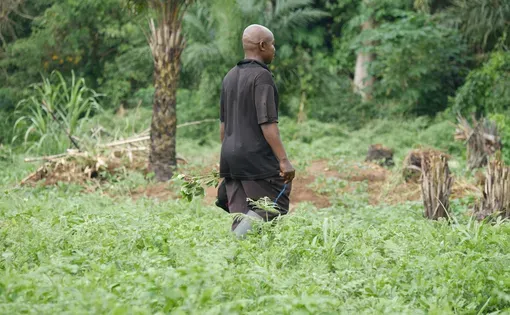
In recent years, Eni has been working to create a network of “Agrihubs”, particularly in Africa, to directly manage crops for the production of raw materials for its biorefineries, allegedly favoring crops that are not competitive with food production such as castor oil. The Italian government supports part of these projects with its “Mattei Plan”, which takes its name from the founder of the oil giant, Enrico Mattei. Eni’s Agrihubs are currently operational in Kenya and Tanzania but, according to the company’s latest sustainability report, supply is currently marginal (7,458 tons of vegetable oils in 2024).
An industrial challenge
The battle that is taking place in Brussels for fuel policies concerns the entire automotive sector. “Biofuels can be used in current means of transport, whether they are light vehicles, heavy vehicles, maritime transport or air transport,” Ballista told us.
In 2023, 22.7% of new registrations in the European Union were electric vehicles (2.4 million new cars), with significant differences among Member states: in Norway, electric vehicles have exceeded 90% of new registrations, in France and Germany the figure is 30%, in Italy we are around 8%, Poland has not reached 5%.
“We are confident that Europe can change direction, to save the automotive sector,” said Alberto Gusmeroli, a MEP for the Italian right party “Lega” and President of the Commission for Productive Activities of the Chamber of Deputies, who spoke at the event on biofuels at the Eni’s headquarters. “Otherwise we will become a continent of assemblers, and we cannot afford that,” he said.
Critics, on the other hand, say biofuels have a “scalability problem,” meaning they can’t grow beyond a certain threshold, and the revised EU regulation could actually end up delaying the move away from fossil fuels. “It’s very clear that vegetable oils as a resource are really limited, even when you look at something like Used Cooking Oils,” Malins said. “It’s not something that is scalable and it doesn’t take you to your longer term decarbonization goals.”
 View this story on Corriere Della Sera