Story
 December 3, 2025
She Fought To Stay in Milwaukee. Friends Wonder What Her Deportation Means.
Country:


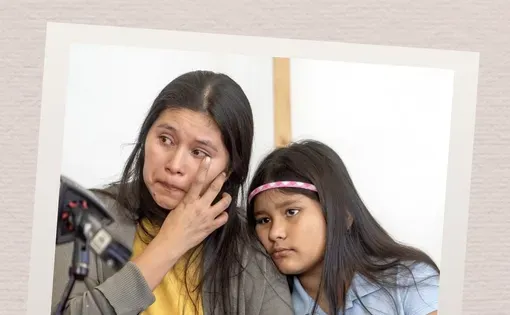
A mother's story challenges the Trump administration assertion that its priority is deporting...
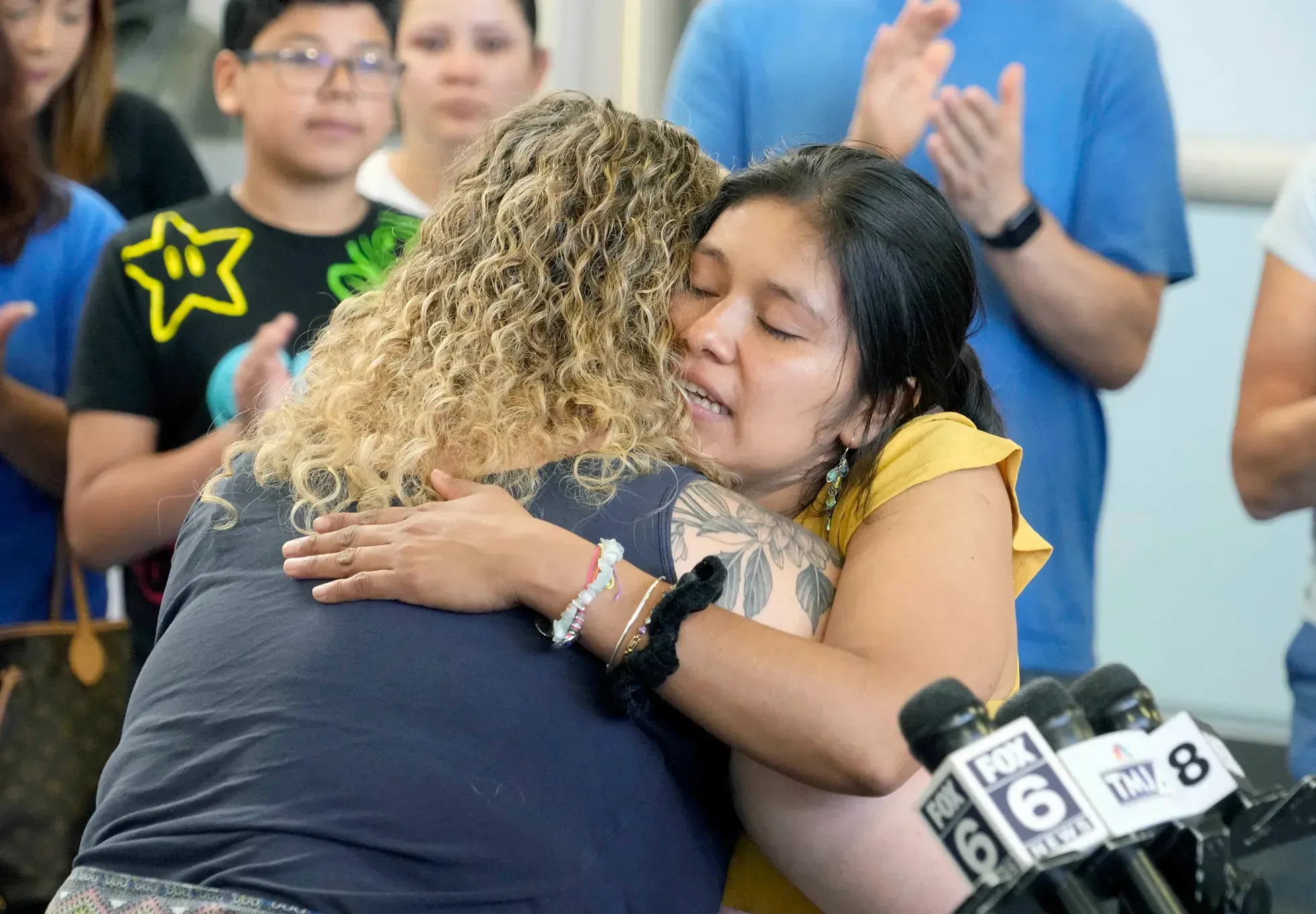
Part of a series supported by the Pulitzer Center that examines life after deportation for a former Milwaukee teachers aide and her family.
Months after Yessenia Ruano had to return to El Salvador, her church group in Milwaukee still prays for her, and her former teaching colleagues still keep up with her.
The tight-knit community that rallied around Ruano, a former Milwaukee teacher's aide, as she publicly fought her deportation continues to feel her absence. They see her story as representative of an outdated, broken immigration system that offers people like her few options to achieve legal residency.
For Timothy Muth, senior staff attorney of the American Civil Liberties Union of Wisconsin, Ruano's experience also calls into question statements from President Donald Trump's administration that it is deporting "the worst of the worst" criminals.

"It does show the fallacy of the Trump administration saying they're only removing the bad guys, because she's clearly one of the good ones, and in fact, if anything, she was a victim," Muth said.
Ruano says she was harassed and threatened by gangs in El Salvador before she left in 2011. Later, her brother was killed by gang members.
Ruano has U.S. citizen children and no criminal convictions. Although she crossed the border twice, she was not charged with illegal reentry because she told an immigration agent in Texas that she was afraid of persecution if she returned to her home country. She spent nearly all of her 14 years in Wisconsin in limbo, waiting for her applications for protection and legal status in the U.S. to be processed and decided.
The Journal Sentinel traveled to El Salvador to report on Ruano's life after deportation. It also spoke to four people in Milwaukee who reflected on what her deportation has meant.
Timeline: From El Salvador to Milwaukee and back: The winding journey of a woman seeking safety
ACLU attorney Timothy Muth: Immigration system needs reform
Muth, the local ACLU attorney, has been living in El Salvador part-time since 2004, writing a blog on Salvadoran news and politics. He had followed Ruano's story in Milwaukee but never met her until they found themselves on the same flights to the country.
Months later, in September, he was at a gala for the Milwaukee immigrant-rights group Voces de la Frontera when organizers announced Ruano was receiving the group's "Unbreakable Spirit Award." He was flying to El Salvador the next day, so he offered to deliver the plaque to her.
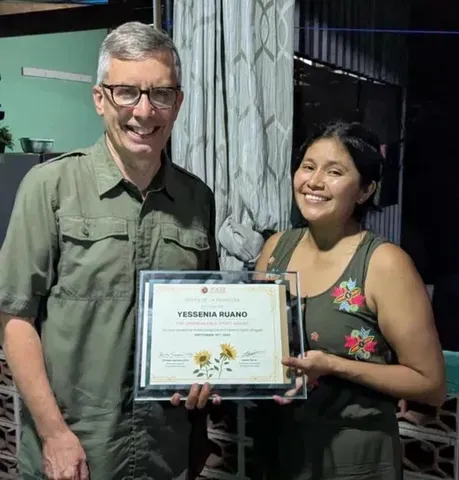
"A person like Yessenia is somebody who we very much want as a member of our community here in Milwaukee," he said, adding she owned a house, paid taxes and worked for the public school system.
And yet, she couldn't find a legal way to stay.
"Her complicated situation is just an example of how desperately in need of reform the immigration system is, and that Congress and politicians of both parties, over decades, have simply failed to rationalize the system," Muth said.
Timeline: Former Milwaukee teacher's aide builds a new life in El Salvador
Voces de la Frontera's Christine Neumann-Ortiz: Ruano's deportation doesn't make community safer
Neumann-Ortiz is the executive director of Voces de la Frontera. Her group held news conferences, circulated a petition and organized rallies on Ruano's behalf, trying to put pressure on U.S. Immigration and Customs Enforcement to delay her deportation.
"While we weren't able to stop her deportation, we were able to slow the train down," Neumann-Ortiz said. "And we were able to, at least, ultimately have her decide the terms in which she wanted to leave."
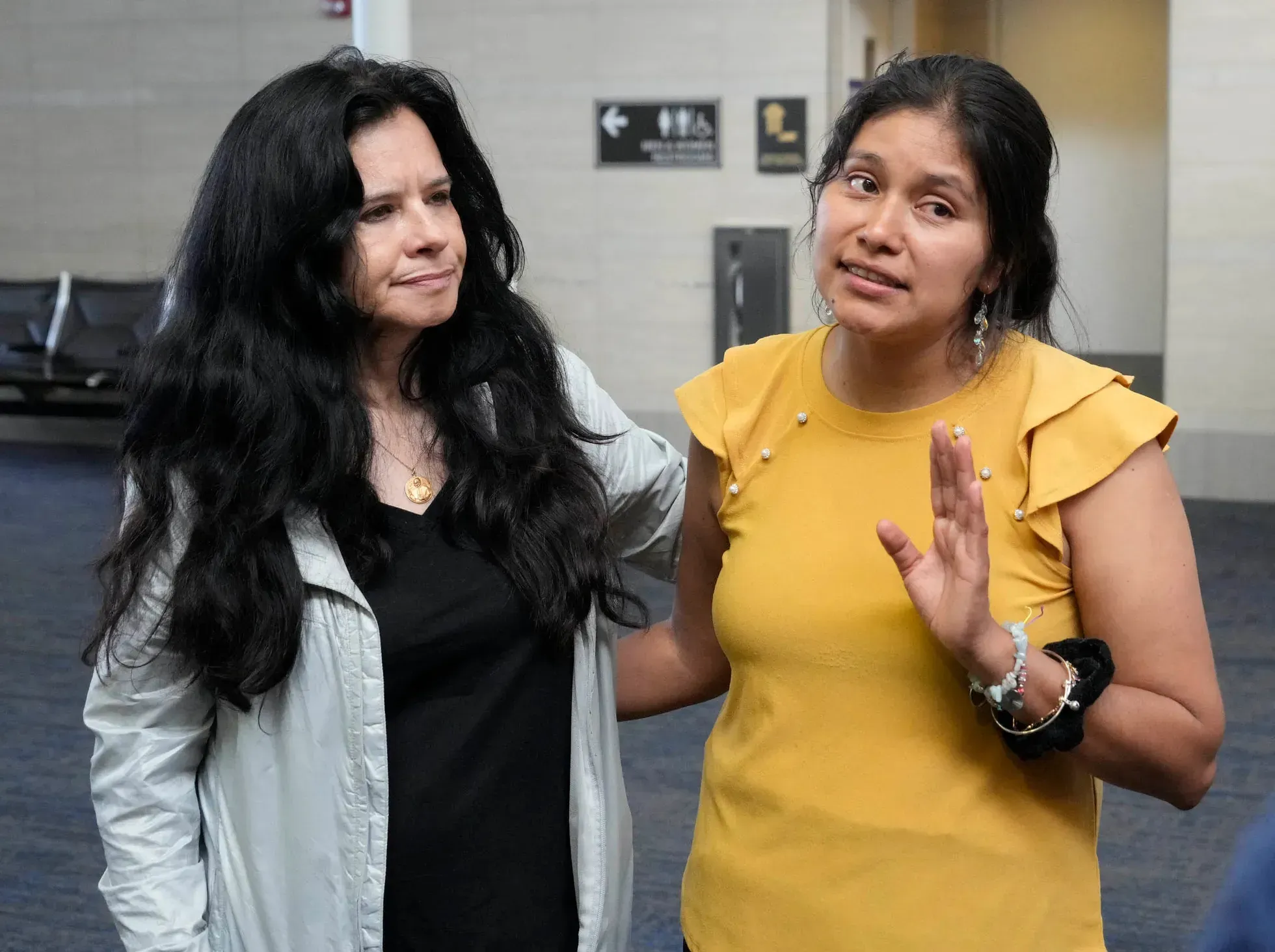
Ruano has called into Voces meetings, and she accepted her award at its gala over video. Her continued presence has been a reminder that the strong ties between immigrants and their communities "are not lost when someone is forced out of this country," Neumann-Ortiz said.
Neumann-Ortiz found Ruano's story heartbreaking, but also inspirational in that she showed courage by speaking out about the plight of other immigrants during a painful time for her own family.
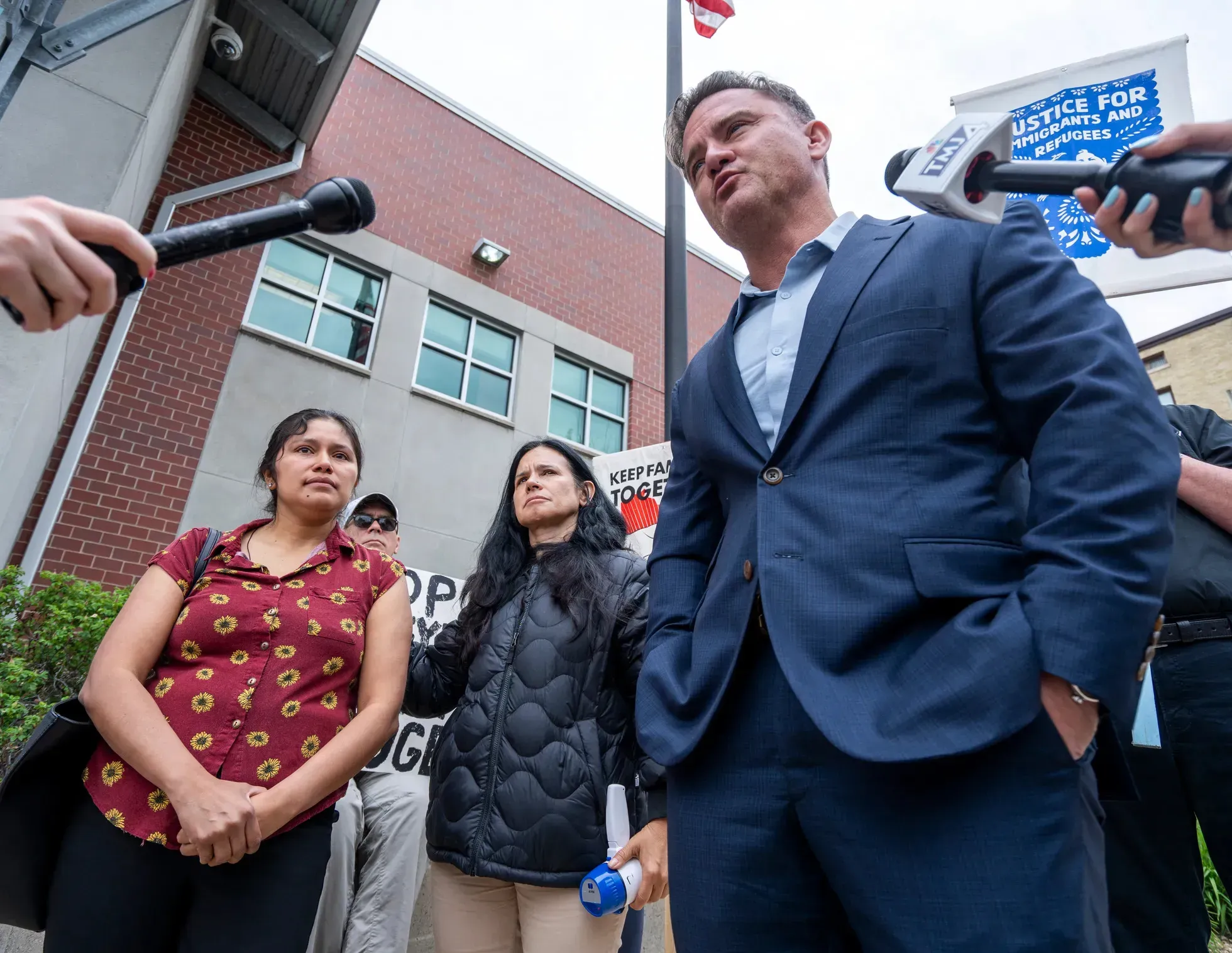
Deporting a victim of gang violence in El Salvador and human trafficking at the U.S. border was senseless and unjust, Neumann-Ortiz said. And, she noted, it made no sense to lose a bilingual educator at a time when schools face labor shortages.
Forcing Ruano from the country "doesn't make our communities safer, and it doesn't uphold the values that we want for our community or the ideals for what you want in a democratic society," she said.
Fr. Javier Bustos: It's easier to enter heaven than to enter the U.S.
Bustos is the pastor of Ruano's Catholic parish in Milwaukee, Our Lady Queen of Peace, where she was a lector. Even today, she wears a white T-shirt with the church's logo to her pastry classes in El Salvador.
The departure of Ruano and her family has left a hole in the church's weekly prayer group, Bustos said. Its members keep in touch with Ruano over the phone, offer prayers for her, and remain afraid of being deported themselves, no matter their legal status. After a recent prayer group meeting, Bustos said a parishioner told him she hoped he'd visit her in Veracruz, Mexico. He was puzzled; she has legal permanent residency in the U.S. "Just in case they send me there," the woman said, clarifying her fear.
"They're trying to live their normal lives, but in the back of their minds, they always picture the worst scenario," Bustos said.
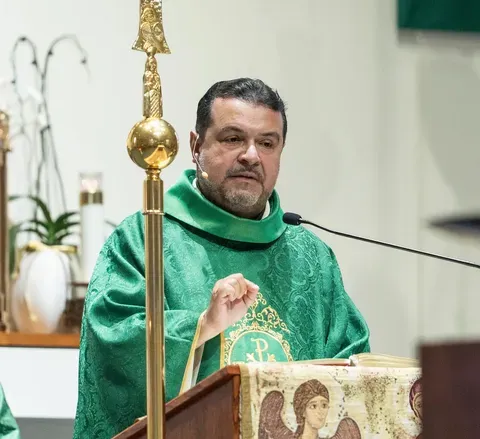
Bustos believes Ruano deserved an opportunity to stay in Milwaukee while she waited for her trafficking victims visa case to be decided.
As for those who judge Ruano negatively because she crossed the border without authorization, he said it's important to study the unique facts of each immigration case rather than making generalizations about all immigrants.
"She had reasons to run away from her country," he said. "I'm very sure that whoever would say that would probably do the same."
Most Americans have no idea how difficult it is to immigrate to the U.S., he said. In Bustos' view, immigration shouldn't be a partisan debate, and immigrants should be seen as human beings first.
"It's easier to enter heaven than to enter the U.S.," he said.
He hopes to travel to El Salvador next year to marry Ruano and her husband in the Catholic Church.
"Whatever she will be, she's going to be successful, because she's a very smart woman," he said. But he understands it's been difficult for her family to adjust to their new lives.
Fellow educator Sarah Weintraub: The fight to stop deportation was worth it
Weintraub is a special education teacher at ALBA School, where Ruano worked as a teacher's aide. The two were friends for years before Ruano shared that she feared she'd be deported at her February immigration check-in appointment. Weintraub connected her with Voces and helped mobilize ALBA teachers and parents to support Ruano.
Ruano's position this school year has been filled. But in general, Weintraub said, Milwaukee Public Schools is understaffed, especially with bilingual teachers. Ruano filled in as a substitute teacher and would've received her U.S. teaching license if she'd been able to become a permanent legal resident.
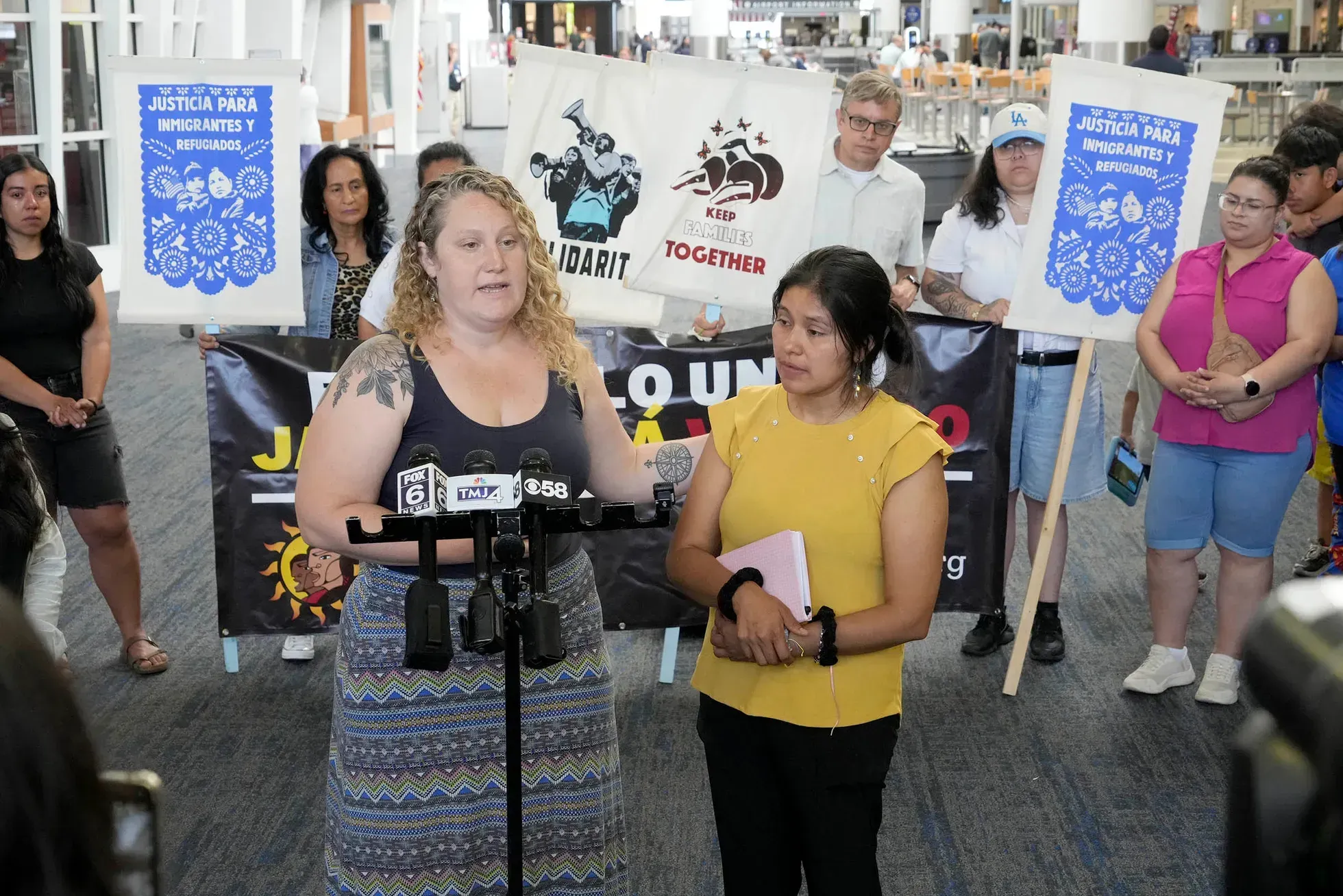
Looking back, Weintraub hopes Ruano's story can "puncture the narrative" that the immigrants being forced out by ICE are all criminals. She believes many people have "pretty severe misconceptions" about what it takes to become a legal resident, having heard comments about Ruano like: "Why didn't you do it the right way? You had 14 years here."
"It just shows a real lack of understanding about how deeply challenging it is to gain status. All the cost, all the runaround, the many years of waiting. She was truly doing all the things that you're supposed to do," Weintraub said. "And she did have a right to seek asylum."
When Ruano walked free from that February appointment, she and Weintraub returned to their school. Students and teachers lined the halls to welcome Ruano back, holding signs and singing the school song for her: "I am ALBA, you are ALBA, we are ALBA, a family."
At a time when the school community felt hopeless about immigration enforcement, it was powerful for those families to see Ruano leave the February check-in appointment, and later leave the U.S. on her own, with her daughters and her dignity, Weintraub said.
The outpouring of public support Weintraub witnessed for Ruano is encouraging as she thinks about the bigger picture.
"You have to look deeper at what we can win for the long haul, and all the hope that people gained, and the way that her story impacted so many people — beyond our school, beyond Milwaukee, beyond Wisconsin," Weintraub said. "You have to understand all of that as what's possible when we stand up for what we believe in."