Story
 January 5, 2026
‘No End in Sight’: West Virginia Water System Struggles, Consolidations Proving Costly
Country:

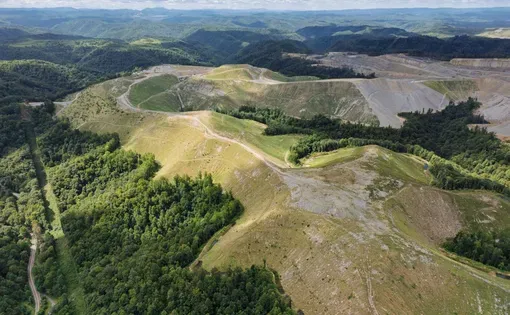
In West Virginia, water is a devastating stumbling block.
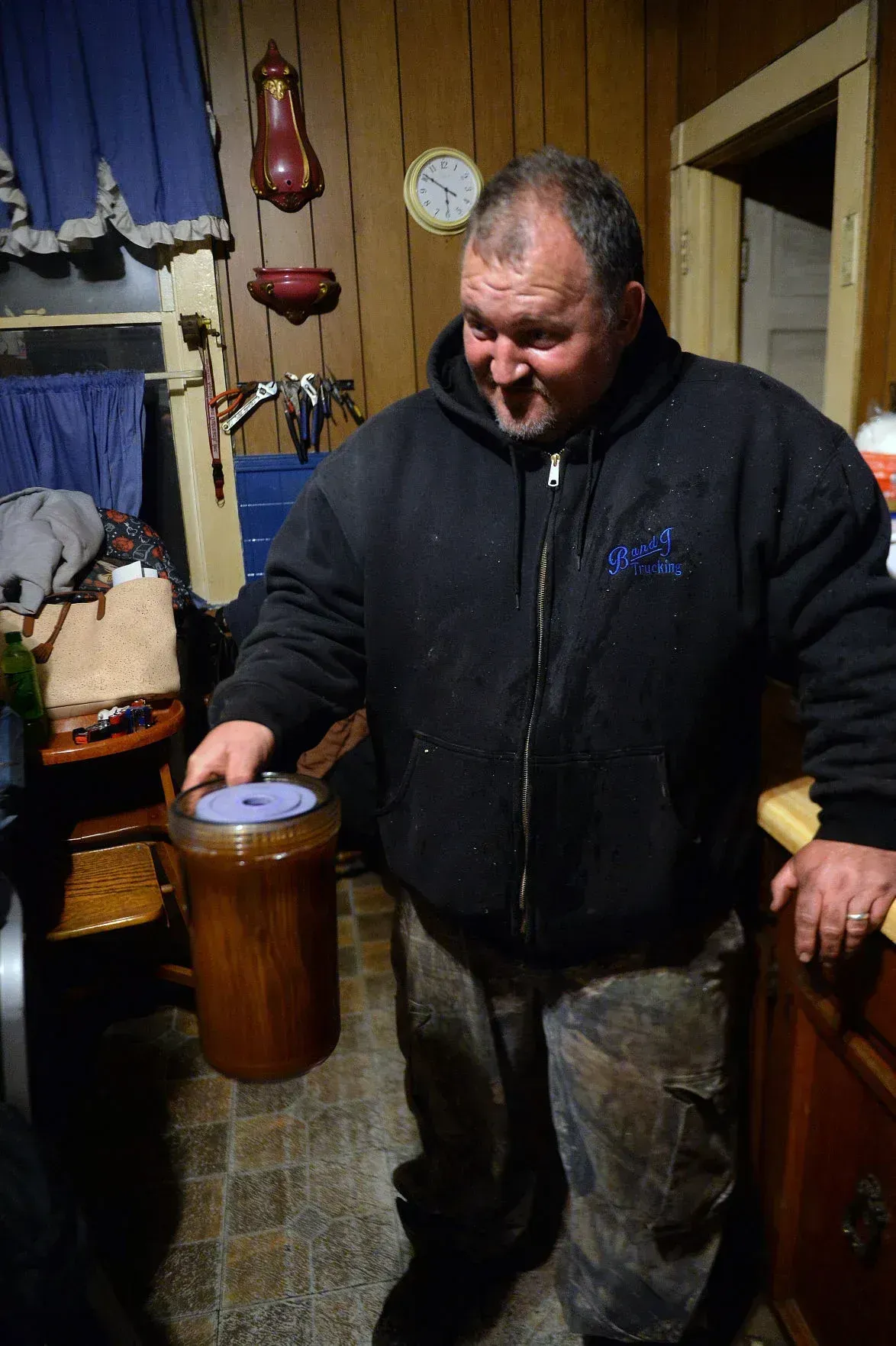
Chris Coleman told West Virginia utility regulators the red water was one red flag among many.
Coleman, one of fewer than 1,000 residents in the McDowell County city of Gary, made it clear the city’s sewer utility had given him reason to see red for years at a November 2023 state Public Service Commission hearing at the McDowell Public Library in Welch to take public comment on whether the utility was “distressed.”
For the previous 10 to 12 years, Coleman said he’d been dealing with sewer utility issues, indicating the city sewer system had flooded his basement repeatedly and that Welch city workers had to come out to his home because Gary city workers wouldn’t clean out his sewer.
“[T]here’s multiple other places where all the sewer and stuff runs in the river,” Coleman said. “The water is terrible. It’s either red or brown half the time.”
The PSC later said the 400-customer Gary sewer system had experienced numerous line breaks allowing sewage to flow into the Tug Fork of the Big Sandy River.
In March 2024, the PSC issued an order determining Gary’s sewer operations comprised a distressed utility under Senate Bill 739 of 2020, which allows the PSC to order the acquisition of a failing water or wastewater utility by what the agency deems the most capable “proximate” utility.

As a nonprofit journalism organization, we depend on your support to fund more than 170 reporting projects every year on critical global and local issues. Donate any amount today to become a Pulitzer Center Champion and receive exclusive benefits!
The PSC determined the McDowell Public Service District was a capable proximate utility and ordered Gary and the district to negotiate and enter into an operations and maintenance agreement.
But momentum toward that end has stalled in the nearly two years since, evidence of how difficult it has been to change a status quo of rampant water quality concerns and chronic underfunding for water and wastewater utilities throughout West Virginia.
After PSC staff requested the agency reopen the case in anticipation Gary and the McDowell Public Service District wouldn’t be able to negotiate an agreement, the PSC in January 2025 set up an advisory assistance team to help the two sides forge a deal.
But in May, PSC staff reported a persistent impasse that it said involved Gary refusal to terminate water service for delinquent and unpaid sewer bills.
McDowell Public Service District board president Jerry Stepp told the Gazette-Mail in a subsequent interview the district could take over Gary sewer operations only along with the city’s water operations – service that Gary has made strictly off limits in negotiations.
Stepp told the Gazette-Mail the McDowell Public Service District has millions of dollars of outstanding loan debt that the district doesn’t want to jeopardize by taking over Gary’s sewer operations. The district pays out $33,000 toward debt every month on 30-to-40-year loans for infrastructure projects, none of which will be retired in the next 10 years, Stepp said.
“We would [have to] do all the repairs, more or less be a maintenance [provider] for them,” Stepp said. “But we cannot do that because if the money was not collected and turned over to the PSD, we’re sitting there in a situation where we cannot get paid.”
Gary Mayor Robert Little told the Gazette-Mail in an interview he fears that the city giving up both its water and sewer operations would lead to it losing its municipal charter.
“You won’t have [any] law enforcement here,” Little said.
In July, Gary unilaterally filed a proposed agreement with the PSC in a pending case under which the McDowell Public Service District would operate the city’s sewer system but not its water system.
Amid that deadlock, concerns about Gary’s water quality have grown.
PSC staff in a July agency filing reported it had determined Gary “for many years has been dealing with the issue of contaminated water, either through discoloration, a greasy film, or water that ruins their clothes.”
PSC staff said residents had been under a boil water advisory “for some time now” and that Gary lacks the personnel needed to “do maintenance and upkeep on customers’ homes and their water works.”
The West Virginia Bureau of Public Health reported very high levels of iron, manganese and alkaline metals present in the water, along with other, unidentified contamination sources, PSC staff said.
The U.S. Environmental Protection Agency has assigned iron and manganese secondary maximum contaminant levels — guidelines to help public water systems manage drinking water for aesthetic considerations, like taste, color and odor.
But although contaminants aren’t thought to pose a human health risk at the secondary maximum contaminant level, according to the EPA, their presence throughout West Virginia communities makes for water that smells foul and has stained residents’ clothes, sinks and tubs.
PSC staff reported issues had been documented with the Gary water works that included:
- Lead in customer’s water
- Corroded pipes
- Exposed wires in facilities
- Lacking and improper monitoring on chlorine, disinfection byproducts and coliform
- Failure to consult with the state after significant fecal coliform found in a groundwater source
Fecal coliform are bacteria found in human and animal waste that indicate fecal contamination which can drive waterborne disease outbreaks. Fecal coliform has a legally enforceable primary standard. It’s zero.
In August, the PSC granted its staff’s request to consider determining whether Gary’s water works is a distressed or failing utility and named the McDowell Public Service District a capable proximate utility.
The case remains unresolved after a Dec. 15 McDowell Public Service District filing in which the district said it lacks the revenue needed to cover engineering and accounting fees for an evaluation and report on the cost of extending water to the city of Gary.
The district said it would need to apply for funding for immediate distribution system and other repairs until connections could be properly evaluated by a qualified engineer.
The PSC on Oct. 7 added the city of Welch as a potential, capable proximate utility, but eight days later, the city responded in a filing that neither it nor its water board has a sufficient budget or staffing to manage Gary’s water utility.
“They're trying to say that our water is in stress, which it is not,” Little claimed to the Gazette-Mail. “Our biggest problem with the water here is it’s got a lot of iron. We treat it the best as we can.”
In a Dec. 1 filing, the city of Gary asserted it has a “technically feasible, funding imminent, project to completely overhaul and replace its water system” poised to lead to a design work loan and construction.
“[N]o one will loan money to this project while this case is active,” Gary contended in the filing.
The PSC denied the city’s request to dismiss the case last month after its staff said the proposed project wasn’t fully funded and was at least one year from bidding.
The PSC has aimed to consolidate struggling water operations throughout West Virginia in recent years, often leaning on investor-owned and expanding West Virginia American Water to do so.
W.Va. has high concentration of small water systems
A report prepared for the Appalachian Regional Commission and published in August found that the population served by larger systems throughout Appalachia had increased by roughly four percentage points in the past two decades.
The percentage of the Appalachian population served by larger systems (73%) still lags behind the U.S. as a whole (84%), the report noted, finding that a slightly larger percentage of the population relies on smaller systems, which it concluded typically have higher costs.
Aging and inadequate infrastructure remain a primary concern for surveyed operators throughout the region, stated the report prepared in conjunction with the University of North Carolina’s Environmental Finance Center and Virginia Tech.
West Virginia’s percentage of population served by small or very small community water systems with 3,300 or fewer connections was 23% in 2024 – fourth-highest in the 13-state Appalachian region and lower only than Mississippi, New York and Virginia.
West Virginia had the country’s highest percentage of public water systems with health-based federal Safe Drinking Water Act violations — 29.2% — in 2024, according to a Gazette-Mail analysis of U.S. Environmental Protection Agency data.
Health-based violations represent the exceedance of maximum contaminant or residual disinfectant levels.
The PSC had determined 30 water and wastewater utilities to be potentially unstable as of Oct. 24, according to a “watch list” of such utilities it prepared as required by state law.
West Virginia American Water has loomed large in state utility consolidations.
The company noted in a PSC filing in a pending case in which it has sought a 27.9%, $60.5 million water and wastewater revenue increase that since 2019, it has acquired the following systems deemed distressed or failing:
- Boone-Raleigh Public Service District water
- Page-Kincaid Public Service District water
- Town of Glasgow water
- Town of Cedar Grove water
- Town of East Bank water
- Shenandoah Junction wastewater
- Cave Road Utilities water and wastewater systems
- Boone-Raleigh Public Service District wastewater
West Virginia American Water noted it has been named a proximate utility in distressed utility cases for Gauley River Public Service District and Kanawha Falls Public Service District. That PSD's general manager, Joseph Goodnite, has called SB 739 the WVAW Acquisition Act, claiming the PSC has used it to allow the company to acquire public service districts.
Roughly $30 million West Virginia American Water’s forecasted $301 million of investment planned through February 2027 is considered new investment for acquisitions, Christina Chard, senior director of rates and regulatory support at American Water Works Service Company, testified in West Virginia American Water’s pending revenue hike case.
American Water Works Service Company is an affiliate of West Virginia American Water parent firm American Water Works Company.
Chard testified in her written testimony that part of the investment was also being used to improve service to small, troubled water and wastewater systems that the company has acquired, including Boone-Raleigh Public Service District wastewater, Shenandoah Junction wastewater and Cave Road wastewater.
West Virginia American Water has had to address “the significant challenges posed by the many small, troubled systems that still exist across the state,” Chard testified.
“WVAWC must raise substantial amounts of debt and equity capital and, in the process, must demonstrate its ability to provide a reasonable return to convince investors to commit their funds to the Company for its use,” Chard testified to justify the company’s request for further rate relief.
In January 2025, the PSC approved for West Virginia American Water what the company said would result in a 2.78% rate increase, or roughly $2 per month, effective Jan. 1, 2025, for the average residential water and wastewater customer using roughly 3,000 gallons per month.
From 2014 to 2024, the company saw its net income nearly quintuple, from just below $8.5 million in 2014 to over $40.8 million in 2024, according to reports it has filed with the PSC.
Meanwhile, the average monthly West Virginia American Water residential bill for 3,100 gallons grew from $29.54 in 2005 to $65.99 in 2022, according to data from the West Virginia Consumer Advocate Division, an independent arm of the PSC charged with representing residential ratepayers’ interests.
West Virginia’s average $82.40 monthly cost for 3,400 gallons of water use was 14th-highest among 325 utilities statewide as of Dec. 26, according to PSC data.
West Virginia had the nation’s highest monthly water utility cost at $121 — $6 higher than next-highest California — according to a report published in October by Move.org, a moving industry recommendation website.
Rethinking recommended
PSC Chairman Charlotte Lane signaled that West Virginia American Water customers’ rates could be about to climb higher at a PSC evidentiary hearing on the company’s pending rate hike request last month.

David Dismukes, a Baton Rouge, Louisiana-based consulting economist with the Acadian Consulting Group, a research and consulting firm that focuses on regulated and energy industries, recommended in written testimony the PSC discontinue West Virginia American Water’s Distribution System Improvement Charge, or DSIC surcharge.
Dismukes contended the company’s post-2017 investment performance hasn’t yielded meaningful ratepayer benefits despite accelerated capital spending of over $322 million, citing a company unaccounted-for water rate increase of 8.4% over the last four years relative to the first four years of the program while boil water advisories increased by 42%.
Unaccounted-for water generally is recognized as water lost or not traceable within a distribution system before it gets to consumers.
“So would you have this commission just sort of close our eyes and let West Virginia American Water operate like a lot of the small water utilities do in the state that can’t even provide potable water?” Lane asked another Consumer Advocate Division witness, Ralph Smith, later.
“No, I’m not suggesting that you let the quality of service deteriorate,” Smith, a senior regulatory consultant at Livonia, Michigan certified public accounting firm Larkin & Associates PLLC, replied. “I think there has to be some kind of balance, though.”
The DSIC, Smith suggested, should be “terminated and rethought.”
When asked by Lane what rate arrangement could work better, Smith eyed Arizona.
Smith noted that in December 2024, the Arizona Corporation Commission released a policy statement allowing regulated utilities to propose a formula rate plan in future rate cases before that commission.
A formula rate plan allows a utility to adjust its base rates outside a general rate case, typically annually, based on an actual or projected rate of return on rate base, which is the value of property used by a utility to serve the public.
In addition to creating funding opportunities for ongoing maintenance, the Appalachian Regional Commission project team's report recommended:
- Ensuring compliance with Safe Drinking Water Act monitoring and reporting requirements
- Improving the public’s perception of centralized water system quality
- Potentially reducing the use of expensive, microplastic-laden bottled water
Without more funding, West Virginia American Water is well-positioned to grow on the state’s water service scene as a big fish in what has been a cash-strapped, contaminated pond.
“Even without the DSIC, the company’s coming in [asking] for base rate increases every couple of years and double-digit increases,” Smith testified to the PSC. “There seems to be no end in sight.”