Story
 May 28, 2026
Advocates Hope Mumbai Coastal Garden Will Help Lessen Climate Change Impacts
Country:

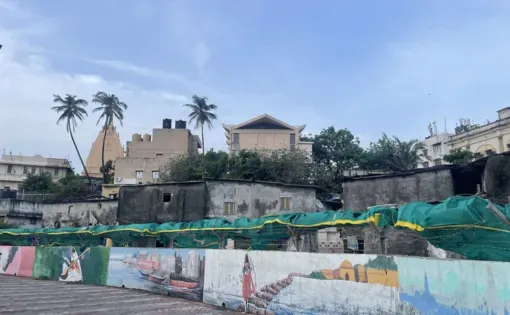
Polluted air and harsher weather are challenging the livability of Mumbai. Citizens want an upcoming...
On a humid November evening, Mamta Mangaldas, a resident of Mumbai, India’s financial capital, walks ahead of me. We take a small pathway that cuts away from the bustle of Warden Road in the Breach Candy neighborhood. There is a blue sign that reads in Marathi and English: “Way to Coastal Road Promenade.”
After a quick rocky crossing, we find ourselves on a meandering path. There is a fence on the right that blocks the view of informal settlements. We emerge to see cars in the distance on the newly constructed 18-mile Mumbai Coastal Road.
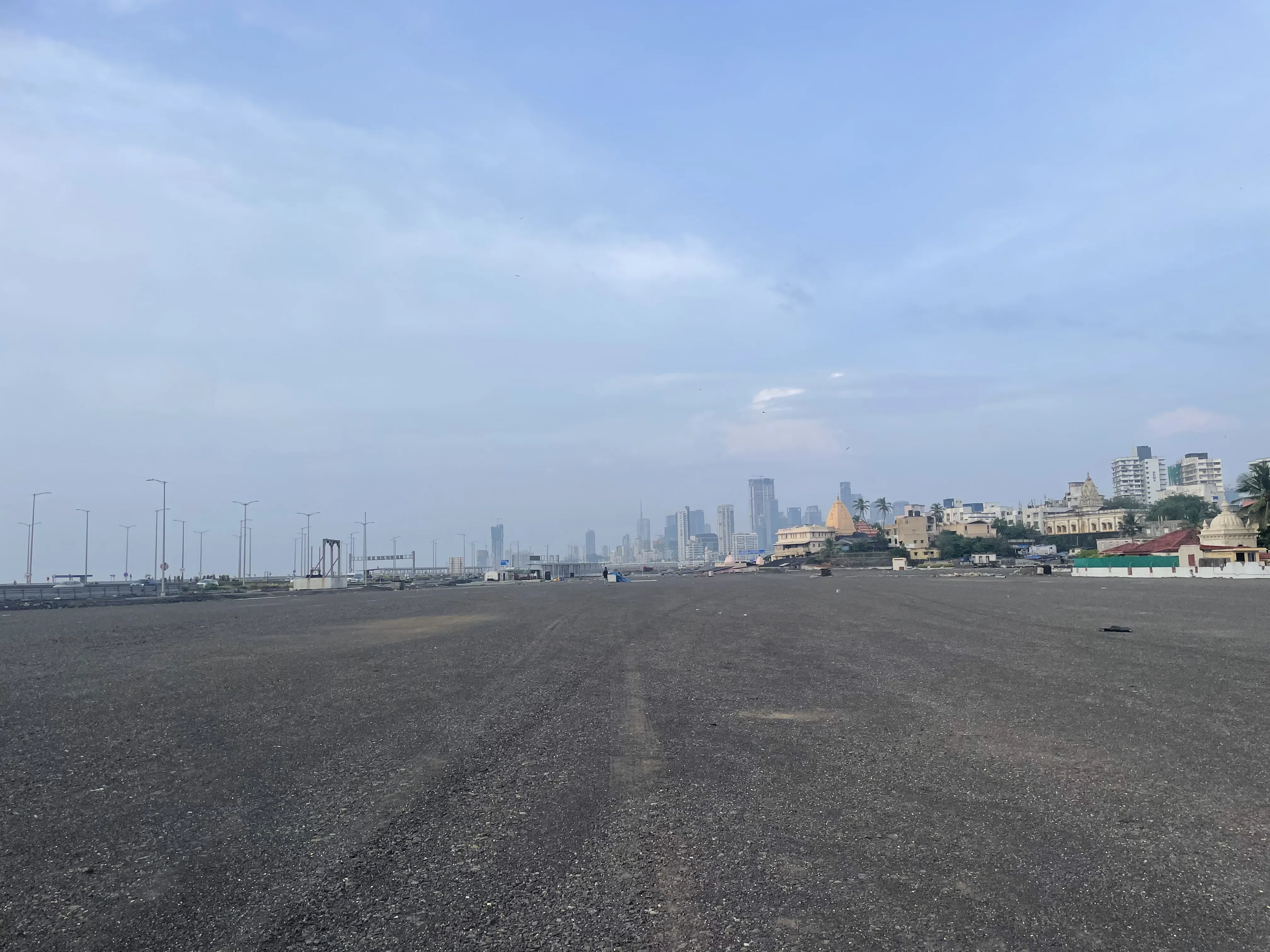
Beneath our feet is a barren expanse of silt and gravel that extends about 130 acres from Nepean Sea Road to Worli, almost five times the size of Shivaji Park, the city’s biggest park.

As a nonprofit journalism organization, we depend on your support to fund more than 170 reporting projects every year on critical global and local issues. Donate any amount today to become a Pulitzer Center Champion and receive exclusive benefits!
“Can you imagine, all of this used to be ocean,” Mangaldas said.
Mangaldas is part of a citizens’ collective called the Friends of the Mumbai Coastal Forest, which includes residents, historians, architects, urban planners, and civil engineers. They have witnessed this land change from an intertidal area along the coast into a public development project of the city.
In two years, it is expected to become a coastal garden, built by the country’s richest municipality and India’s richest family.
Citizen collectives like Mangaldas’ are part of a grassroots effort asserting their voice to shape civic infrastructure. They want the garden to be a restorative, native forest that can mitigate the adverse impact of climate change.
The scale of this project makes this “a rare opportunity,” the citizens’ collective told me in an emailed statement. “What is built here will shape Mumbai’s microclimate for generations,” it said.
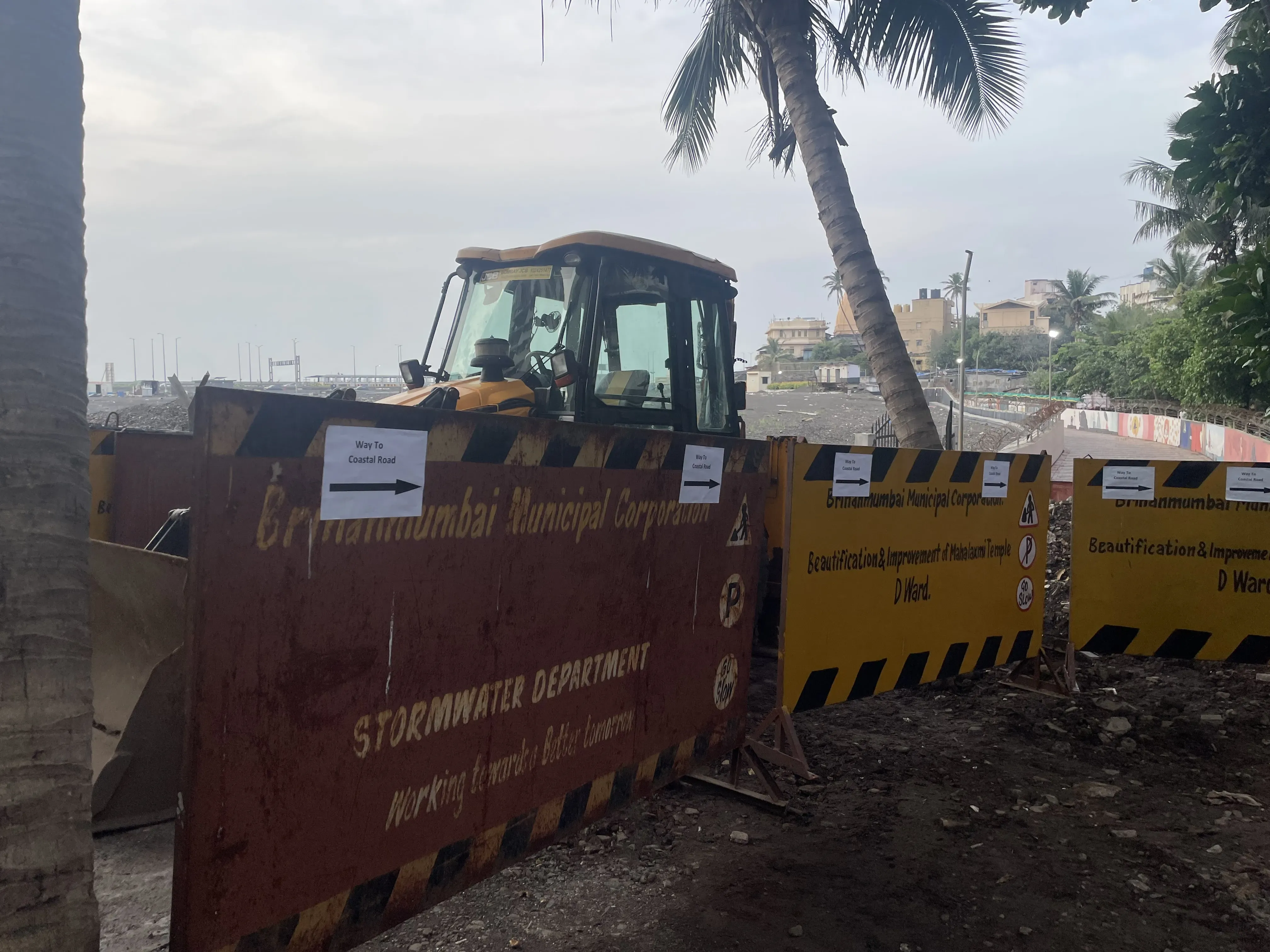
The land is part of 274 acres reclaimed from the sea by the city’s municipal authority, Brihanmumbai Municipal Corporation (BMC), according to their website. It was part of BMC’s plan to decongest existing roads and to build an arterial roadway, the Mumbai Coastal Road, along the western edge of the city. After the road was constructed, about 130 acres of the remaining reclaimed area was allocated for landscaping and gardens. And Reliance Foundation, the philanthropic arm of Ambani’s Reliance Industries Limited, has been entrusted with building it.
Conversations around the project’s ecological impact are important for the city, where there is little public discourse on civic infrastructure, according to Lubaina Rangwala, who heads the urban development program for World Resources Institute (WRI) India, a nonprofit think tank.
“How much of it [a coastal garden] will actually act as a buffer is not something we can fully anticipate, but any amount of greening will decrease temperatures and create microclimates that are much more habitable,” Rangwala said.
And evidence suggests that Mumbai is becoming less habitable.
Air pollution is driving elevated health risks and rising deaths in Indian cities, even the cleanest ones, according to Health Policy Watch, a global health reporting watchdog. It cited a 2024 study published in The Lancet that attributed almost 5,091 annual deaths to air pollution.
That figure represents about 5.9% of all deaths in the city, according to Health Policy Watch.
As of 2025, the average annual air quality index (AQI) in Mumbai was 111, according to AQI.in, an open-source air quality monitoring platform. In the first two months of 2026, when the reporting on this piece was completed, Mumbai’s AQI reached 168. For context, levels between 151 and 200 are categorized as “red,” or “unhealthy.”
But Mumbai’s environmental concerns are not limited to clean air.
Residents of the city, known as Mumbaikars, are adept at wading through the annual monsoon season. But in August 2025, they experienced some of the highest levels of rainfall since 2020, which significantly disrupted life and commute.
Climate change is making monsoon rains in the city deadlier, especially for residents living in poverty, according to a November 2025 report by the University of Chicago.
Their study found that rainfall causes more than 8% of Mumbai’s deaths during the monsoon season, and that more than 80% of these deaths occur in informal settlements.
With the generational impact of these concerns weighing on the public consciousness, it is not surprising that a public development project on 130 acres has drawn significant interest.
Some, like Susieben Shah, see the Mumbai Coastal Garden as “one of the largest open spaces that the city is going to be gifted.”
The project is an avenue for more public dialogue to ensure better open spaces and combat pollution, according to Shah, co-founder of South Mumbai Residents Association.
“Residents, whether in Malabar Hills, Worli, or other areas abutting the coastal road, we are the real stakeholders because we have lived here over generations,” Shah said.
Shah’s residents association hosted the first public meeting in February on the proposed development. An invite to the meeting circulated on WhatsApp opened with a question: “Worried about how the 70 hectares of open coastal road land would be utilised?”
The meeting was attended by Milind Deora, a member of the upper house of the Indian Parliament, BMC Commissioner Bhushan Gagrani, and Reliance representative Shivam Jhumani, according to attendees this reporter spoke to.
There was also a public presentation of a draft concept plan by Jhumani, attendees said. According to the draft reviewed by this reporter:
- 55% of the project area is planned as forests and woods.
- 25% as open recreational areas, which will include parks, a petting zoo, pickleball courts, and a Ferris wheel.
- 10% will be plaza and hardscape features that provide accessibility.
- The remaining 10% will be pathways.
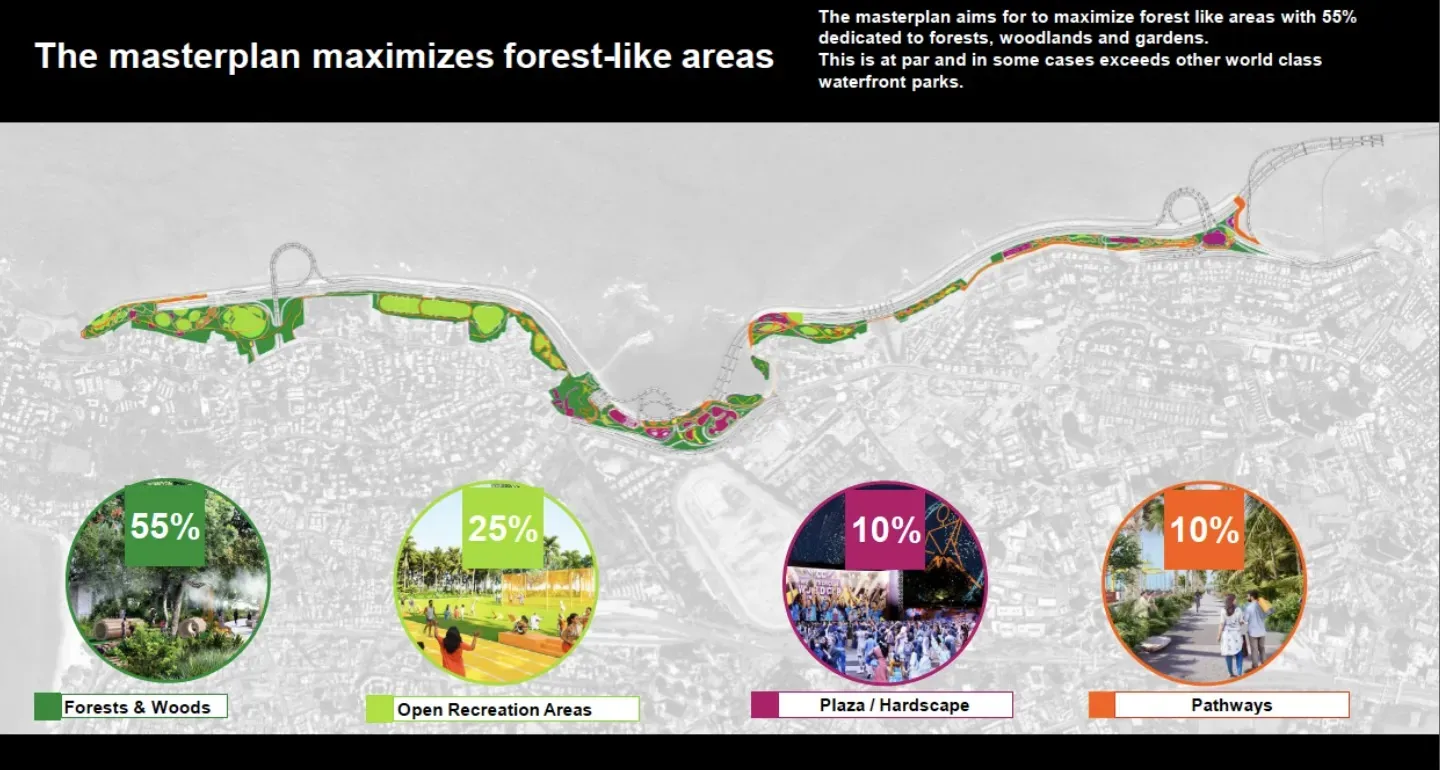
The plan stated that it aims to “maximise forest-like areas” and include “landscape character zones” across the site.
With 55% dedicated to forests, woodlands, and gardens, the coastal garden is “at par and in some cases exceeds other world-class waterfront parks,” according to the draft. Reliance Foundation did not respond to requests for comment.
The plan includes 28 amenities over 13 access points from the edges of the Breach Candy neighborhood all the way to Worli.
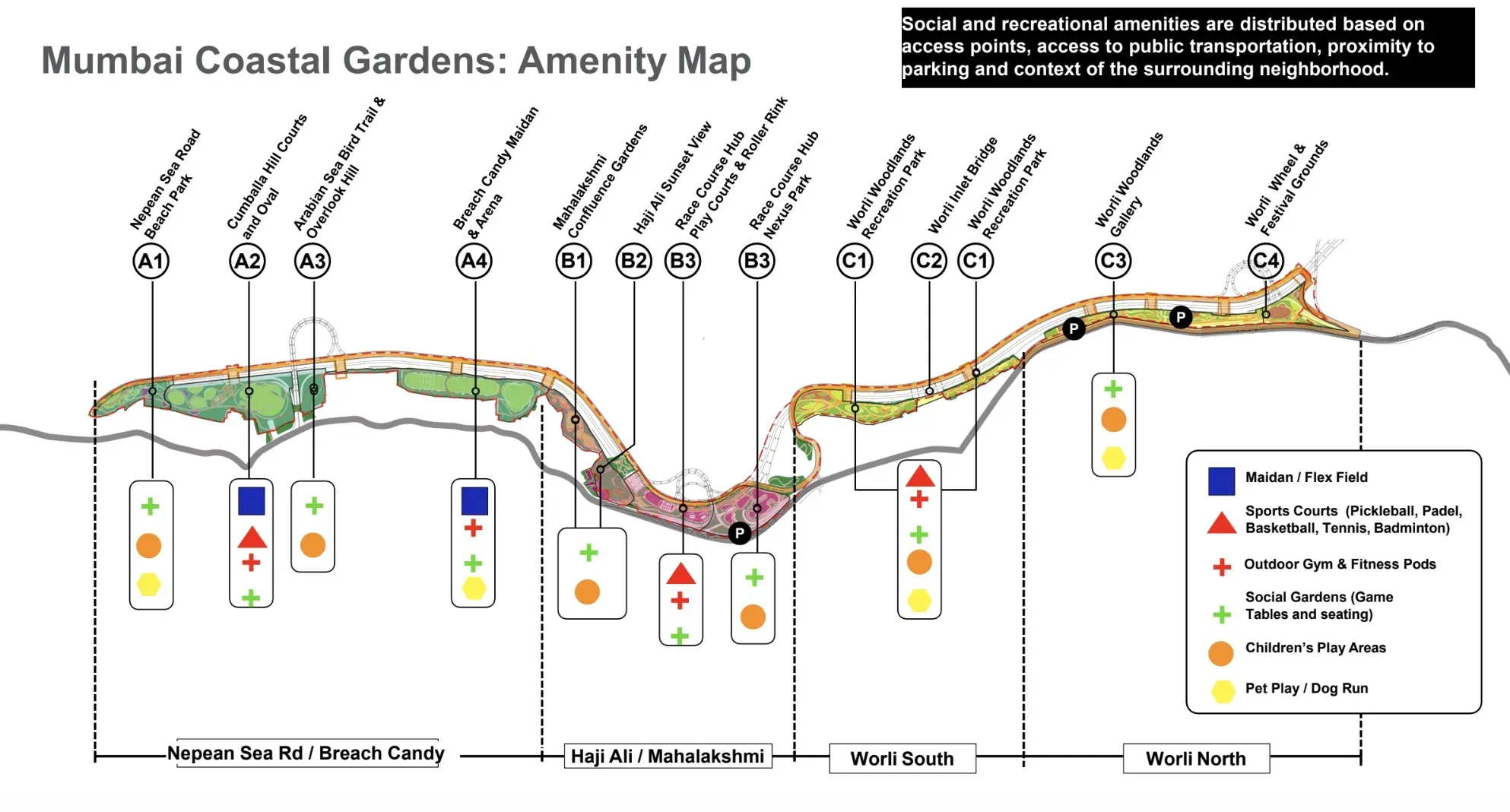
Recreational amenities can coexist with the forested space, but should be “climate sensitive and secondary to ecological restoration,” Friends of the Mumbai Coastal Forest said.
“In a coastal city facing rising temperatures, flooding, and sea level risks, the primary objective of these 100 acres should be ecological performance: dense native canopy, soil restoration, biodiversity corridors, and heat mitigation,” the collective added.
Historically, climate consciousness about city infrastructure remains low as development projects prioritize efficiency, connectivity, and infrastructure over safety, resilience, and livability standards, according to WRI’s Rangwala.
But this time, Rangwala sees a difference in approach as citizen groups are actively talking about ecologically sensitive greenings.
This is where the semantics around the project become important.
Using the word “forest” evokes the idea of a natural formation. But the coastal garden is very much a constructed green space, and in this case, it will also be subjected to windy conditions and salt sprays from the sea.
Species belonging to the region and those that can “thrive and survive in urban conditions” will be planted, supported by “potentially sand-based, well-drained soils—a technique we have used in other similar conditions,” the draft document noted.
The meeting also addressed long-standing public concerns about the land’s future.
The coastal garden land will not be used for “any commercial exploitation,” Gagrani, BMC commissioner, told attendees. He added that the municipal body submitted an undertaking to the Supreme Court promising the same. Gagrani and the BMC did not respond to requests for comment.
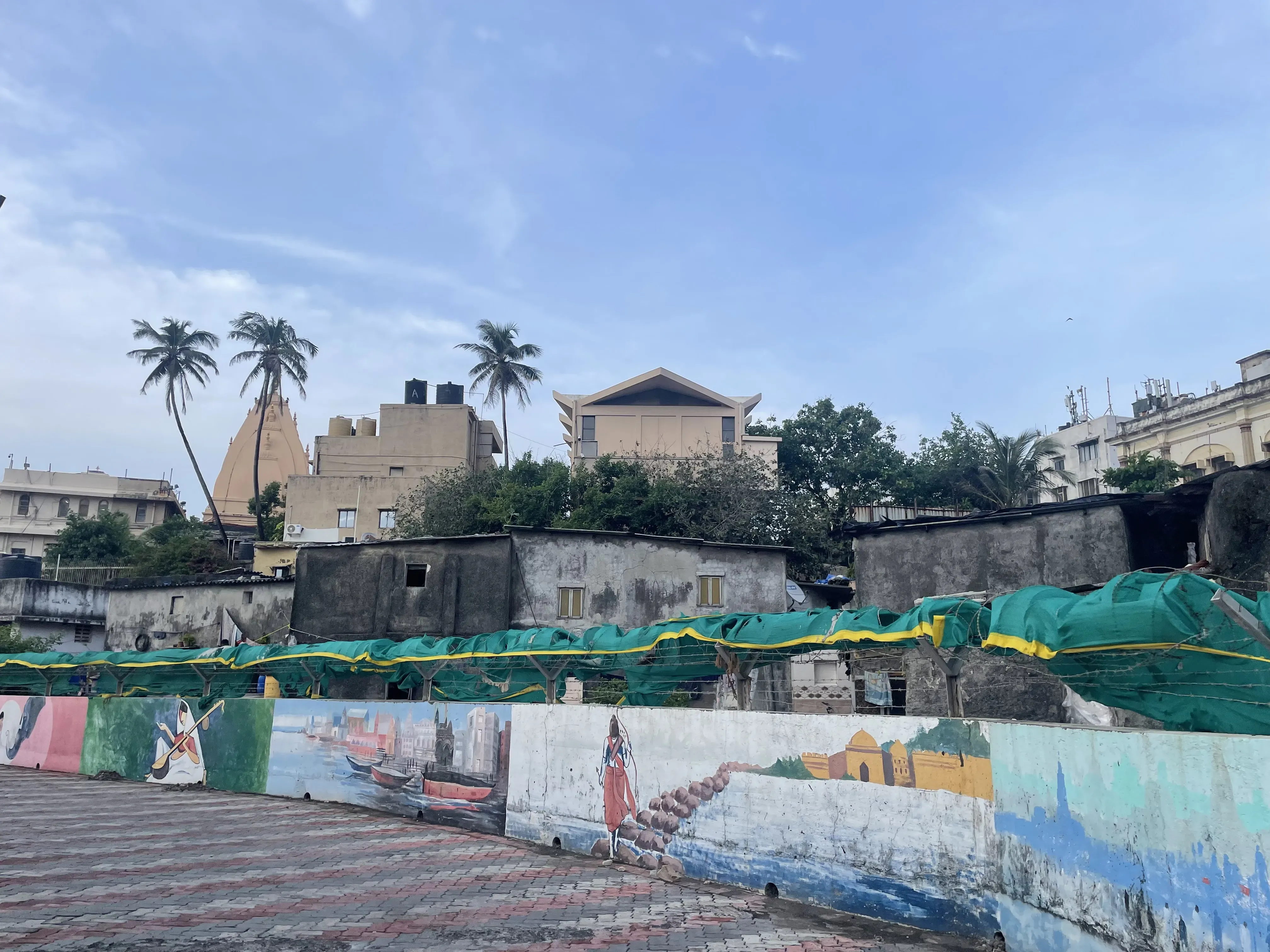
The undertaking was born out of a larger controversy surrounding the reclamation of land for the coastal road that predates the idea of the coastal garden.
In early 2015, the Maharashtra Coastal Zone Management Authority, a state level regulatory body, amended regulations to allow reclamation and construction of a coastal road. This was challenged at the Bombay High Court, where the court sided with the petitioners who wanted to restrain reclamation activities over the impact on coastal ecology and intertidal fishing practices.
The petitioners, which included fishing communities, argued that the BMC had not conducted public hearings and clearances were granted without assessing their impact on livelihoods.
“The victory in the High Court of Bombay, however, was short-lived,” one of the petitioners, Shweta Wagh, wrote in a paper published in the Economic and Political Weekly.
The country’s Supreme Court reversed the Bombay High Court decision, allowing the municipal agency to reclaim land and build the road. Subsequent orders allowed for “other development” like the construction of gardens and green open spaces.
In early 2025, BMC invited bids for the “development and long-term maintenance of landscaping and garden, as well as maintenance of promenade” at no cost to taxpayers. Ambani’s Reliance won that bid.
As for the fisher communities, BMC offered financial compensation along with better access for boats at the bowstring arch bridge in Worli to go further into the sea.
The municipal authority appointed Mumbai-based Tata Institute of Social Sciences (TISS) to assess the impact of the project on the fisherfolk at Worli Koliwada and Lotus Jetty in Haji Ali, two localities that were affected by the reclamation. In February 2023, TISS submitted a list of 1,343 affected fishermen and estimated ₹130 crores ($14 million) in compensation, according to its website.
An official with the municipal authority who wished to remain anonymous estimated that ₹64 crores (about $6.9 million) were awarded to some of the displaced fisherfolk between October 2018 and May 2024. The monetary compensation continues till 2030 and is distributed in line with the TISS report, the source said.
“Ever since that portion of the land was reclaimed, the existing geo-morphology, the intertidal ecology has been completely altered and almost irreversibly destroyed,” Wagh said in a phone interview. “There is no possibility for the fisher community to be able to practice or conduct their livelihoods in that area in the way that they used to,” she added.
But the promise of a possible green, open space in Mumbai has other takers.

“What the city really needs, or lacks, are safe open spaces where the public can freely enter, use, enjoy, and then leave,” said Gautam Patel, a retired judge of the Bombay High Court.
The per capita accessible open space in the city is 1.24 square meters (about 13 square feet). This is a fraction compared to other major metro cities in India like New Delhi and Bengaluru, which offer 21.5 square meters and 17.3 square meters per capita, according to an article published in the The Journal of Public Space in 2024.
Patel agrees that decisions regarding the land need a greater degree of public participation. Referring to the New York High Line Park, Patel said in November that the city, its private contractor, Reliance Industries, and the citizens groups can negotiate a public trust document that would cede accountability to citizens.
Attendees of the February meeting told this reporter that Gagrani said that there would be no public trust because the municipal authority will still execute the project with help from the private sector.
No new meetings have been held after February, but Shah’s South Mumbai Residents Association is hopeful of more public meetings to shape the coastal garden to come. Reliance has not publicly named its development team at the time of this reporting.
Climate buffer expectations and public participation aspirations aside, one thing remains clear about the garden to come: It will be a closely watched project.
“This is our city. We care about it. And we want to leave it in a better place for our children than we had it,” Mangaldas said.