Story
 March 10, 2025
Population Pressure Blamed in Decline of Kigali’s Urban Forests
Country:

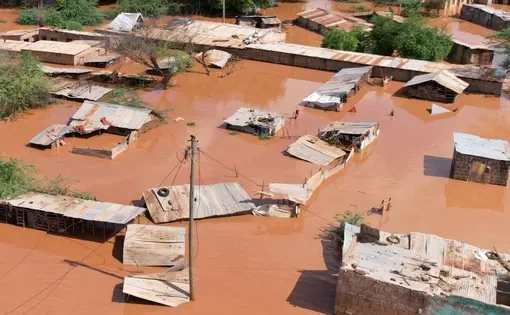
Rapid urbanization is leading to a dramatic loss of urban forests and green spaces.

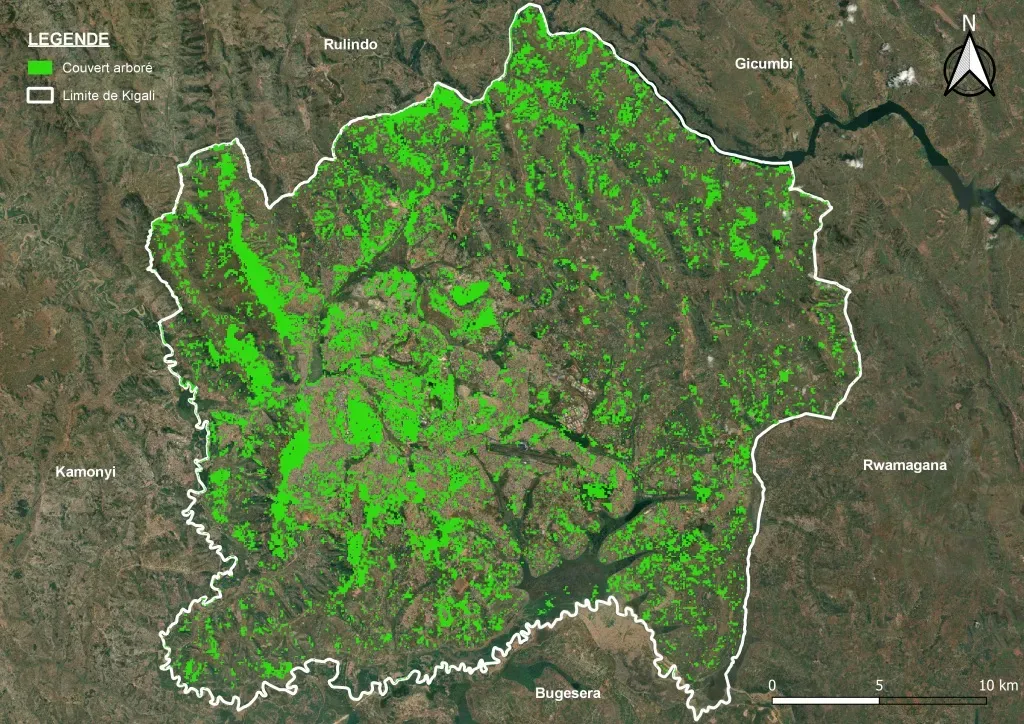
Between 2009 and 2020, deforestation rose by 23% in Kigali, the capital of Rwanda, while afforestation increased by 26.4%. On average, 2.6% of forest cover was added each year, while 2.3% was lost annually.

As a nonprofit journalism organization, we depend on your support to fund more than 170 reporting projects every year on critical global and local issues. Donate any amount today to become a Pulitzer Center Champion and receive exclusive benefits!
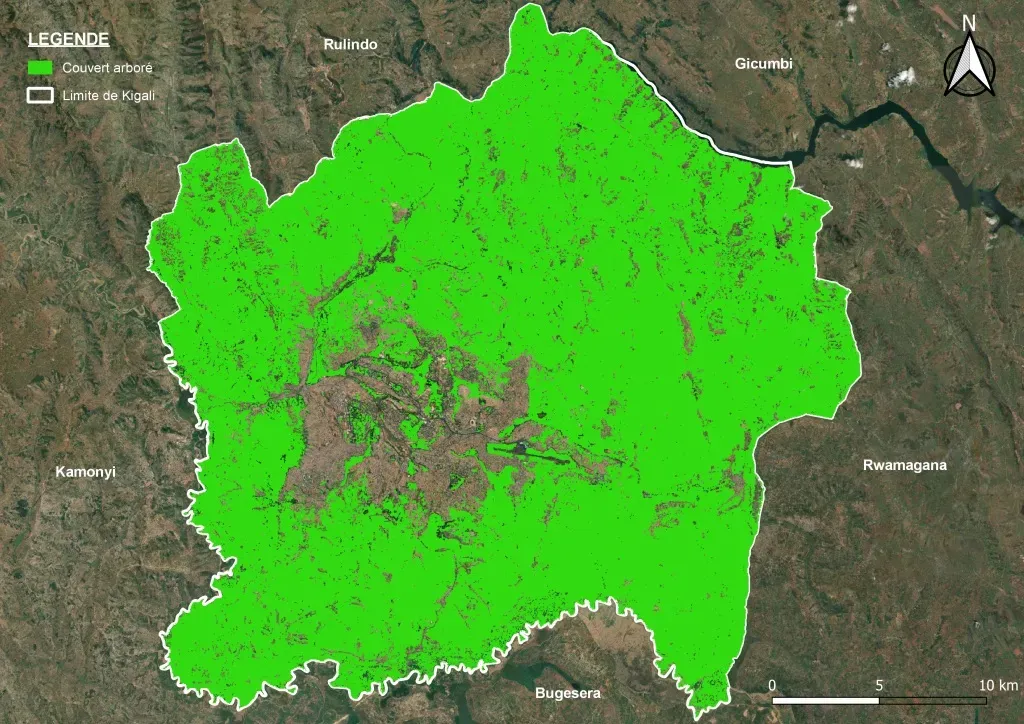
Meanwhile, the net annual increase in forest cover in Kigali has been just 0.3% since 2009.
Siras Musengamana, a 67-year-old from Gitega Sector in Nyarugenge District, has spent almost 50 years in Kigali. He said urban forests in the city were improving the overall air quality and mitigating the urban heat.
However, he also said urban forests have decreased in different areas of the capital due to housing projects, population pressure, and road infrastructure in rapid urban development.
Kigali, composed of Gasabo, Kicukiro and Nyarugenge districts, occupies an area of 730 square kilometres. According to Rwanda’s 2019 forest cover map, Kigali has a forest cover of about 12,641 hectares, which represents 17% of the city’s total land area.
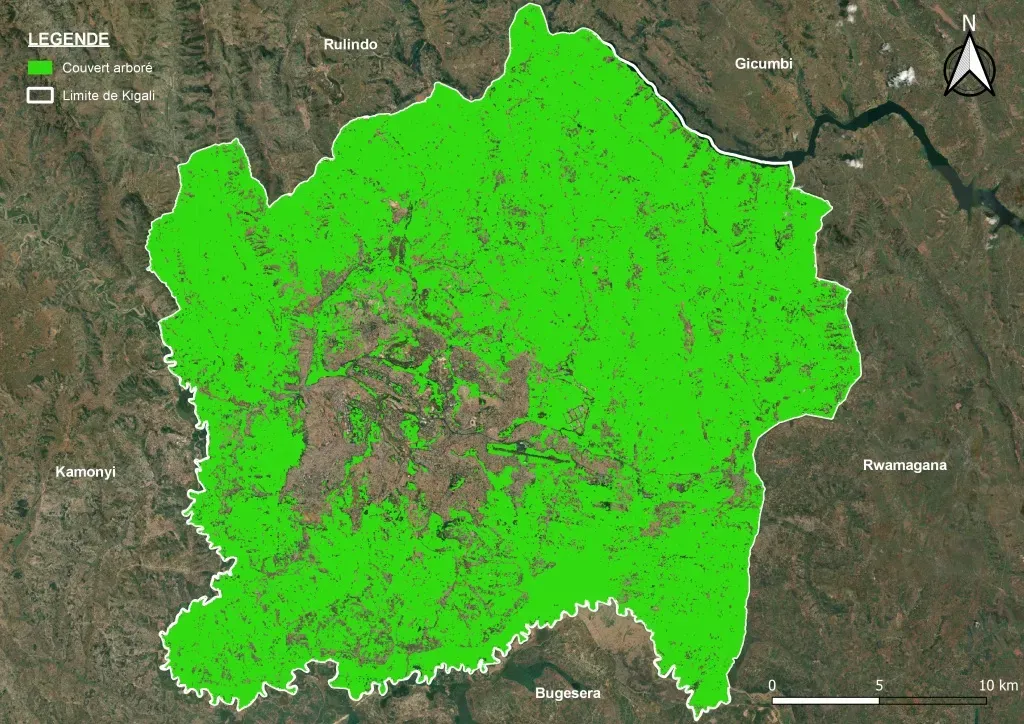
Nyarugenge has the highest proportion of forest cover, with 2,836 hectares (21% of the total district land), followed by Gasabo with 8,381 hectares (20% of the district’s land area). Kicukiro has the lowest forest cover, with only 9%.
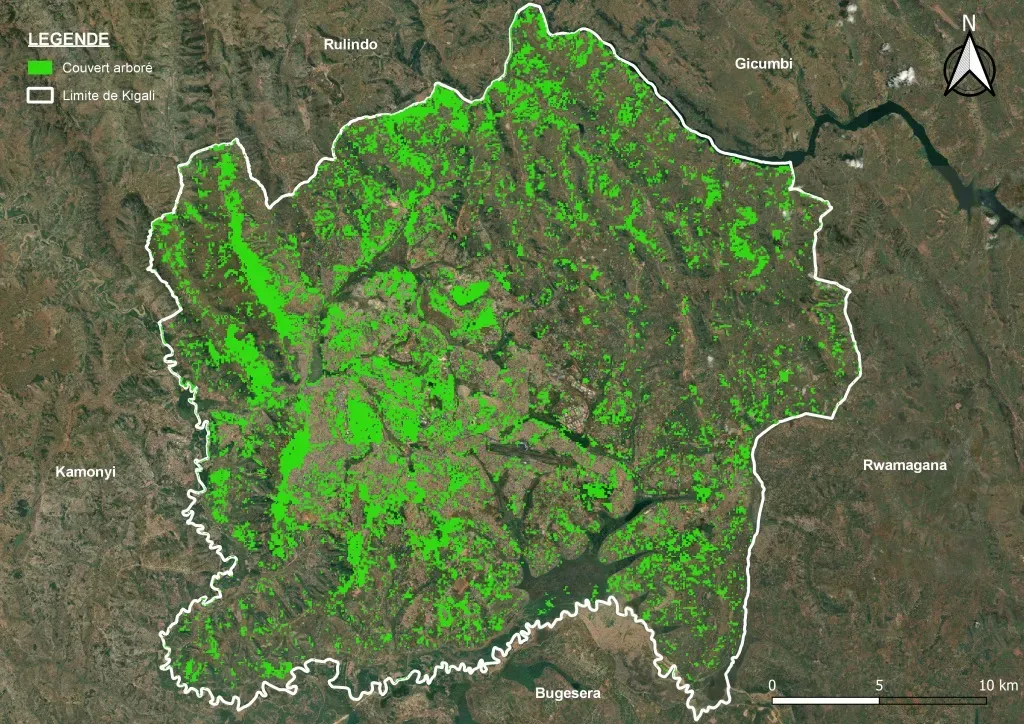
There has been a decline in forest cover within Kigali due to urban expansion, and some are calling for consistent tree planting across various zones.
“There were forests with trees called Imigenge [Acacia hockii] in Kimisagara and Gitega sectors. The trees have decreased due to human settlement and other infrastructure development. The forests were still there when there was low demographic pressure,” Musengamana said.
Housing projects, road construction, and other developments are visible in Nyarugenge district, which accommodates the two sectors.
History of trees that have declined in Kigali
Some areas of the city got their names from trees covering the area. The name “Nyarugenge” comes from the trees called Imigenge (acacia), which once dominated the area. In addition, Musengimana explained that Muhima Sector in Nyarugenge district used to be a habitat for hyenas, and the area was named “Umuhima w’impyisi,” meaning “the Habitat for Hyenas.” However, these animal species have disappeared due to human settlement as the forests diminished.
The name "Kimihurura," a sector in Gasabo District, came from the trees “Imihurura,” which were once abundant there before being eroded by population pressure.
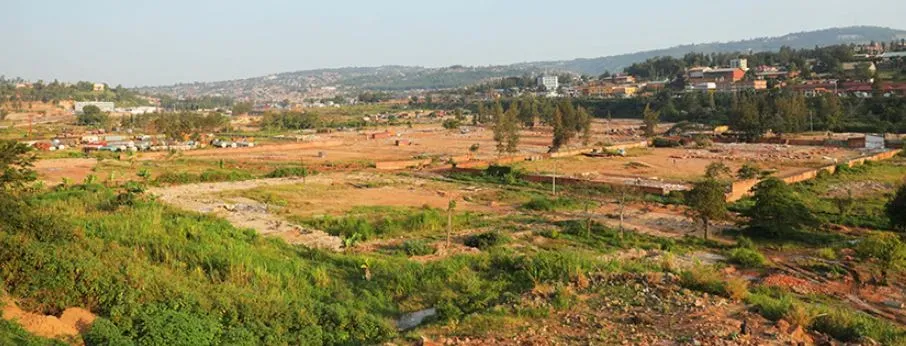
The name "Kimironko," another sector in Gasabo District, originated from “Imironko,” a flexible tree used to make arrows for traditional warfare.
Today, very few of these trees remain.
“We understand that forests attract rainfall and play a role in curbing flooding and landslides, but the land dedicated to forests has decreased due to urban development,” Musengamana added.
“There were many forests in the Gikondo area. Houses were scattered and no one could pass through such forests due to fear. Currently, the area is inhabited with lights on the roads,” added Saidat Twaha, a 70-year resident of Kicukiro District.
Augustin Iyamuramye, a resident in Masaka Sector of Kicukiro added: “ We have intention to plant trees, but the land for trees is being reduced by settlement.”
Pressure on three mountains in Kigali
Such population pressure, the need for human settlement, and the exploitation of forest resources also encroached on three forested hills in Kigali: Mount Jali in Gasabo District, Mount Kigali in Nyarugenge District, and Mount Rebero in Kicukiro District.
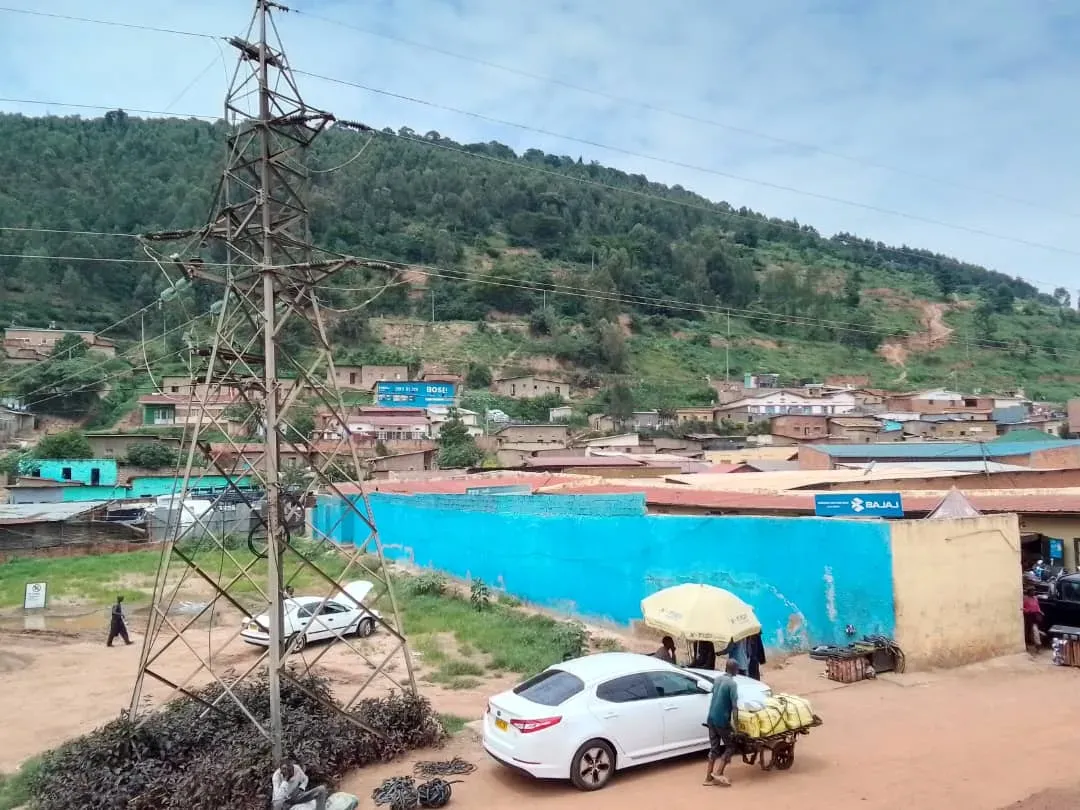
In 2020, police and local authorities in Nyarugenge asked communities around Mount Kigali forest to protect it. Residents were also reminded to report people who are engaged in deforestation, which affects the protected forest.
Currently, Kigali is relocating residents in high-risk zones on the three hills. Athanase Mukuralinda, a forestry expert in Rwanda, said that without urban forests cities will remain vulnerable to disasters such as flooding and other climate change effects.
“People are not planting trees, yet transport and industries are polluting our cities. We need trees to improve overall air quality in our city. We have a model in Kiyovu area in Kigali where people are living with trees. We need such trees in Nyamirambo, Kanombe, Remera areas and others,” he noted.
Dealing with housing pressure on forested land
Concorde Kubwimana, an environment expert from the University of Lay Adventists of Kigali (UNILAK), said trees should be increased in all possible spaces across the city.
“We can’t stop urbanization, but we can build and still maintain friendly trees in and around our homes, buildings, roads, and others. It is possible to plant five trees, especially fruit trees, in one’s parcel of land. It is also possible to plant trees along neighborhood streets,” he explained while urging the city to consider green spaces with reforestation.
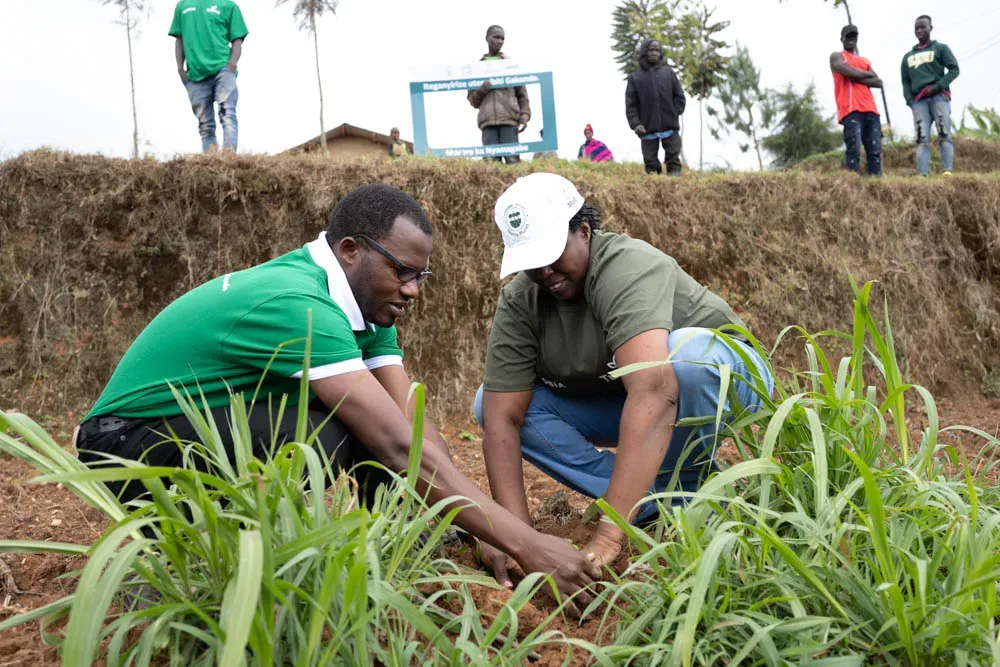
Concorde Nsengumuremyi, the director general of the Rwanda Forestry Authority (RFA), says forests are facing challenges due to construction and demographic pressure.
“You can build houses, roads, and plant ornamental trees. Between one house and another, you can plant trees. We are focusing our efforts in Kigali City, planting indigenous trees and other endangered species. Development activities can be carried out while also planting trees. As the population grows, we need to plant trees; without doing so, we cannot survive. We need to plant trees at health centers, factories, and other places, ensuring forests coexist with development activities,” he stated.
To reduce housing pressure on land for forests and other green spaces, Olivier Kabera, the Minister of State in the Ministry of Infrastructure, said that with the forthcoming revised housing policy, vertical housing will become mandatory through the application of construction permits in most parts of the country.
Vertical housing refers to the construction of multi-story buildings, which minimize land use compared to single-family homes.
“Forests are on the decline. Housing is increasing in places like Bugesera, Ruyenzi [Kamonyi], Musanze, and others.
We need to take urgent action. Vertical housing is the solution. We want to enforce it so that building permits are provided only if the landowner plans to implement vertical housing in cities and other areas,” he said.
Planting campaign for 3 million trees
According to Rwanda’s 2019 forest cover map, urban forestry efforts should be focused on Kicukiro District, which consistently had the lowest forest cover between 2009 and 2019.
The city master plan designates 87.7 square kilometers, or 12% of Kigali’s total land area, as a forest zone.
Kigali is aiming to plant 3 million trees as part of a five-year campaign called “My Tree.”
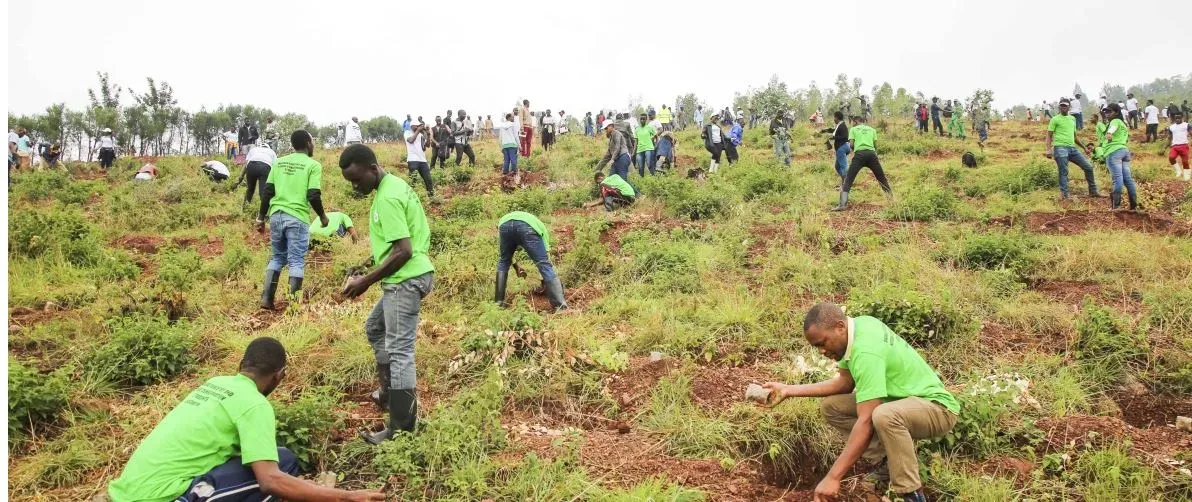
The city is prioritizing the planting of indigenous tree species, in line with national priorities, while also promoting both native and exotic species.
Emma-Claudine Ntirenganya, the city’s spokesperson, stated, “The City of Kigali’s goal to encourage Kigalians to plant at least three million trees over the next five years, whether indigenous or fruit-bearing, is ambitious yet inspiring. Trees play a vital role in cleaning our air. A mature tree can absorb up to 48 pounds (22 kilograms) of CO2 every year, which helps reduce pollution and improve air quality. Even a single avocado tree can make a difference, benefiting both the environment and nearby residents.”
In addition, the city aims to plant five fruit trees per household, including avocado, mango, orange, citrus, papaya, and guava trees.
Mark Cyubahiro Bagabe, the Minister of Agriculture and Animal Resources (MINAGRI), stated that the initiative to plant five trees per household is also intended to combat malnutrition while fighting climate change.
The city will also establish youth-centered model fruit orchards to engage young people in reforestation efforts.
“You can have infrastructure and trees coexisting. This means the initiative will mix fruit trees with other trees which are part of urban forests. We can also green vegetation even on buildings as well,” he noted, revealing that the Ministry of Agriculture planted vegetables through vertical farming on a building.
The government has also launched the Scaling Urban Nature-Based Solutions (NbS) for Climate Adaptation in Sub-Saharan Africa (SUNCASA) project in Kigali.
This project will support the Igiti Cyanjye campaign, facilitating tree planting through 2026 and creating over 5,000 green jobs.
Led by the International Institute for Sustainable Development (IISD) and the World Resources Institute (WRI), the SUNCASA project aims to benefit 2.2 million people living in high-flood-risk areas across three major African cities—Dire Dawa in Ethiopia, Kigali in Rwanda, and Johannesburg in South Africa—by enhancing their resilience to flooding.
Kubwimana, who is also the Founder and Executive Director of the Save Environment Initiative (SEI), said there are plans to plant 100,000 trees in Kigali City.
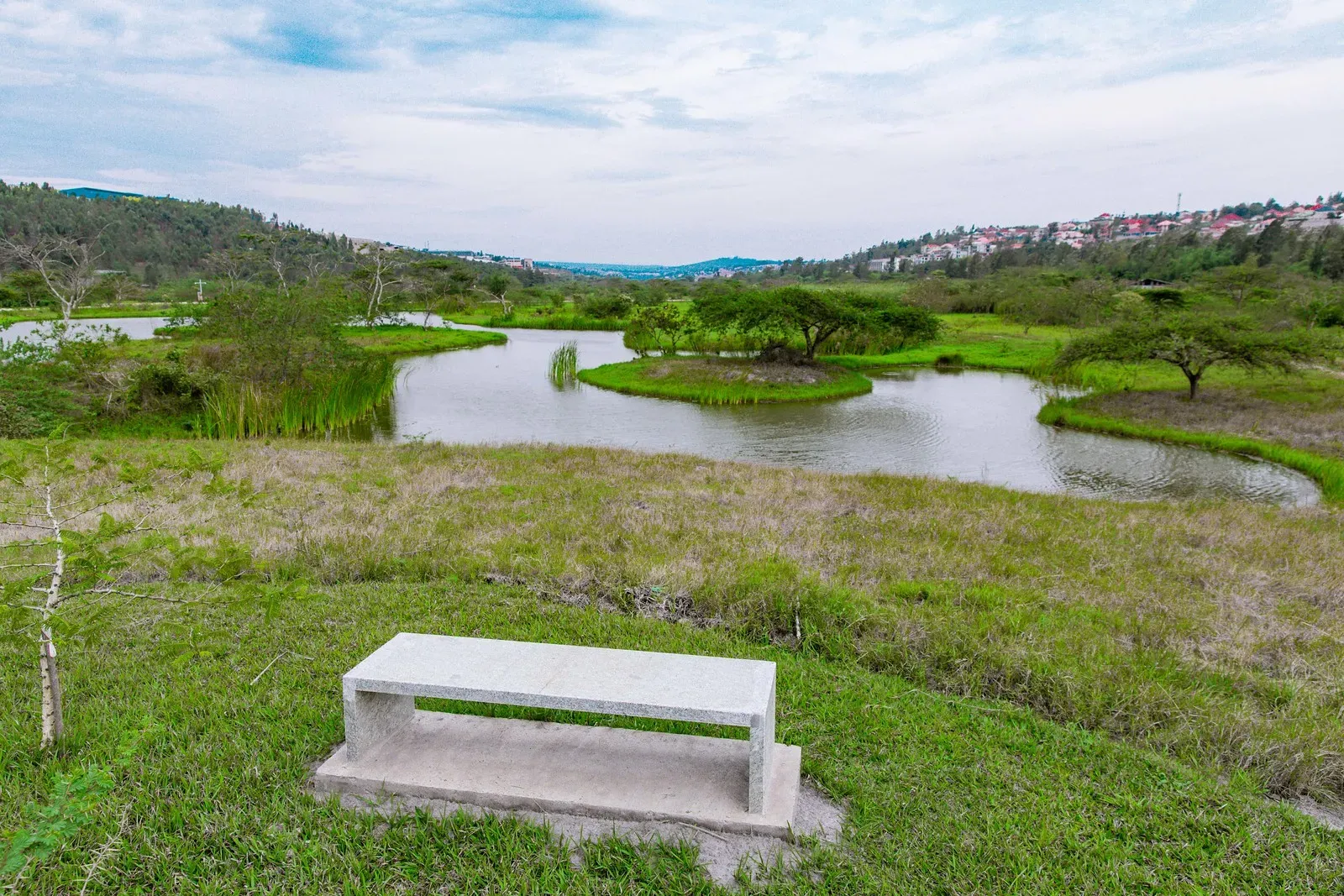
“We are focusing on fruit trees targeting areas near rivers such as Kagina River and in schools in Kigali and districts around Kigali,” he noted, calling for more civil society players and youth to contribute to the effort of greening the city.
“We need to plant trees in schools, homes, roads and others in Kigali, but mechanism to ensure their survival rates is needed. In addition to fruit trees we are promoting in Kigali, we are also focusing on indigenous trees which are resistant to climate change,” said Protais Habanabakize, the Director of Programmes at Action pour la Protection de l‟Environnement et la Promotion des Filières Agricoles (APEFA), a non-government organization focused on environmental degradation, climate change, smart agriculture, and food security in Rwanda.
Survival rates of planted trees in Rwanda is around 70% and below.