Story
 July 8, 2025
Using AI on Campuses: Security Surveillance or Privacy Invasion?
Country:

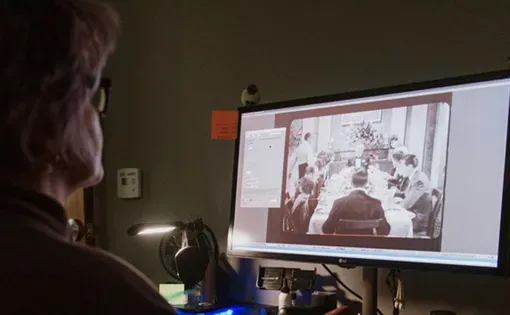
William & Mary students embarked on reporting around the world during the 14th Sharp Writer-in...


A modern college campus spans hundreds of acres, has thousands of students, and is busy almost 24 hours a day. The task of supervising such a large and bustling area can require hundreds of security cameras, which you might think would require the work of many people. But at Michigan State University, just one public safety employee is responsible for watching the entire campus.
How is this possible? MSU is one of many universities across the country that use AI algorithms to facilitate surveillance. Such automated technology interprets surveillance footage in real time. It can track people's movements, scan their person for weapons, analyze their behavior, and monitor their access to campus buildings.
At Michigan State, the future of campus safety is already here—and it is not alone.
AI security systems are being implemented on college campuses across the country. License plate readers and AI-integrated video management systems are two types that show up on the websites of companies working with a dozen campuses, including Michigan State. Proponents of these systems believe automated surveillance will make campus communities safer by increasing the speed and breadth of traditional, human-monitored systems, thereby preventing violence. But others, including civil rights advocates, are concerned these systems are flawed and are worried about crackdowns on student speech.

As a nonprofit journalism organization, we depend on your support to fund more than 170 reporting projects every year on critical global and local issues. Donate any amount today to become a Pulitzer Center Champion and receive exclusive benefits!

“We want to make this a safe campus,” said John Prush, deputy director of the Management Services Bureau at Michigan State. He oversees the campus surveillance system, and says that artificial intelligence is being used more frequently in the surveillance industry, which he believes will result in safer college campuses nationwide. Ultimately, Prush said, his concern is student safety: automated surveillance is “not a spying tactic.”
Michigan State instituted its system as part of the response to a 2023 shooting that claimed three lives, although the initial contracts for the system predated that tragedy.
However, student activists, educators, and civil rights experts believe that the AI aspect of these systems is concerning. Andrew Ferguson, who studies surveillance technology, privacy, and civil rights at American University's School of Law, said universities may be too narrowly focused on protecting students from external violence.
“The university essentially wants to protect the students and faculty,” Ferguson said. “They don’t see their role in surveillance as necessarily a privacy threat.”
Regardless of what schools think about automated surveillance, Ferguson said, these systems are a double-edged sword. “The flip side [of safety], of course, is that same surveillance is also watching students as they go about their business.”
He believes that student activists, in particular, have reason to be concerned. “Students who are challenging the power or decision-making of the university—that same surveillance technology can be used against them, and has been used against them.”
Ferguson also believes that automated campus surveillance could play a part in actions of the type recently undertaken by ICE against student activists and organizers.
“If immigration enforcement powers wanted to start targeting students, a pretty sophisticated video analytics system and license plate reader system would be a pretty easy way to effectuate the targeting of undocumented students and their families,” Ferguson said.
“In a world where the national law enforcement powers are starting to target different groups, a benign relationship that was looking at threats to the university could very well shift to start targeting students,” he said.
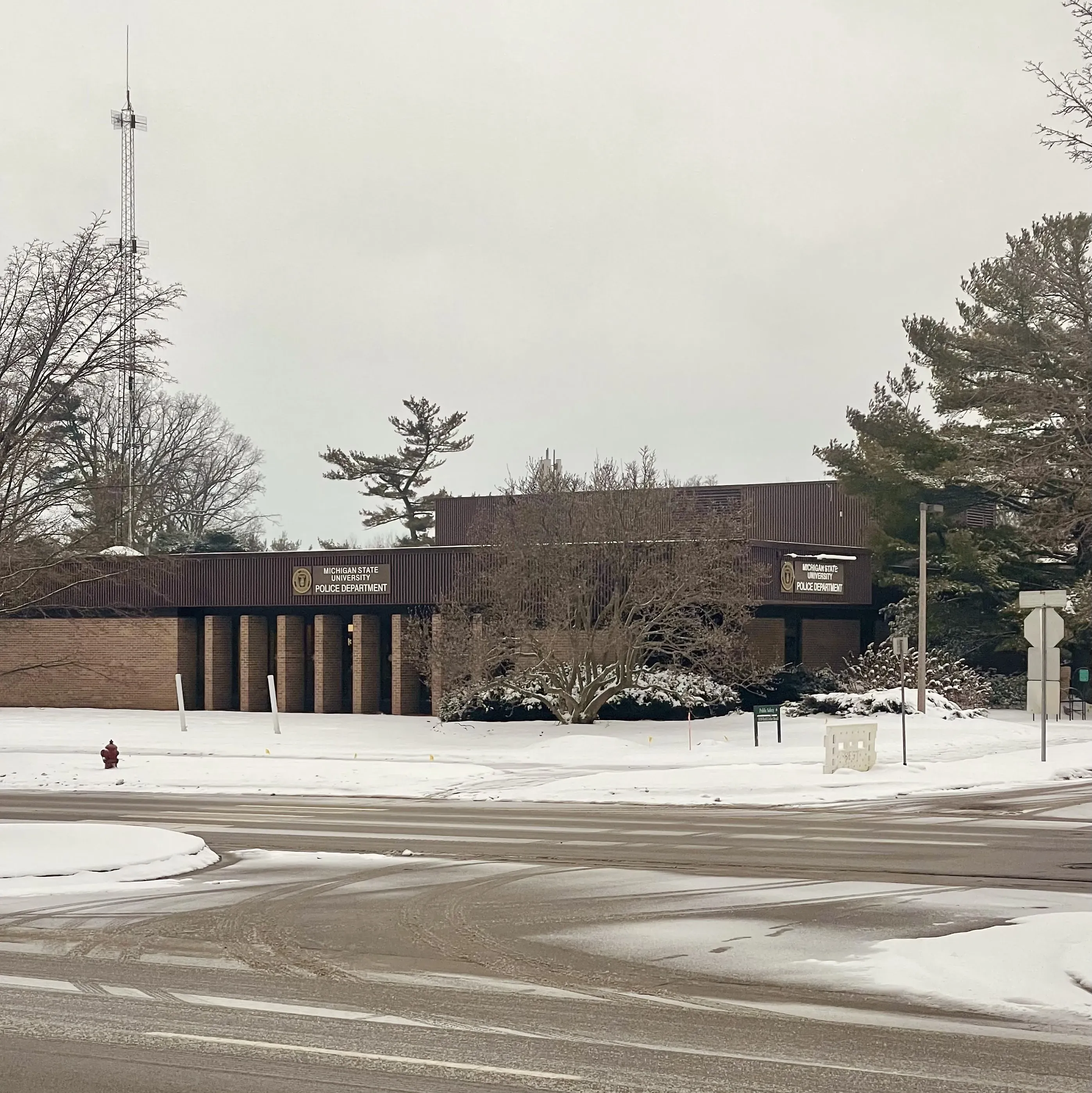
Eli Folts, a student activist with MSU’s Sunrise Movement, echoed these concerns: “I think the biggest concern is that [AI surveillance] will hinder our support."
Folts believes that his organization will not be able to advance its mission of environmental justice as effectively if students worry that their actions will be tracked. With activism under attack, he worries that students are being intimidated into “general apathy and ignorance.”
Other student activists worry that AI surveillance will mean less privacy and more inequality. “We have a lot of concerns about who’s being watched,” said Ryan Rosenblatt, president of the MSU Law ACLU chapter. “We want to make sure that if they're using surveillance, that it's transparent, it's appropriate, and that the safety of students, and their privacy, is at the utmost importance.”
He also raised concerns about the effectiveness of automated security systems as a solution to mass shootings and is further concerned that certain demographics of students could be at risk, given that research has raised questions over the technical effectiveness of AI-driven surveillance. The research includes examples of demonstrated biases related to facial recognition and about issues with camera quality and lighting in the detection of weapons.
Prush said Michigan State “does not have, or intend to have any software” that uses facial recognition. However, Ferguson believes that shortcomings are serious enough to designate automated surveillance systems as an example of “security theater.”
He contends that such infrastructure is intended to make students and faculty believe they are safer on campus, even if they are not. Often, schools and police “buy into the argument that new technologies will save them, not because they actually believe it'll work, but because they need an answer,” he said.
For Ferguson, that idea explains in part why campuses that have seen violence or divisive protests are more likely to implement automated surveillance.
Students are not always consulted, or even aware of these new systems. Folts said the implementation of automated surveillance feels undemocratic.
“I pay around $40,000 a year to be here, and will be $120,000 in student loan debt when I graduate,” said Folts. “And [university administration] doesn’t treat me like a stakeholder.”
Legal experts also are concerned about the ramifications of automated security systems, which tend to be loosely regulated. The rapid development and implementation of this technology has made it difficult for legislatures and courts to keep up.
“The legal system is trying to catch up [to AI],” said Iria Giuffrida, a law professor at William & Mary whose research focuses on legal issues arising from AI and cybersecurity. “The acceleration of technological development has been immense, and the questions are so difficult that the legal system doesn’t have an answer.”
This legislative gap means that there is a general lack of transparency about AI surveillance, but especially when it comes to higher education.
“Schools haven't been very transparent about the technologies that they are using and what's happening with that information that's been captured,” said Ferguson.
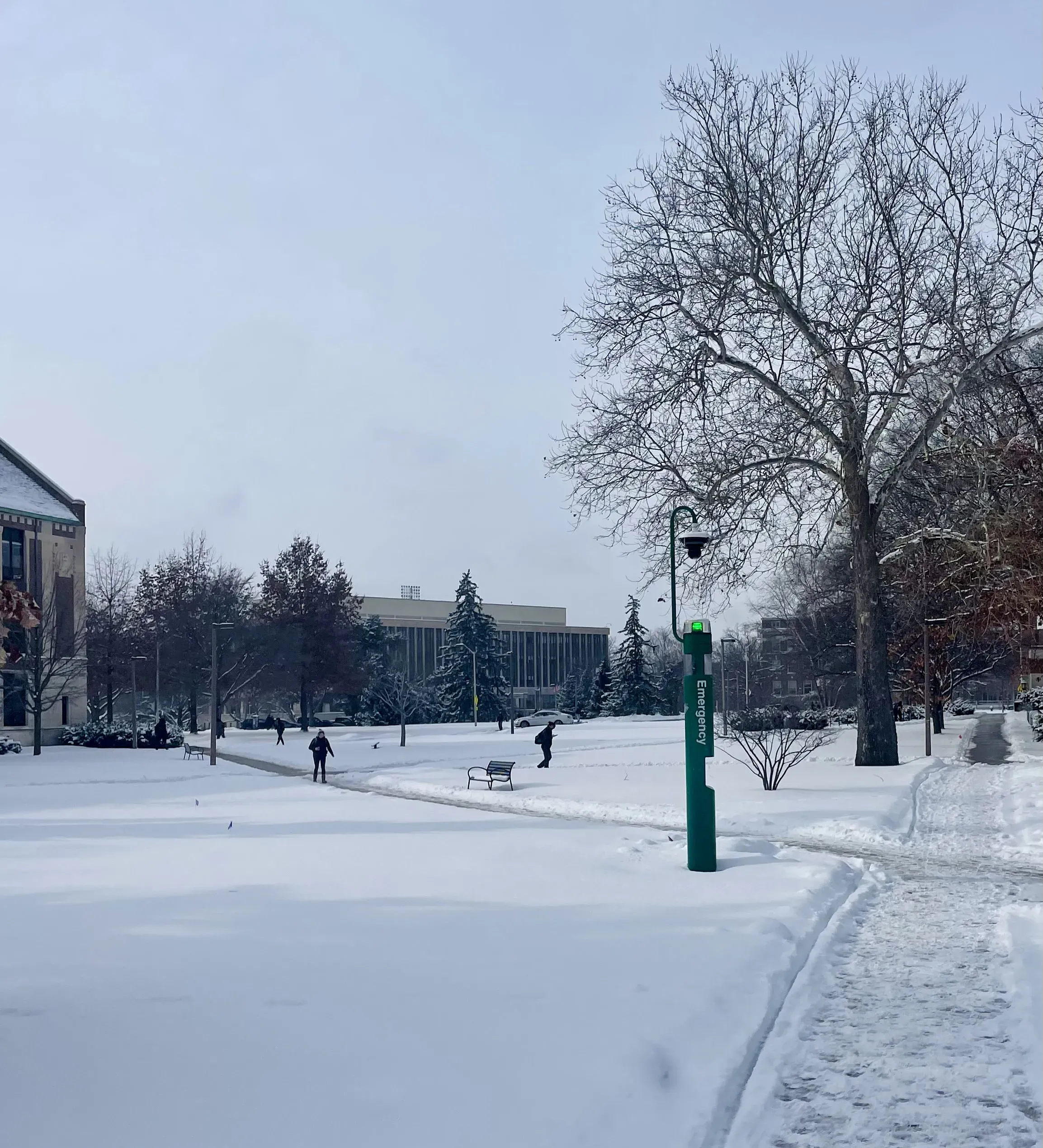
Many automated surveillance software packages are extremely customizable and expansive. This means that it is often unclear which exact technical capabilities schools are using. Even when contracts referencing automated surveillance are publicly available, Ferguson said, schools may choose to implement only some features of a system—helping them to address their specific security needs, but leaving community members in the dark.
Prush emphasized the distinction between capability and operation: “For me to say that we can't [implement facial recognition] would be disingenuous,” he said. “But if it does have the capability, we are not using it." He believes that other schools are making similar decisions.”
Yet even aggregated and anonymized data can be valuable. Ferguson believes that companies in the security industry see data from college campuses as a source with unique potential for profit.
“For AI [companies], campus surveillance is actually very valuable, because they need more training data,” said Ferguson. He believes that some companies that operate on college campuses see automated surveillance systems as a way to access a unique type of footage that is better for training AI models.
Experts estimate that the global video surveillance industry is currently worth tens of billions of dollars and is growing rapidly as it embraces AI. Industry documents from Genetec, the Montreal-based company that makes the software employed by MSU, project accelerating growth in AI. Almost 60% of the company’s end users intend to implement some form of AI in their security systems by the end of 2025, and many of these clients are in higher education.
Such statistics demonstrate that the software and hardware implementation of automated surveillance systems on college campuses is already happening. To many scholars and advocates, what remains to be seen is the direction that this new surveillance will take.
“There are going to be more campuses that are going to [implement AI surveillance],” Ferguson said. “As the price point comes down, and as there's a desire for public safety and security for students, I think it is going to be the norm going forward.”