


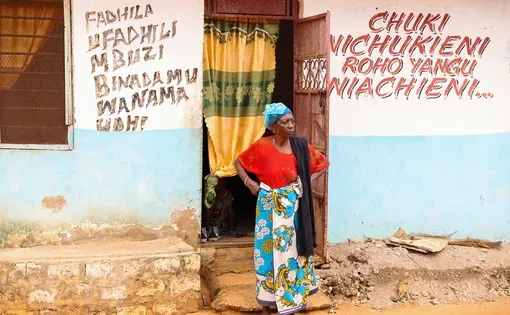
Human rights groups have started to document alleged attacks on villagers.
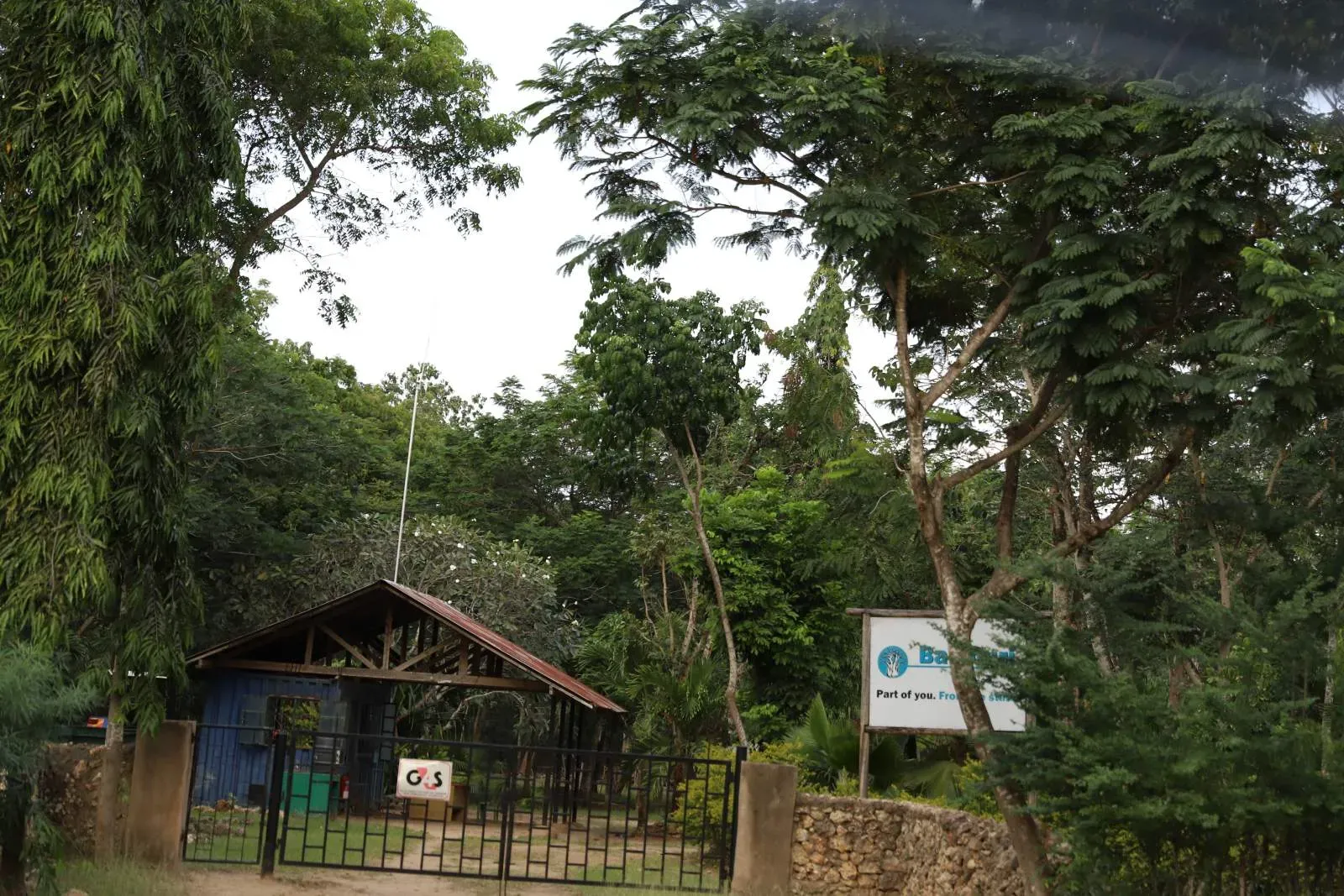
In south-eastern Kenya, a local community is accusing cement company Bamburi of land grabbing, eviction and physical attacks. Bamburi is a subsidiary of Swiss multinational Holcim. How is the Zug-based company responding to the accusations?
This is the violent history of a piece of land in Denyenye, a coastal region in south-eastern Kenya, around an hour’s drive from the large port city of Mombasa. A story that begins seventy years ago and is characterized by colonial and economic power structures. According to the local community, these structures are enforced with beatings, biting dogs and sexualized violence. At the heart of the matter is a simple question: who owns the land, which is divided into four blocks and covers a total of 1,500 hectares, or just over 2,000 football pitches?
On the one side is a Swiss company: Holcim. The world’s largest building materials group, which generated a turnover of 27 billion Swiss francs last year, has its headquarters in Zug. Its Kenyan subsidiary Bamburi Cement PLC has claimed the land since 1954. To date, the company has not developed any commercial activity on it; it lies fallow. Nevertheless, the cement producer is making sure the local community cannot access the land.

As a nonprofit journalism organization, we depend on your support to fund more than 170 reporting projects every year on critical global and local issues. Donate any amount today to become a Pulitzer Center Champion and receive exclusive benefits!
On the other hand, locals living in the surrounding villages say that this is their traditional ancestral land, ‘Chikuyumtole’. For centuries, they have worked the land, fished in the sea, collected firewood and grazed their cattle. They want to continue doing this. So there are two versions of this story, one told from above and one from below. Which one is true? And can the conflict be resolved?
To find out, WOZ, together with the Dutch investigative platform “Follow The Money”, the two pan-African platforms “The Elephant” and “ZAM Magazine” and online magazine “The Africa Report”, conducted intensive research on site and spoke to over a dozen villagers, evaluated police reports and searched for officially verifiable documents pertaining to the ownership of the land. The other side was also contacted and confronted: Holcim, Bamburi Cement and the “security forces” involved.
Bite wound is now septic
Shee Mbimbi lives in Denyenye and works as an artisanal miner in a regional quarry. He sits in front of his homestead, surrounded by coconut and mango trees. On August 29 last year, he walked through a forest on his way home from work to collect firewood. The forest is on the Bamburi land. Firewood is an important source of energy and livelihood for the local people living in poverty, explains Mbimbi. Suddenly, two guards from the private security company G4S (see fact box) hired by Bamburi Cement turned up. “They confronted me and asked me what I was doing there.” One guard started beating him with a baton, but he tried to fight back, says Mbimbi. “The other guard then let a dog loose on me and it bit me. They escorted me home and warned me not to tell anyone that I had been bitten by a Bamburi dog.”
He then went to a local hospital, but could not afford medical treatment, not even a rabies vaccination. He shows us cell phone footage that was taken immediately after the attack. In it, Mbimbi is lying on his back while cradling his bloody, injured leg. “They didn’t take me to the police station,” he says to the person filming him. “They also told me to warn others not to collect firewood or they would unleash their dogs to kill. “Recently, a doctor examined Mbimbi’s septic wound and found that the sepsis had progressed to the bone and his leg would most likely have to be amputated.
Fear of the police
What happened to Shee Mbimbi has also been experienced by others. At the end of last year, several Kenyan NGOs, including the Kenyan Human Rights Commission and the Kwale Mining Alliance, documented further violent attacks by security forces on the land claimed by Bamburi Cement in reports and videos. Some of the allegations raised in these reports are serious, ranging from rape to deaths as a result of violent attacks. One point is relevant here: Not only are there G4S people working on the site on behalf of Bamburi, but also the notorious state paramilitary police unit General Service Unit (GSU)* has been present for almost two decades. This story is not only about Holcim, but also about Kenyan government bodies.
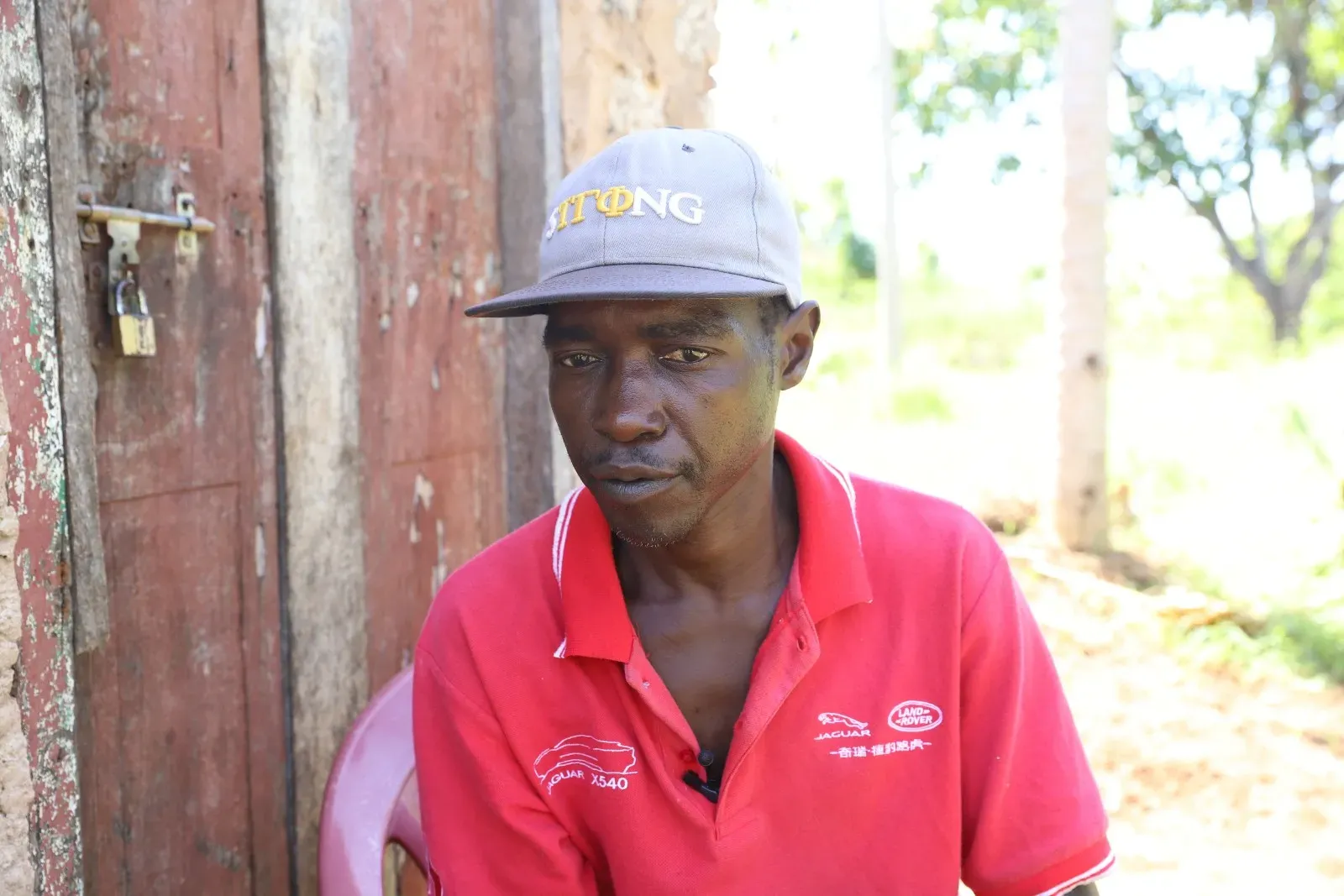
WOZ has spoken to over a dozen victims. For example, with 69-year-old Mishi Juma, who was groped by a GSU officer in 2017 and whose son died as a young adult in the mid-noughties as a result of beatings by GSU officers. Or with 34-year-old Hamad Juma Dari, who, together with two friends, was attacked by three GSU officers and beaten up for an hour while a G4S security guard stood idly by. Both victims deliberately want to go on the record. The villagers’ statements are consistent and the repetitive patterns indicate a systematic approach. However, the attacks are not always as well documented as Shee Mbimbi’s case, who deliberately recorded himself immediately following the dog bite on a cell phone. Several cases occurred years or even decades ago. Many villagers do not trust the local police. For years, they have tried to report abuse and violence on the land in Denyenye to the police, say the villagers. The police ignored them. This has changed thanks to the support of the NGOs. Twelve reports have now been filed with the local police.
No contact, no talks
WOZ presented the allegations to Bamburi Cement, Holcim and G4S, as well as to the GSU and the government bodies responsible for them. While the latter authorities remained silent despite repeated requests, G4S, Kenyan subsidiary Bamburi and the Zug-based Holcim answered at least some of the numerous questions.
“We take human rights allegations of any kind extremely seriously, and in this case a member of the human rights team flew to Kenya to investigate and support our colleagues on the ground,” writes Holcim. “This is an example of their standard practice on human rights issues, all allegations are investigated immediately and thoroughly.” And: “The investigation revealed that the allegations concerned previous allegations against the police unit GSU and Bamburi service provider G4S”, and that “after conducting reviews and investigations, no evidence of misconduct was found”. Holcim writes that there were two recorded incidents that were thoroughly investigated: “One was reported to and dealt with by the local police; the allegations in the other could not be substantiated,” Holcim said.
Holcim claims to be strongly committed to the communities in which it operates and would support them as part of its social responsibility through various ongoing social initiatives “ranging from education, environment and water to sanitation, employment and infrastructure”. The feedback from G4S is more concise: The security officers working at Bamburi Cement would be trained to a high standard, including with the so-called “Voluntary Principles on Security and Human Rights for the Extractive and Energy Industries”. “We have a security dog on site, which is only used at night by a trained dog handler and is kept on a double leash,” G4S concludes: “We are of the opinion that the allegations you have made against G4S are unsubstantiated.”
WOZ would have liked to know more about Bamburi’s contract with the controversial security company G4S: What is the worth and how many employees are involved? Is the contract being monitored? Does Holcim work with G4S at other sites? All of these questions remained unanswered.
Class action has been filed
The question of who actually and legally owns the land sits at the heart of this complex and layered situation. WOZ has asked Bamburi Cement and Holcim as well as several national and regional authorities questions about this.
Despite repeated requests, not a single party was able to provide the original lease agreement from 1954. With regard to current ownership papers, the Kenyan Ministry of Lands was only able to produce title deeds for two blocks of the land. And while Bamburi Cement invited WOZ to the private Capital Club in Nairobi to present legal documents projected on a screen, the dimensions and other details did not match the documents provided by the Ministry of Lands. Holcim was unable to prove that Holcim’s claim to the land is completely legal.
Holcim itself sees things differently. “Bamburi Cement is the owner of all four blocks of the land and has full legal title to it”, including a permit to build a clinker production plant “in full compliance with government regulations”. The land was leased from the Kenyan government for 50 years from August 2001 and this could be verified with the Ministry of Lands.
Meanwhile, the human rights campaign continues. So far, the police have not followed up on the twelve reports of violence, but Emmanuel Mwangi, a human rights lawyer, is now using them to bring a class action suit by eleven community members before the Kwale High Court. In addition to the lawsuit for injuries, deaths and trauma, it is also about the land issue. “The new Kenyan Constitution of 2010 contains very strong and progressive provisions on land,” says Faith Alubbe, CEO of the Kenya Land Alliance. “Those affected on the ground deserve justice.”
*Clarification as of November 14, 2024: This police unit operates independently of Bamburi on the site. There is no cooperation between the cement company and GSU.