Pulitzer Center Update November 6, 2026
Pulitzer Center Editor: It's Time To Work Together in AI Reporting


“As we confront the impacts of AI in our countries, we face challenges that are too big for us to take alone.”
Our second Mozfest pre-conference day with our AI Fellows, civil society grantees, and partners began with a keynote from Pulitzer Center Executive Editor Marina Walker Guevara.
It is at these times, Walker Guevara said, that we need to work together.
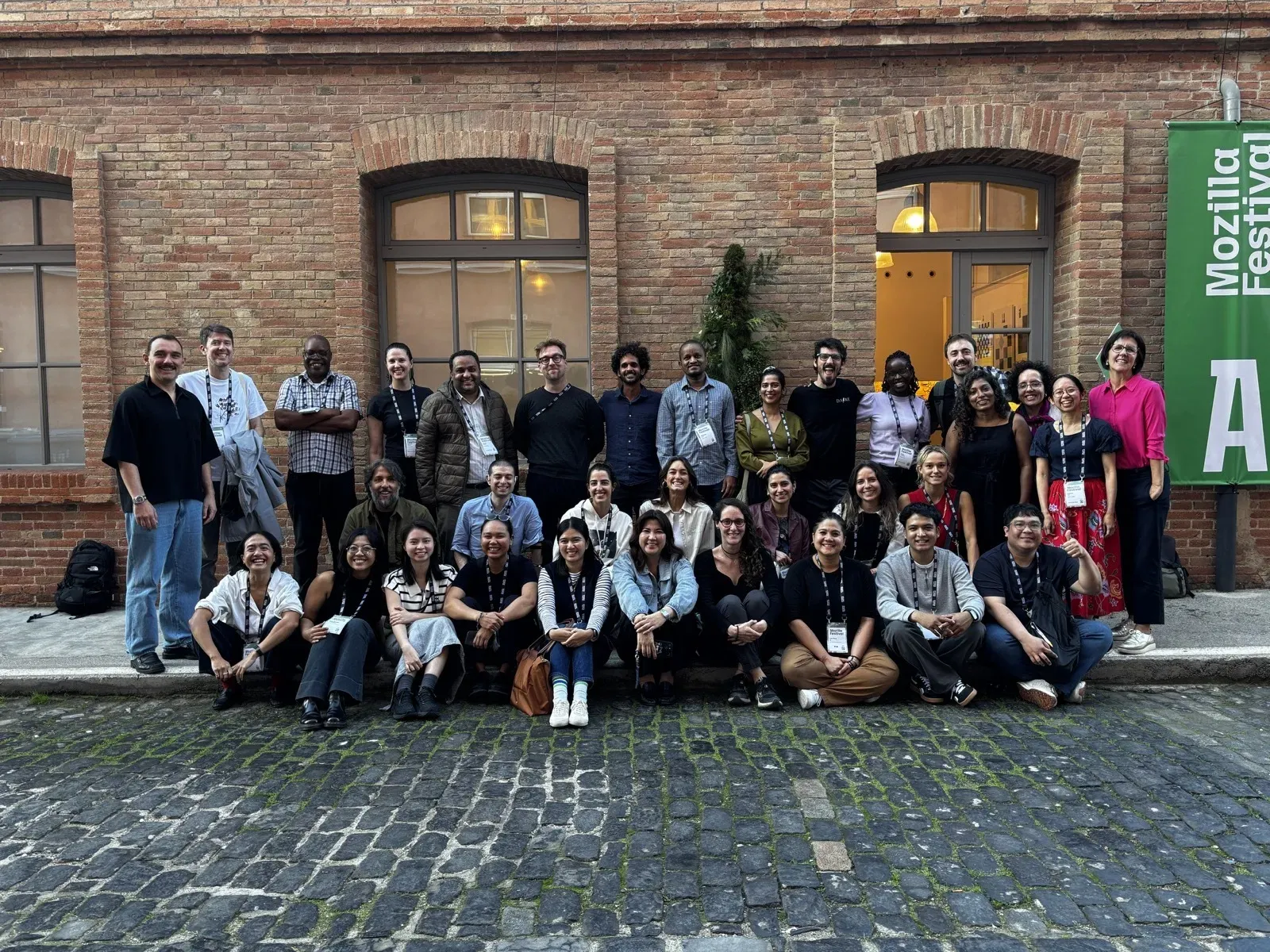
Radical collaboration and partnership were the themes of our pre-conference in Barcelona ahead of Mozfest, a festival gathering people to discuss and build the future of technology.
Over two days through small group discussions, art, and games, participants shared reporting challenges, collaboration pathways, and opportunities for partnership.
Our goal for the pre-conference was to bring together various stakeholders working toward similar goals: holding to account the powerful actors behind the development and use of AI. For the first time, we invited two cohorts of our AI Accountability reporting Fellows, six South to South civil society micrograntees, and various partners to meet in person. Over 40 people participated from more than 15 countries and five continents (sadly, several participants were unable to get a visa to attend). We had journalists, researchers, academics, lawyers, and more in the room.
Beyond the many takeaways for each person’s work, there were four recurring themes:
- Despite the wide range of investigations related to AI from surveillance to data centers to child sexual abuse material, there are overlapping power brokers and affected communities: When we created small breakout groups for the conference, we weren’t certain how the conversations would go as people in the same group were from different continents and working on very different issues. However, there were many shared experiences and pain points. Participants found that Big Tech representatives used the same jargon and narratives to push their agendas across all geographies.
- We need to cultivate more knowledge and information sharing through interdisciplinary collaboration: The gathering was our first and testing ground for facilitating in-person, interdisciplinary groups. We have been experimenting with our approaches since the AI Accountability Network’s inception — collecting methodologies of partnerships, and continuing to build and engage with networks key to continue our vision in radical collaboration. In a post-event survey, participants found hearing from different stakeholders on their experiences of partnership to be the most helpful.
- Boundaries between disciplines have to be respected: While our gathering was focused on creating partnerships, it is important to maintain independence. For some journalists, working with certain groups can erode public trust in their findings and lead to serious consequences. For civil society to do its best work, timing and timelines can’t always be rushed to fit a publishing deadline.
- There are many reasons to be optimistic: Despite the many challenges that were shared throughout the two days, it was great to see how many brilliant and creative people are working to hold AI accountable. We saw true leadership, generosity, and ingenuity in the room. The optimism continued throughout Mozfest, where sessions featured people working on holding Big Tech accountable and reimagining the role of technology in society.
Beyond the discussions, activities, and dinners, people built deeper relationships and trust. While many of our participants have met on Zoom and shared reporting virtually, meeting in person brought the group closer together, sharing contacts and ideas for future collaborations.
Since 2021, the Pulitzer Center has supported journalists in interrogating the impact of predictive and automated systems on our societies. The work has never stopped at just publishing the stories, but we’ve supported journalists in making sure their reporting reaches the audiences that can use the information to take action, whether it’s affected communities, local governments, or company leaders. Collaboration has always been a crucial part of this work, and convening this group of AI accountability leaders was a step to deepening that work going forward.
Walker Guevara ended her keynote by saying that trust, communication, and courage are necessary at a moment when tech power is increasingly centralized into private hands. We hope this gathering laid the groundwork to prepare our network for the important work to come.




