Story
 December 3, 2025
From El Salvador To Milwaukee and Back: The Winding Journey of a Woman Seeking Safety
Country:


A mother's story challenges the Trump administration assertion that its priority is deporting...

Part of a series supported by the Pulitzer Center that examines life after deportation for a former Milwaukee teacher's aide and her family.
After 14 years in Wisconsin, the last four months of it in the public eye, Yessenia Ruano is back in her native El Salvador.
She's far from the young woman who escaped harassment from gangs.
She has a husband and their twin daughters with her. She has the memories of her Milwaukee home, church community, and beloved colleagues and students at the bilingual public school she left behind. And she has become a voice speaking out on President Donald Trump's crackdown on immigrants.

The twists, worries and delays in her story highlight the convolution of the U.S. immigration system and the challenges anyone who crossed the border without authorization faces in trying to become a legal resident.
To understand, it's important to walk step-by-step through Ruano's adult life.
(Story continues below.)
Yessenia’s Journey: 2011

Yessenia Ruano migrates to the U.S. from El Salvador at age 24.
Gang members had been harassing Ruano, who was working as a seventh-grade teacher. On her first attempt, she is caught at the border and sent back. She crosses again, through tunnels to a house in El Paso, Texas, where traffickers force her and others to stay for a week. She and others are picked up by ICE agents after three days in the desert.
After graduating from college in El Salvador, Ruano worked a low-paying teaching job. Gang members harassed and threatened her because they thought she had information on them.
In 2011, at age 24, she paid traffickers to help her leave El Salvador and cross the U.S.-Mexico border into Texas. American immigration agents quickly caught her, and sent her back, using a deportation process called expedited removal.
She crossed again, this time led through tunnels to a house in El Paso, Texas. Traffickers forced her and about 30 others to stay in the house a week. Ruano was sexually abused, she said.
The smugglers finally moved them out, directing the group to walk through the desert, she said. After three days, ICE agents found them.
(Story continues below.)
Yessenia’s Journey: Dec. 1, 2011
After six months in an ICE detention center, Ruano applies to stay in the U.S.
Ruano told agents she feared returning to El Salvador, and she waited in a Texas ICE detention center for six months.
An asylum officer interviewed her to assess whether she had a "reasonable fear" of persecution in her native country. Because she had already been deported once, she only was eligible to apply for a status similar to asylum called "withholding of removal," which required her to prove she'd be tortured or harmed in El Salvador. After the interview, she paid $5,000 bail and flew to Wisconsin.
(Story continues below.)
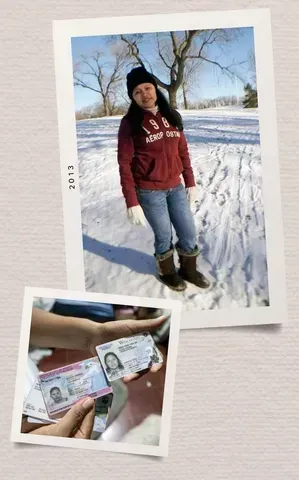
Yessenia’s Journey: 2013
Ruano, now living in Milwaukee, gets married and has two daughters as she waits for her immigration case to be heard
Under a work permit allowed under the “withholding of removal” status she applied for in Texas, she works as a teacher’s aide. She keeps all of her appointments with ICE — 18 over the course of 12 years, she says.
Upon arriving in Wisconsin in late 2011, Ruano found work in Jackson, Wisconsin, but shortly thereafter moved to Milwaukee. In 2013, she started a relationship with Miguel Guerra, who had grown up nearby in El Salvador. Together they welcomed twin baby girls.
The "withholding of removal" status she applied for back in Texas allowed her to receive a work permit. Ruano first worked at the Palermo's Pizza manufacturing plant and then as a teacher's aide at ALBA School, a bilingual Milwaukee Public School.
During her time in Milwaukee, she attended regular check-in appointments with ICE — 18 in all over 12 years, she said — waiting for her withholding of status case to be heard by a judge.
That exceptionally long wait is not uncommon, said her attorney, Marc Christopher. Immigration courts face a major backlog, with 3.4 million pending cases nationwide. The backlog has ballooned by more than 200% since 2019. The current situation is exacerbated by a decline of about 125 immigration judges since January from firings by the Trump administration and voluntary resignations, an 18% drop overall.
(Story continues below.)
Yessenia’s Journey: 2017
Back in El Salvador, gang members kill her brother, Luis Ernesto.
Yessenia’s Journey: 2023
Ruano withdraws her immigration claim
An immigration judge had raised some issues with Ruano’s claim. Her attorney at the time advised her to withdraw her claim, assuming she’d lose. This left her with no basis to remain in the U.S., and she was put on supervision.

In 2023, an immigration judge did raise some issues with Ruano's withholding of removal claim, but didn't rule definitively on the case. Her attorney at the time — prior to Christopher — advised her to withdraw her claim, assuming she'd lose.
That meant the deportation order from when she first crossed the border rose to the surface, leaving her with no basis to remain in the U.S. The Biden administration was not prioritizing deportations of people like Ruano, so she was put on supervision.
Looking back, Ruano regrets not seeing the withholding case through. She believes she could have won, and could have appealed if she lost.
(Story continues below.)
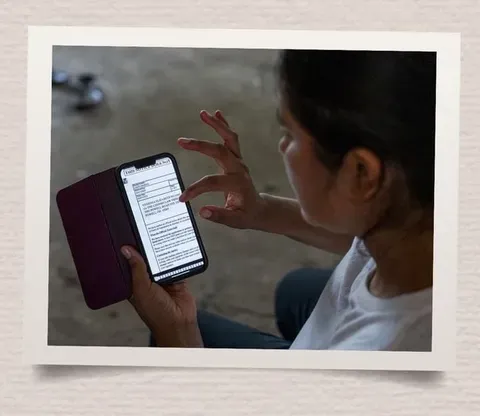
Yessenia’s Journey: 2024
Ruano pays a law firm thousands to file for a trafficking victims’ visa
Under the Biden administration, having an open T visa case would protect her from deportation while she waited for a decision, a process that could take up to two years.
Searching for another avenue to stay, Ruano learned about the trafficking victims' visa, or T visa, which required a person to be the victim of human trafficking and willing to cooperate with law enforcement. She found an Ohio law firm willing to file, and had to pay $16,000, she said. Ruano's experience being held by the smugglers in Texas formed the basis of her case.
Before Trump took office, having an open T visa case would have protected her from deportation while she waited for a decision by U.S. Citizenship and Immigration Services (USCIS), a process that could take up to two years.
(Story continues below.)
Yessenia’s Journey: Feb. 11, 2025
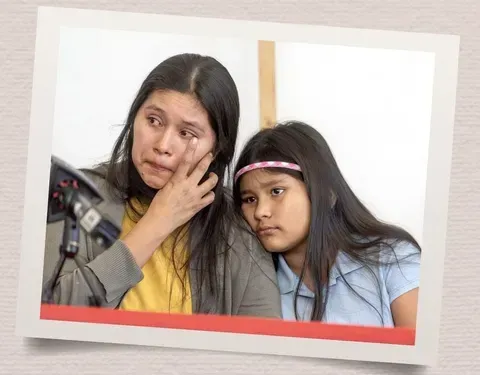
Facing ICE check-in under new presidential administration, Ruano shares her story publicly
A teacher friend and immigrant advocacy group arranges a news conference for Ruano to tell her story before her February appointment with ICE. Her Ohio attorneys also finally file her T visa application.
As Ruano prepared for a February 2025 check-in appointment with ICE, she feared under the new administration detention was likely.
Her T visa application had not yet been filed by her Ohio attorney; she had the standing deportation order; and the Trump administration was not distinguishing between those with criminal convictions and those like Ruano, who had no criminal record, had U.S. citizen children and had strong community ties.
When her friend, teacher Sarah Weintraub, heard about Ruano's situation, she connected her with Voces de la Frontera, an immigrant advocacy group in Milwaukee, which organized a news conference for Ruano to tell her story publicly. In addition, the Ohio attorney finally filed her T visa application days before the ICE check-in.
(Story continues below.)
Yessenia’s Journey: Feb. 14, 2025
Demonstrators rally for Ruano, who gets a reprieve
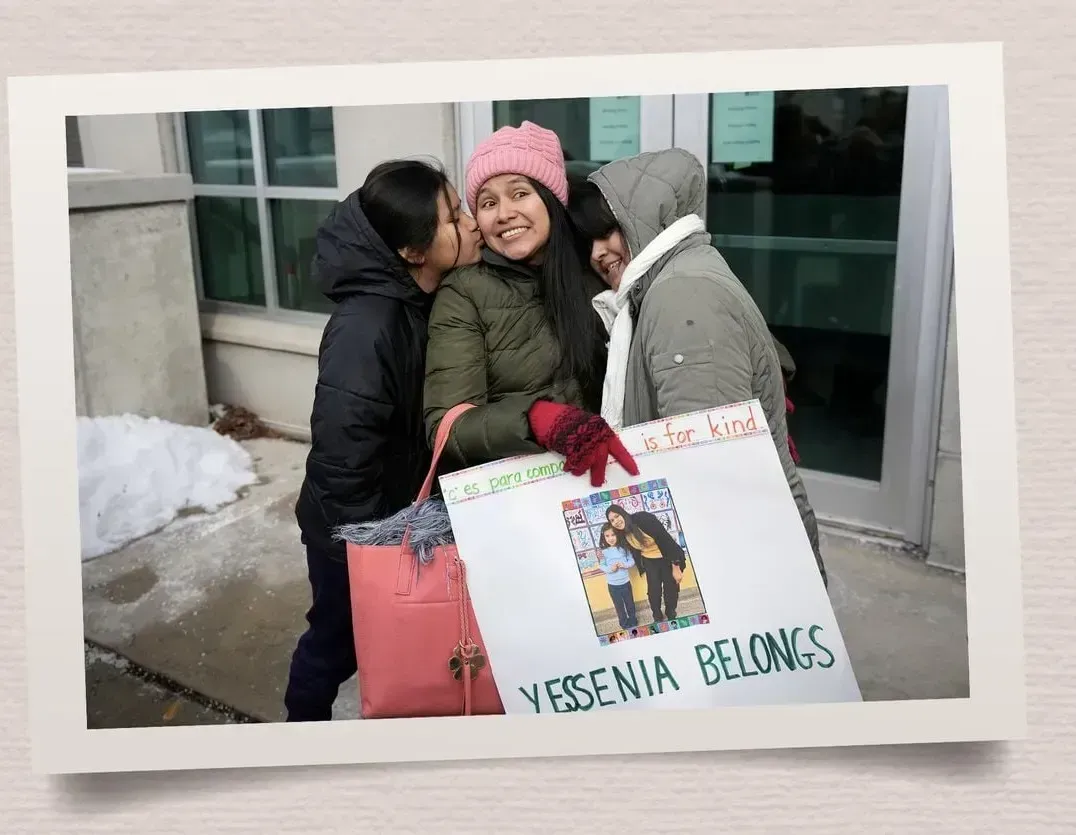
The day of her appointment, a crowd of demonstrators rallied on her behalf outside the Milwaukee ICE offices. When she emerged, she had good news. Immigration officers had given her more time for the visa application to be considered.
(Story continues below.)
Yessenia’s Journey: June 17, 2025
Having exhausted every option, Ruano self-deports
ICE check-ins throughout the spring bought Ruano more time in Milwaukee, but ultimately officers said she had to buy a plane ticket and carry out her own deportation.
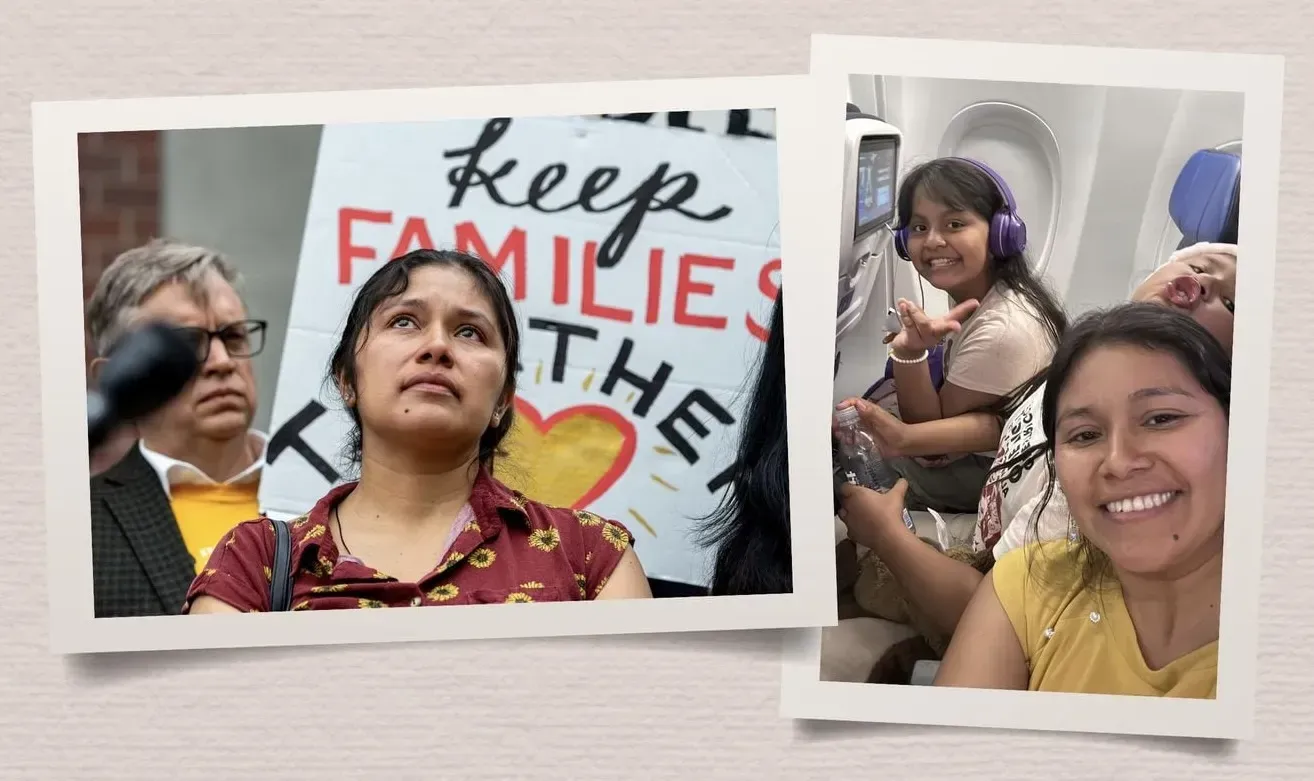
After her February reprieve, Ruano was on a seesaw. She attended several more ICE appointments, each time believing she'd be detained on the spot, each time, supporters gathering outside to bring public attention to her plight.
At an April appointment, ICE officers gave her an extension of 30 days and said she needed to bring proof of a plane ticket to their next meeting. Ruano didn't want to disobey ICE, scared that agents would arrest her at her home or in public if she did.
Just days before a May 30 appointment, she received a much-awaited "receipt number," meaning her T visa application was received and the materials were there.
It didn't matter. ICE said it wanted a decision, and without it, she needed to leave the country.
In early June, Ruano lost a long-shot bid for an emergency pause on her deportation. On June 17, after her daughters finished the last day of school, the trio set off for El Salvador. Colleagues, friends and supporters gathered at Milwaukee's Mitchell International Airport to say goodbye. The flight to San Salvador was her daughters' first-ever airplane ride.
(Story continues below.)

Yessenia’s Journey: June 2025
From El Salvador, Ruano adjusts to new life, joins lawsuit
As Ruano and her family start rebuilding their lives in El Salvador, she joins a federal lawsuit alleging ICE acted illegally when it forced her to deport. She holds onto hope of returning to the U.S.
In El Salvador, they stayed with Ruano's mother in the rural mountain village where Ruano grew up.
Ruano's husband, Miguel, followed in August, and the family moved into his mother's home closer to the coast. The family is renting out their Milwaukee home.
For now, Ruano's T visa case is in limbo. Only people located within the U.S. are eligible for T visas. Since ICE forced her to carry out her own deportation, her attorneys in Ohio told her, they can't continue with her case.
Christopher, a Milwaukee immigration attorney who took on Ruano's case pro bono in the final weeks before she left, believes that sending her out of the U.S. with an pending T visa case "thwarted the meaning of that T visa," as it is intended to shield people from returning to a dangerous situation outside the U.S.
Christopher reached out to immigrant rights groups to see if there was anything that could be done, and a California group expressed interest.

Ruano joined the group's lawsuit against federal immigration agencies filed in October, arguing that ICE acted illegally when it forced her to deport. The lawsuit says that ICE was required by law to ask USCIS, the agency issuing the T visas, if Ruano's case had enough evidence to support it.
If her case met certain requirements, ICE would have been legally required not to deport her. ICE did not seek that determination in Ruano's case, the lawsuit says. Ruano holds onto hope that a court could rule in her favor, and she could return.
Separately, once they turn 21, Paola and Elizabeth could petition for family visas for their parents because they are U.S. citizens. They would likely need to fill out extra paperwork, but in theory, Ruano and Miguel could receive green cards, or legal permanent residency in the U.S.
For now, however, Ruano and her family are waiting once again — this time, in a country not of their choosing.
Design by Andrea Brunty.