Story
 May 1, 2026
A Lesson in Patience and Adaptation When Covering Immigrant Students
Country:

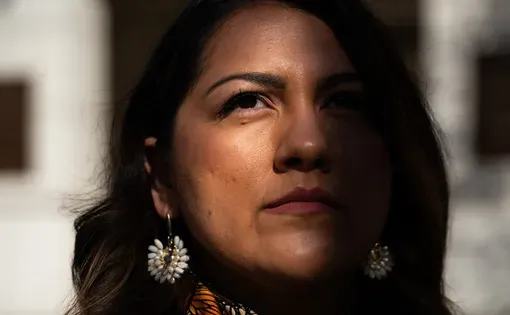
How school discipline can impact the school-to-deportation pipeline
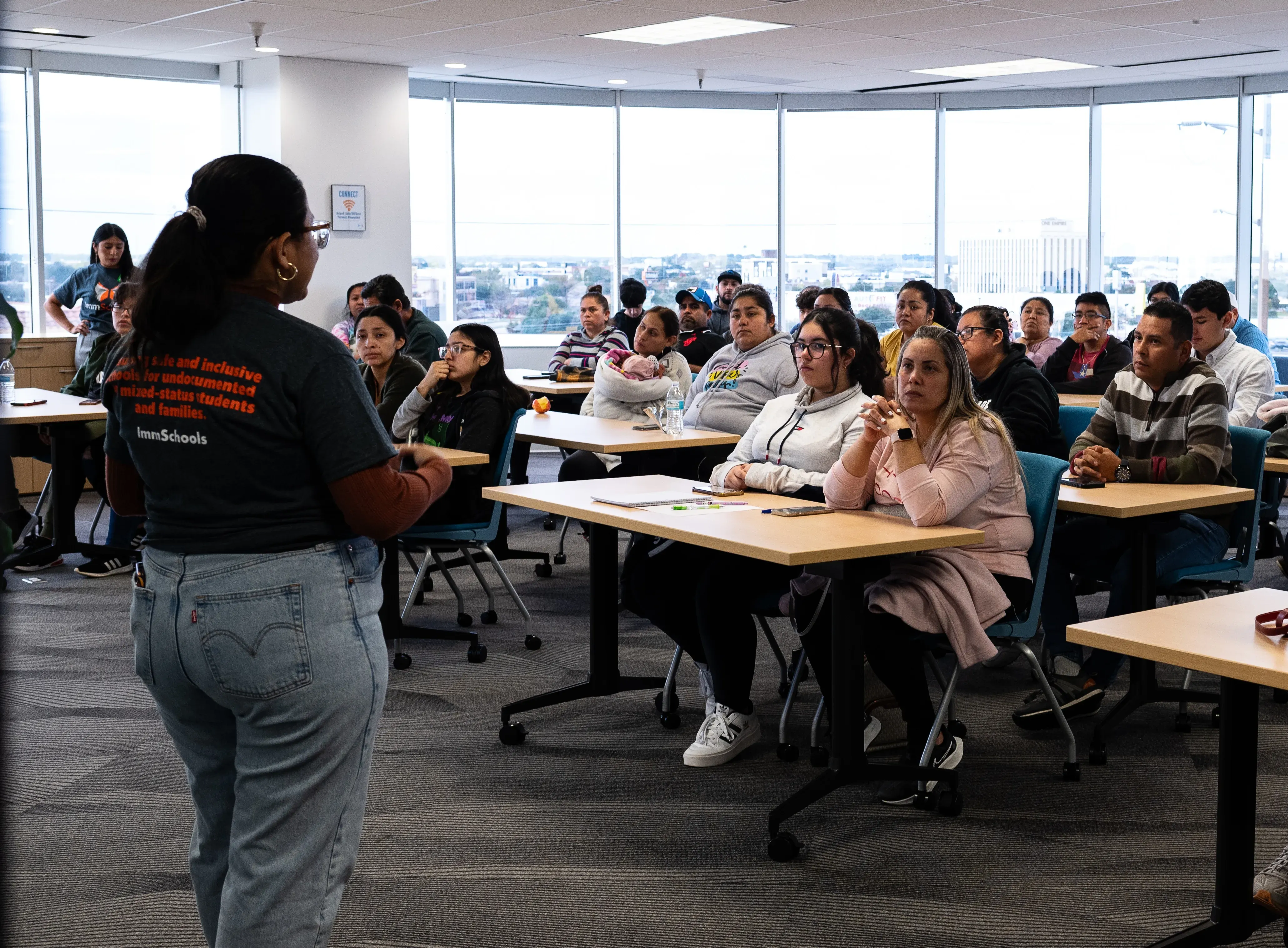
Reporting on the school-to-deportation pipeline teaches journalist a valuable lesson.
Nothing about this project was as I predicted. During the course of my reporting, I was confronted with unexpected changes that pressed me to grow and evolve as a journalist.
I started this project in order to identify how school policing intersects with immigration enforcement, and how educators contribute to this relationship. At first, I wanted to explore how immigrant students of color are impacted when referred to Disciplinary Alternative Education Programs (DAEP) in Texas. These programs often act as an early stage of the “school-to-prison” pipeline. I wanted to see why Black and Latino students are overrepresented in these programs and whether their referrals were the result of minor offenses instead of severe misconduct.
As I reported and researched deeper, I was introduced to the “school-to-deportation” pipeline, a term used to describe the nexus of school surveillance and a flawed immigration system that pushes students into the crosshairs of enforcement agencies. This caused my focus to pivot. Soon after, my project shifted again when state House bill 6, a legislation that allows Texas school districts to carry out swift and harsh discipline for student misconduct, was passed and went into effect.

As a nonprofit journalism organization, we depend on your support to fund more than 170 reporting projects every year on critical global and local issues. Donate any amount today to become a Pulitzer Center Champion and receive exclusive benefits!
The issue of the “school-to-deportation” pipeline is sensitive, and its breadth is wide and underexplored. This meant that it was difficult to track: Data was scant, and sourcing was difficult.
I had to adapt yet again, and I focused on developing sources. So, rather than rely on statistical data as the crux of my piece, I leaned into the power of anecdotal evidence from sources who witness the issue firsthand.
Amid the obstacles, struggles, and adaptations, however, my focus—informed and affirmed by my reporting and research—was clear: how the school-to-deportation pipeline manifests as a result of infrastructural failures and the race-based factors of overpolicing. I also realized the significance of observing policies beyond their surface and projecting how they might impact vulnerable groups—like the ones at the heart of this reporting project—through critical analysis.
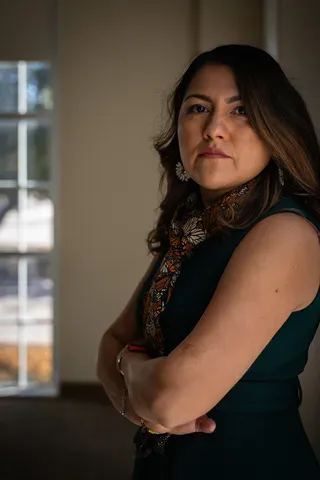
Through these shifts and challenges, the support from my mentors and every person who answered my inquiries, even when I wasn’t quite sure how to phrase what I was looking for, were pivotal in the completion of this project. But, most importantly, I was able to report and tell this story because of people like Lorena Tule-Romain and Paige Duggins-Clay, who have tirelessly battled the targeted violence against immigrants, and who have observed how school discipline in Texas has often re-routed the lives of so many young students of color.
Challenging and fulfilling, this project was not only a lesson in patience, but also in how to transform along with the story. I’ve found that whenever I embark on a story, it rarely ends up as I had envisioned it—and that’s OK.
We, as journalists, adapt, grow, and evolve to tell the story in its truest form.