Story
 May 1, 2026
Older New Yorkers Dance Against Isolation as Federal Funding Cuts Loom
Country:


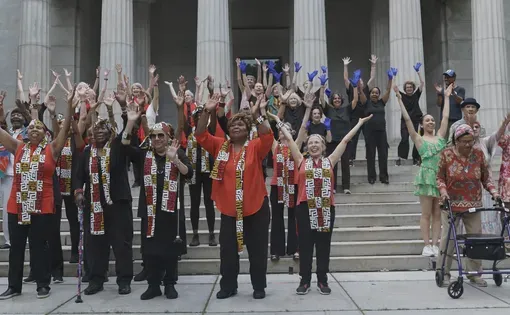
A woman joins a senior dance troupe, finding community while preparing for a final performance.
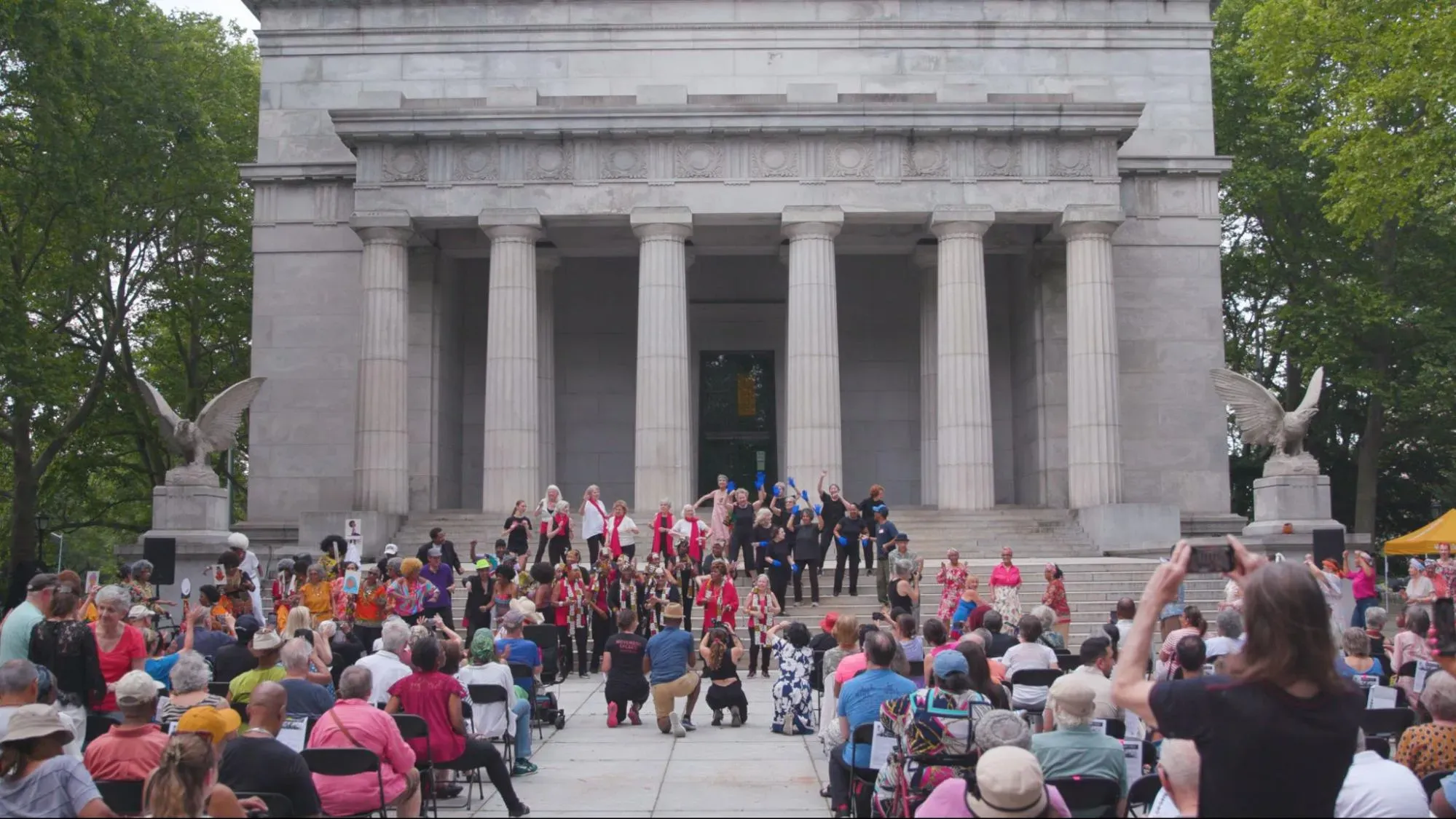
It’s a frigid February morning at Grant’s Tomb, in the northern corner of Manhattan’s Riverside Park.
Glacial winds tear off the Hudson River, catching in jackets and hair. Gloved hands are raised to the sky. A Bluetooth speaker chimes as it pairs, and Walk the Moon’s 2014 hit Shut Up and Dance echoes through the plaza while a group of older adults dance with a confidence and control that belies the patina of snow on the pavement.
The group meets at the plaza weekly as part of a creative aging program led by New York-based nonprofit Dances For a Variable Population (DVP). Since 2009, DVP has provided free, accessible dance classes to older adults across four of the city’s boroughs.
The organization, run by 64-year-old professional dancer Naomi Goldberg-Haas, reaches more than 2,500 people annually through classes held at senior centers, parks, and public squares.
With more than 80 million Americans expected to be over the age of 65 by 2050, organizations like DVP keep older adults visible, valued, and connected within their communities. In a city where the population is growing older every year, the program helps fight social isolation according to its participants, who come from all paths of life every week to move their bodies to the rhythms of hip-hop, salsa, pop, or jazz songs.

As a nonprofit journalism organization, we depend on your support to fund more than 170 reporting projects every year on critical global and local issues. Donate any amount today to become a Pulitzer Center Champion and receive exclusive benefits!
Peter Barton is a retired filmmaker in his mid-80s who has attended classes regularly for three years, noting he’s experienced profound changes in his health.
“There is the community, there is the comradeship, and I think, oh well, if they can do it, I can do it,” he said. “DVP brings people together in an attempt to overcome our loneliness.”
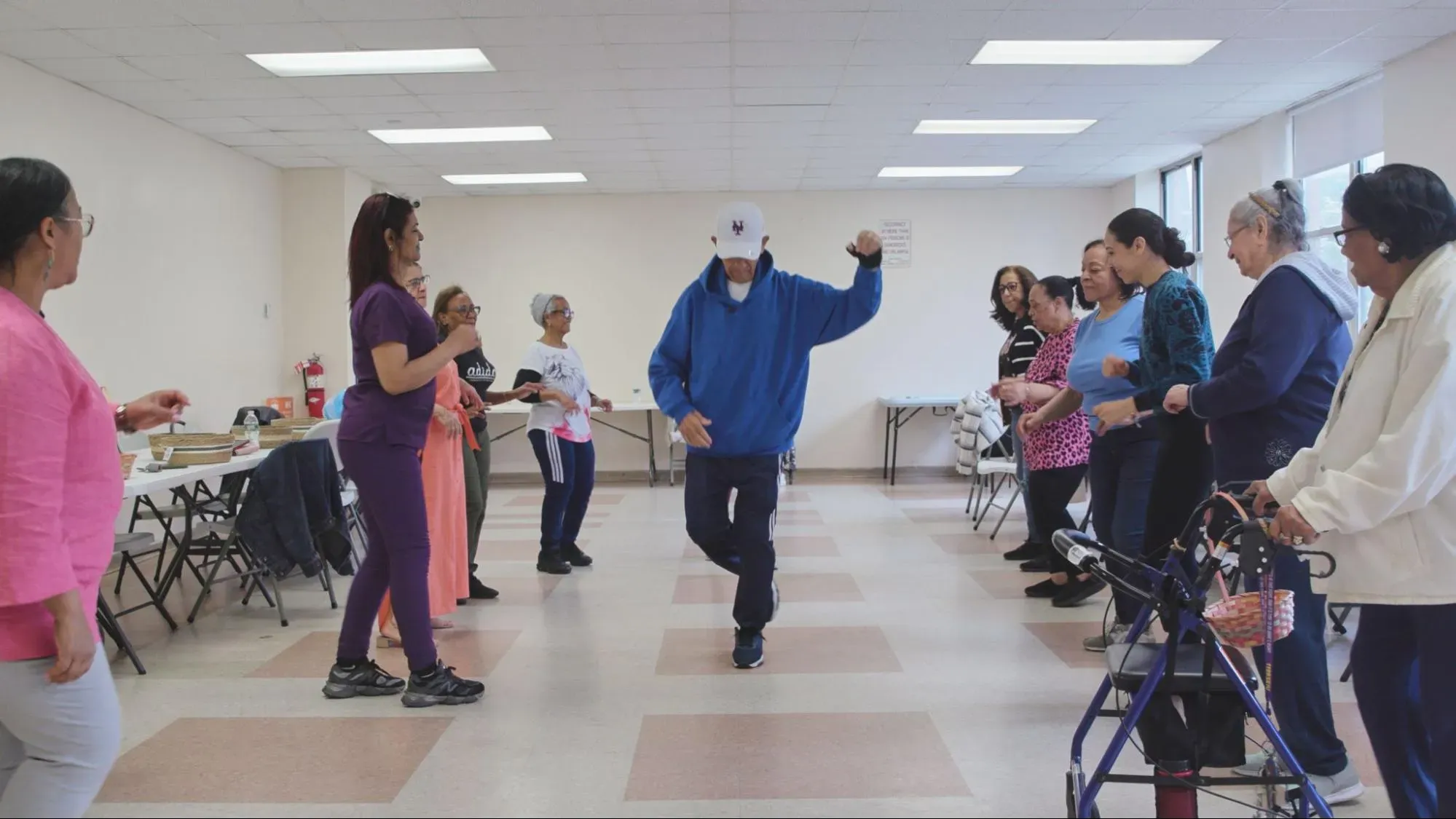
According to Dr. John Beard, director of the International Longevity Center at Columbia University, loneliness affects nearly half of U.S. adults, with older populations among the most impacted. Linked to depression, heart disease, and early mortality, social isolation has become a serious public health issue in the United States.
“There aren’t enough third spaces where people can truly connect in New York,” he said. “With a longer life expectancy, there should be more investment to combat ageism and promote the well-being of older generations.”
There are physical benefits, too. A 2022 study from the Annals of Geriatric Medicine found that dance can be used as a physical therapy to improve strength, balance, and flexibility in the aging population.
Chris O’Sullivan, 78, regularly attends DVP’s classes across the city. She has found that the program gives her a sense of presence and control over her mind, body, and helps her cope with her terminal breast cancer diagnosis.
“It’s amazing how at 78 I can get better at something,” she said. “I like my body dancing. I stop hating it for killing me.”
Since May 2025, programs like DVP have faced an uncertain future. President Donald Trump proposed dismantling the National Endowment for the Arts (NEA), the federal agency that funds arts access across the United States. For small nonprofit organizations, which rely heavily on NEA support, the news was devastating.
By June 2025, the DVP was notified that its NEA grant would be terminated, resulting in an immediate loss of $40,000, about a quarter of its total funding. “It wasn’t a complete shock, but it was still pretty devastating,” said Program and Events Manager Miriam Grill. “It’s a lot to us as a small institution.”
As a direct result of the cut, a key performance in the Bronx was canceled in 2025, denying dancers from the borough the chance to perform for neighbors, family, and friends.
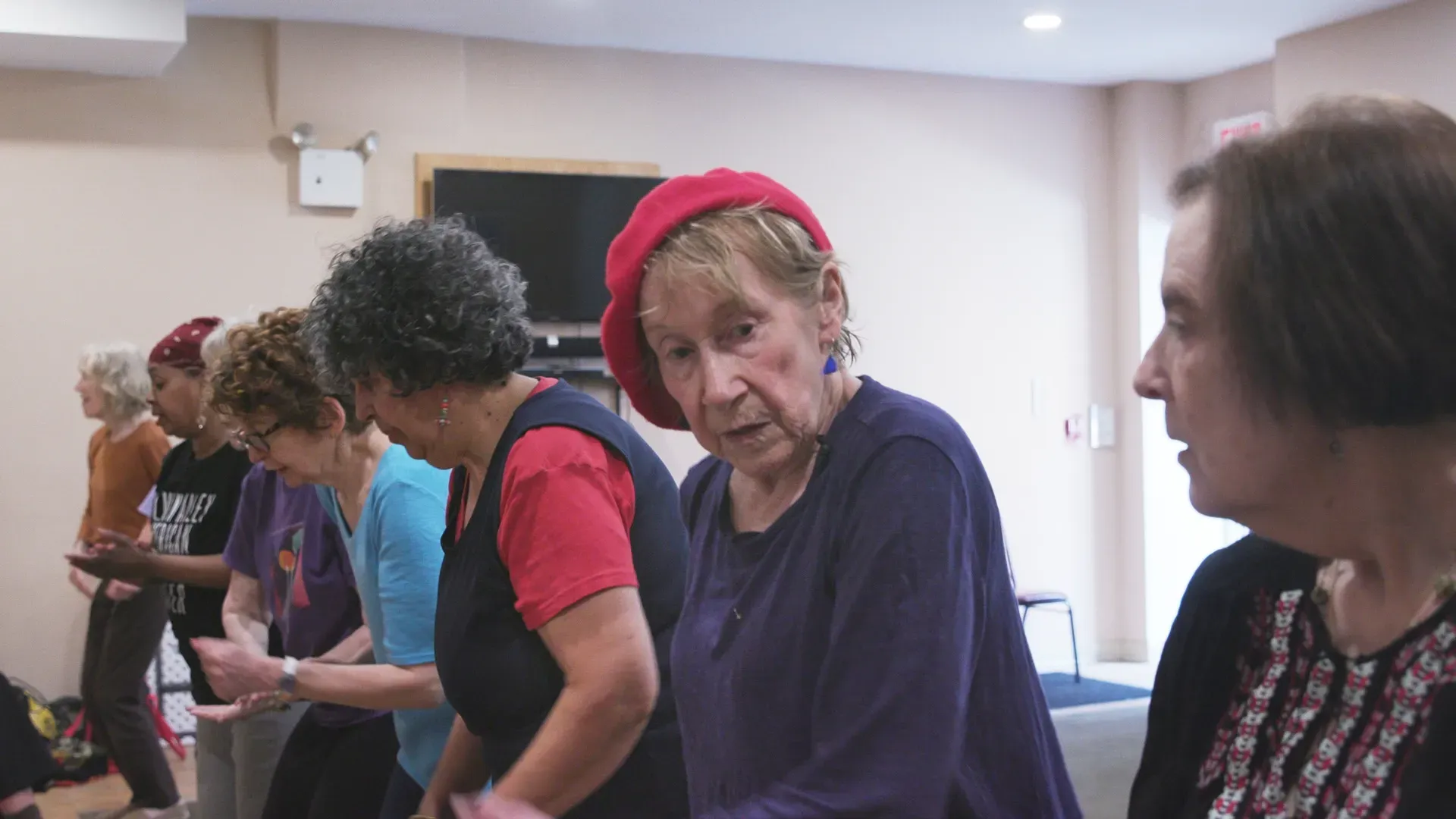
O’Sullivan, a longtime researcher on gender-based violence who spent her career studying the behavior of perpetrators, knows how fragile grant funding can be. “I couldn’t do any of my work now. It’s all gone,” she said.
Most of the grants that supported her efforts to help society address domestic violence and human trafficking have disappeared, and she worries the same could happen to the dance program she calls a lifeline for herself and so many others.
“Depression, cancer, lack of mobility … you name it, we’ve all been through some of these,” she said. “[These] classes help.”
On a Friday in June 2025, the dancers convene again at the base of Grant’s Tomb. In the soupy heat of a New York summer, it is hard to believe they once danced across thawing snow. Now, verdant trees cast patterns of shade on the pavement. The plaza fills with Bill Withers’ Lean on Me as the dancers step across the floor in search of one another.
The pirouettes are loose and the timing is imperfect, but there’s a distinct sense of accomplishment among the group. At one time, they enjoyed three classes per week. Now, with funding cuts, DVP only provides two. Regardless, they continue to meet and improvise together.

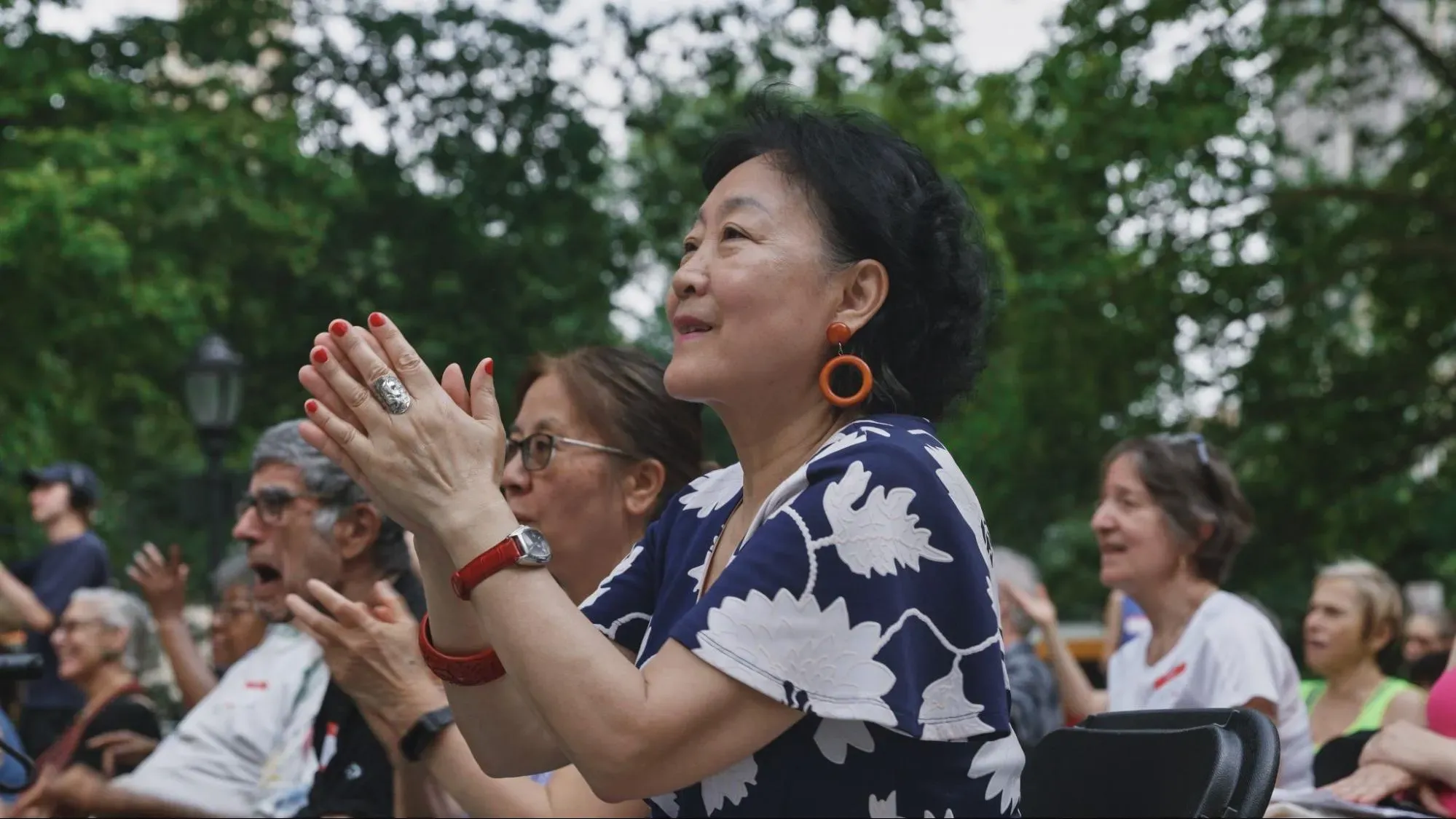
The future of DVP remains uncertain. Grill anticipates that programming will need to be reduced in the coming year, serving fewer people in fewer parts of the city. Instead of preparing to scale up to meet the needs of a rapidly growing older adult population, DVP is grappling with cuts that threaten its very existence.
“We dance under these incredible trees,” said Barton. “They always inspire me. They are old, and they keep going. Their leaves come every spring, and so do mine.”
Reporting for this piece was conducted alongside the development of the short documentary Revival.
Revival follows 78-year-old Chris O’Sullivan, a retired researcher with terminal cancer, as she prepares for what may be her final dance performance. It was directed by Claudia Rosel and Nicola Sitch. The film premiered at Columbia DOC Fest in December 2025.