Story
 May 6, 2026
School Discipline Legislation in Texas Worries Immigration Advocates
Country:

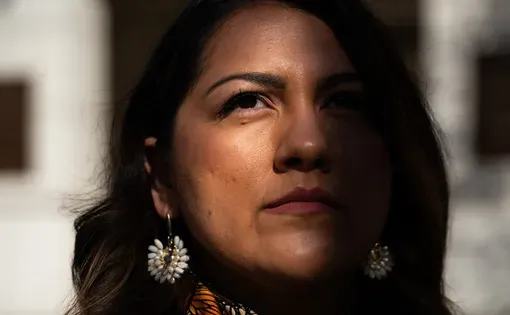
How school discipline can impact the school-to-deportation pipeline
Texas educators and advocates reel from immigration enforcement’s impact on students and worry how legislation could make things worse.
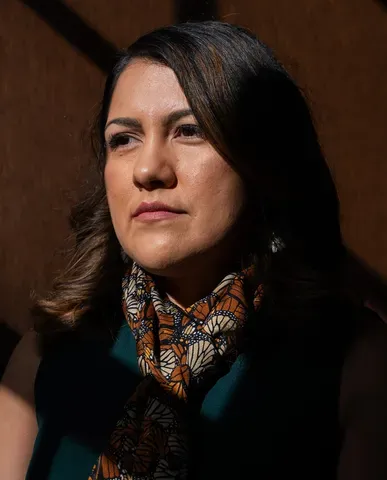
Lorena Tule-Romain has spent the past year grappling with America’s new reality: students and their families caught in the crosshairs of immigration enforcement.
Educators tell her of children who are too scared to go to school because they fear facing immigration enforcement agents. She’s spoken with parents who are opting to self-deport rather than endure deportation proceedings or go through the grueling U.S. immigration process. Some parents have even had to leave their children behind so that they may continue schooling in the U.S. on their own, she said.
This is what life has been like for many immigrant families under President Donald Trump’s second administration, and advocates like Tule-Romain worry that harsher Texas legislation regarding school discipline could exacerbate these issues, making their mission even more critical.

As a nonprofit journalism organization, we depend on your support to fund more than 170 reporting projects every year on critical global and local issues. Donate any amount today to become a Pulitzer Center Champion and receive exclusive benefits!
“This work is even more important now from what we're seeing as an organization and continuing to serve our families, our students, and our educators who are impacted by the immigration issue,” said Tule-Romain, a co-founder of the nonprofit ImmSchools, which helps educators create an inclusive school environment for immigrant children.
As anti-immigrant rhetoric in the country heightens, students who are immigrants are facing increasingly hostile challenges in pursuit of their education, including legislation.
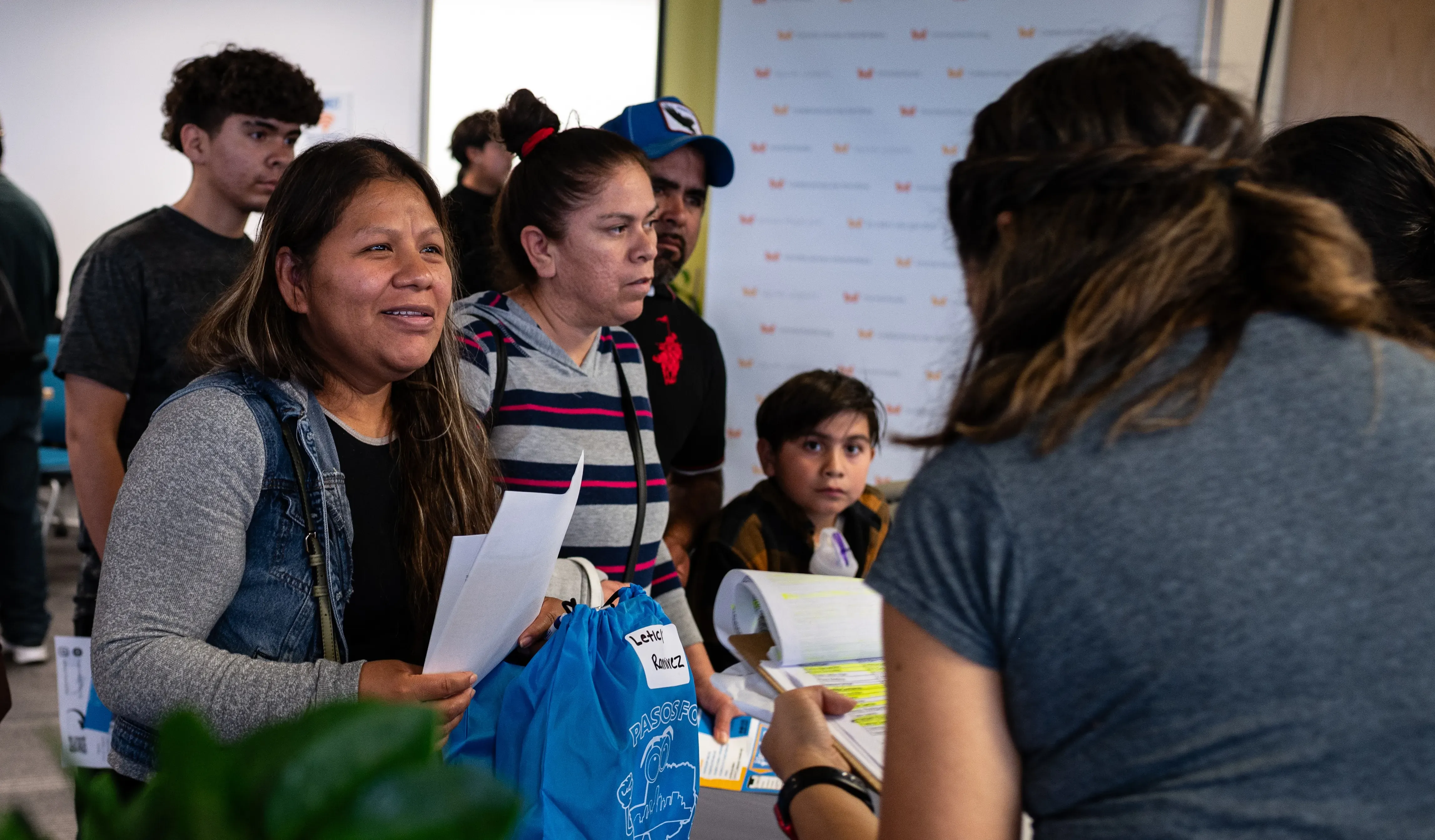
In June 2025, Texas passed House Bill 6, which allows school districts to carry out swift discipline for student misconduct, including minor and single incidents.
According to advocates, Black and Latino students are more likely to be caught in this dragnet, a direct product of disparate policing by educators. For those who are also immigrants, they risk becoming entangled in what has been labeled the “school-to-deportation pipeline,” the nexus of school surveillance, a flawed immigration system that pushes students into the crosshairs of enforcement agencies, and the psychological and structural factors that drive this phenomenon.
“The 'school-to-deportation pipeline' is the same sort of idea as the school-to-prison pipeline, but with the added element of fear of immigration enforcement, because a lot of the times what we found in our research was that it was not even that ICE [Immigration and Customs Enforcement] or customs officials or immigration officials were actually present,” said Patricia Maloney, associate professor of sociology at Texas Tech University who has studied how immigrant students are shaped by school profiling. “It was just their shadow that was causing students and teachers to act in particular ways.”
Since Trump took office, educators around the country have reported a decline in student attendance and, in Texas, teachers have testified about the effects of government policies on their classrooms.
“This week, I have walked into my classroom, and I see fear and concern in the faces of my students, some of whom have families who are living in constant fear,” Ryan McKelvy Gonzales, an instructor at Sunset High School in Dallas, said in January 2025 during a school board meeting. “That fear of being deported, fear of discrimination, fear of an uncertain future, and fear of being separated from their loved ones. These are not abstract issues. These are real fears that affect real children right here in our schools.”
Support for students and educators
ImmSchools is a Texas-based organization co-founded by Tule-Romain in 2018 to help educators around the country create an inclusive environment for K-12 students who are immigrants. It also focuses its work on helping teachers combat their own implicit biases.
Tule-Romain began her work helping to acclimate teachers who were recipients of the Obama-era Deferred Action for Childhood Arrivals (DACA) program, which protects eligible young adults who arrived in the U.S. as children from deportation and authorizes them to work for a temporary and renewable period.
“I was leading a lot of the national work on integrating DACA teachers to classrooms across different states, and what was happening at that moment after Trump took office was a lot of what we see now—the anti-immigrant rhetoric happening, the increase of enforcement around detention and immigration,” she said.
But very quickly she saw another need arise, one that was voiced by the teachers and school leaders she was working alongside.
“They were trying to figure out, ‘How do we support the school but not talk about politics in a school setting?’” Tule-Romain said. Since 2025, she’s once again seen schools become a hotbed for the national conversation surrounding immigration with some of the country’s most vulnerable people at the center: children.
Accustomed to getting five inquiries per month from school districts in the country interested in partnering with the organization, ImmSchools has now seen that number rise to about 175 monthly inquiries after Trump’s return to office in 2025.
With the passage of HB 6, Tule-Romain’s concern has now shifted to encompass how school discipline might be wielded against immigrant students of color.
“They’re opting to enforce those bills instead of doing some other alternative ways of redirecting the child if they have behavior issues,” she said. “My worry is that we won’t see the data and the urgency to pivot from those and provide alternative ways until it’s too late.”
Through her work at ImmSchools, Tule-Romain hopes to educate teachers and administrators on the role that they can play in policing.
“In our sessions, we allocated time for us to highlight and make sure that we’re spending time sharing and explaining to the educators the implications,” she said. “We added the 'school-to-deportation pipeline' as one of the terms that they need to learn by the end of the session. They need to be aware that this exists and that this is a thing.”
Lawmaker: HB 6 aims for 'safe, focused classrooms'
In June 2025, Texas legislators passed House Bill (HB) 6, which expands teachers’ authority to remove a student from a classroom setting for even a single incident. The bill went into effect for the 2025-2026 school year.
Lawmakers cited a dramatic surge of violent incidents and behavioral challenges in classrooms as reasons for the bill’s introduction, challenges that have become a growing concern since the start of the pandemic.
“I think what HB 6 was responding to was a really severe increase in the number of quite serious injuries that were occurring when teachers were assaulted by students whether deliberately or trying to intervene in the assault of another student,” said Jennifer Gordon, staff attorney for the Association of Texas Professional Educators (ATPE). Gordon said teachers have reported experiencing concussions and even traumatic brain injuries at the hands of students in recent years. “We're hoping that this bill reduces greatly the number of calls we get like that.”
According to lawmakers, the legislation is designed to curtail classroom distractions and address teachers’ safety concerns.
“House Bill 6 gives educators the tools they need to maintain safe, focused classrooms while allowing flexibility in how discipline is applied,” Texas state Rep. Gary Gates, who co-sponsored the bill, said in an emailed statement. “It’s a smart, balanced approach to protect the learning environment without losing sight of student needs.”
However, advocates warn that the extreme and blanket punishment of students for otherwise low-level offenses will have an adverse effect, particularly on students of color.
“There has been, to me, an unconscionable and unfair conflation of serious behaviors that are truly harmful—truly injurious—and minor behaviors that are age-appropriate and may be disruptive but are not at the same level of harmful nature as some of the things that the stories might suggest,” said Paige Duggins-Clay, chief legal analyst at the Intercultural Development Research Association (IDRA). She was among several people who testified about the bill in March 2025.
Over the years, organizations like IDRA have examined how these zero-tolerance policies are more punitive than progressive and disproportionately harm Black and Latino students.
“Unfortunately, a variety of factors come together to result in Black and Latino students being unfairly targeted for all sorts of partial contacts, including school-based beliefs,” Duggins-Clay said. She stated that these students often encounter excessive school policing due to race-based factors and policies.
One example of this disparate policing, she said, is the allocation of school-based police officers on campuses.
“What we most frequently saw was that it had very little correlation to actual incidents of school-based crime or criminal misconduct,” she said, “but rather it was more strongly correlated with the population of Black and Latino students on a campus and especially Black students on a particular campus.”
For Black and Latino students who also happen to be immigrants, this can have far more harrowing consequences, particularly as law enforcement agencies have become “overzealous” in implementing federal immigration practices under the current administration, Duggins-Clay said.
"We added the 'school-to-deportation pipeline' as one of the terms that [teachers] need to learn .... They need to be aware that this exists and that this is a thing."
Lorena Tule-Romain, co-founder of ImmSchools
“That level of scrutiny is unfortunately infiltrating our schools,” she said. “And so what does that look like? It means that when a student misbehaves, maybe when they come into contact with the school-based police officer—either a school resource officer or a contracted officer from a municipality or a county—those officers may work in concert with state and federal officials to refer students to federal immigration authorities.”
The area surrounding schools have also become grounds for immigration enforcement efforts.
Tule-Romain recounted an incident of a 16-year-old student who was referred to immigration authorities by city law enforcement officers after the student failed to adhere to a stop sign while leaving school premises.
“He was detained on a bike on the wrong side of town coming out of the school,” she said. “So it's a perception of, ‘Oh, this kid looks sketchy on a bike …’ Location has a lot to do with who gets stopped and that was the reason.” The student was transported to a detention center, Tule-Romain said.
“HB 6 has really created a full climate where some educators and administrators feel emboldened to remove students that they perceive to be challenging, overly disruptive,” Duggins-Clay said. “And so we know from history and from research that implicit bias plays a role in how the behavior of students is perceived.”
No data on 'school-to-deportation pipeline'
The "school-to-deportation pipeline" is a phenomenon that researchers have observed but can’t quite quantify yet. There is no available data on the number of immigrant students in Texas that have come into contact with immigration enforcement officials after facing disciplinary action in school. This makes it difficult for researchers to examine the full scope of the issue.
Instead, researchers have primarily relied on anecdotal evidence and policy analysis to examine the "school-to-deportation pipeline" as a whole. They have identified several ways in which educators contribute to or challenge the pipeline process and the factors that play a role in the expulsion of students of color who are immigrants.
“We were already familiar with the concept of the school-to-prison pipeline, which comes out of a book by Ann Arnett Ferguson called Bad Boys that talks a lot about the overpolicing—particularly of young Black males—in the classroom and how the school system not just culturally but also judicially sets the stage for later arrests,” Maloney said.
“In a lot of our research, we had noticed the same sort of thing happening with immigrant students and, of course, immigrant students have the added complication of what we refer to now as ICE in the classroom, and being worried about that,” she said.
Maloney echoed Duggins-Clay, and said that some administrators are not only complicit but also actively weaponize this pipeline in classrooms. They use threats of lower standardized test scores to push out students they worry might negatively affect school averages, which directly co-relates to the amount of funding that is disbursed, Maloney said.
“We found that that was really a big reason why teachers acted the way they did,” she said. “They were worried about the immigrant students, both because of a low socioeconomic status but also because of low English skills in some cases, pulling down their test scores.”
On the other hand, however, Maloney said she’s also witnessed educators and administrators challenge the pipeline, particularly under the current Trump administration.
“In the same way that some sanctuary cities won’t cooperate with national law and the local police are instructed not to cooperate with national ICE and immigration enforcement,” Maloney said, “there were schools that were protecting the children in their schools regardless of their nationality or their citizenship status … so they were taking steps to shield their students, especially immigrant students and undocumented immigrant students.”
The consequences of immigration enforcement and the fear of coming into contact with these forces weigh on a child’s conscience. Tule-Romain knows this well.
Through her work, she’s witnessed how immigrant students are left with little resources in the secondary education system. Tule-Romain also knows this because she is an immigrant herself, and she experienced it firsthand as a product of the Texas public school system.
“We didn’t come with a visa,” she said. She moved to Dallas from Buenavista de Cortés in Guanajuato, México, when she was just 9 years old.
“It wasn’t a part of my identity or my experience that my parents didn’t tell me. I knew I was undocumented,” she said.
Tule-Romain, who, through her spouse, is no longer undocumented, now holds a doctorate in education. She still remembers how she felt when she first arrived in Texas and began to settle into life here.
“Early on, I realized that it wasn’t safe,” the now 37-year-old recalled. “The message unintentionally from the school districts that I went to was that it’s not safe for my parents to come ... I see that parents get asked for their driver's license and my parents didn’t have driver's licenses.”
As a result, her school experience vastly differed from that of her peers who were born in the U.S. “So it was very much of my parents being absent from my school and [not] engaging with my school because I was afraid that they would be questioned.”
Tule-Romain said she first noticed anti-immigrant rhetoric grip communities when Trump was elected for his first term in 2016. Now, she says, she’s seeing history repeat itself, only with far higher stakes.
“We've seen [immigrant students] unenrolled from the school district because they got detained,” Tule-Romain said. “Now they have an academic record, and I think this is maybe the nuance to the application of the policy, in my perspective.”
Because the length of time families are detained often spans months, “the school will drop them,” Tule-Romain said. As a result, immigrant students are caught in a catch-22 situation.
“There's lost trust in the family,” she continued. “There's lost trust in the student, who now is having to reintegrate into the system, knowing they already have a record against them academically because the school's looking at attendance. The school's looking at behavior. The school's looking at all these things. So it puts the student more in a vulnerable situation.”
"Is everybody’s humanity validated and embraced and celebrated in our classroom, regardless of what is happening politically or what is happening outside of the schools?"
Lorena Tule-Romain, co-founder of ImmSchools
Fighting the "school-to-deportation pipeline" begins at an educator’s level, Tule-Romain said, where teachers must confront their own biases, which include their role in the policing of immigrant students, especially those of color.
With HB 6 now in effect and its consequences in full swing, her efforts to educate the very people who oversee the instruction of immigrant students—particularly those who are undocumented—have intensified.
“Our focus on the best practices is not only having the policies, but also what is the culture of the school,” she said. “Do you celebrate diversity? Do all your children and their families feel welcome in the schools?”
And perhaps more urgently, she said, “Is everybody’s humanity validated and embraced and celebrated in our classroom, regardless of what is happening politically or what is happening outside of the schools?”